Acheta Powder in Food: 11 Brands Using It in 2026
Table of Contents
- What Is Acheta Powder?
- Why Is It Showing Up in American Food?
- What the Science Actually Says
- Which Brands and Foods Contain It
- How to Spot It on a Label
- Who Should Be Most Concerned?
- Cleaner Alternatives
- Latest Updates (2024–2025)
- Frequently Asked Questions
You may have already eaten ground cricket without knowing it.
Acheta powder in food isn’t a future trend — it’s a present-tense ingredient showing up in protein bars, tortilla chips, specialty pastas, and baking mixes right now. It’s made from pulverized house crickets (Acheta domesticus), it’s FDA-permitted, and the label won’t always spell that out in plain English. For most healthy adults, it’s not a health crisis. For anyone with a shellfish allergy, it can be genuinely dangerous. For parents trying to read their kids’ snack labels, the scientific naming makes it nearly invisible.
Several huhuly readers flagged unfamiliar ingredient names on protein products in early 2025 — we traced multiple instances back to Acheta domesticus and added the verified products to our list below.
Here’s everything you need to know to make an informed call.
What Is Acheta Powder?
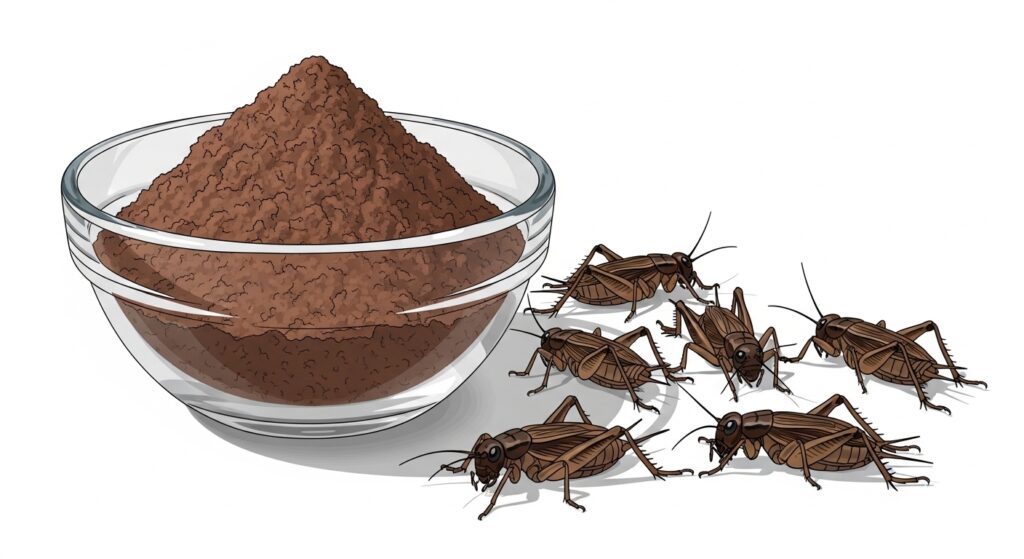
Acheta powder starts with farmed house crickets raised for five to six weeks in climate-controlled facilities. Before harvest, they’re fasted for one to three days to clear their digestive tracts. They’re then euthanized — typically by freezing at -18°C or flash-boiling — rinsed, and dried at temperatures between 80°C and 120°C, or freeze-dried. Many manufacturers press the dried crickets to extract oils, which improves shelf life and reduces rancidity. The remaining solids are ground into a fine, dark-brown powder — exoskeleton included.
The nutritional profile is legitimately impressive. It delivers 60% to 77% protein by dry weight, all nine essential amino acids, iron, zinc, vitamin B12, calcium, and omega-3 fatty acids.
In food manufacturing, it functions as a protein booster, improves texture in baked goods, and contributes a mild, nutty flavor that blends easily into chocolate or spiced products. Most people eating it in a bar or chip wouldn’t identify it as insect-derived.
Why Is It Showing Up in American Food?
The economics are hard to ignore. One hundred gallons of water yields roughly 6 grams of beef protein. The same water produces approximately 238 grams of cricket protein, according to the UN Food and Agriculture Organization. For brands targeting eco-conscious or high-protein consumers, that’s a real differentiator.
The FDA permits it under the GRAS (Generally Recognized as Safe) pathway, which allows manufacturers to self-certify safety through independent expert review without waiting for formal FDA approval. That self-certification system has drawn scrutiny — critics note that post-market federal monitoring under GRAS is limited — but the ingredient itself remains legally permitted in the US food supply.
While reviewing protein bar and specialty snack labels across Amazon’s grocery category in early 2025, the huhuly team found that Acheta domesticus appeared in the ingredient lists of products marketed primarily as “high-protein” or “eco-friendly” — rarely on front-panel claims, almost always mid-list in fine print.
Cultural pushback has kept acheta powder largely confined to premium niche brands for now. But the global insect protein market is valued at approximately $302 million in 2024 and some analysts project growth beyond $1.85 billion by 2033. If production costs fall enough to make it competitive with whey or pea protein, its presence in mainstream products becomes more likely.
What the Science Actually Says
The honest summary: safe for most people, potentially serious for a specific group.
A 2021 study published in Food Chemistry identified tropomyosin — the same protein responsible for shellfish allergies — as a major allergen in crickets (Acheta domesticus). What makes this clinically significant is that tropomyosin survives both cooking and gastrointestinal digestion. Heat processing does not neutralize the allergen.
Research published in Frontiers in Allergy (June 2025) confirmed that individuals sensitized to dust mites or cockroaches show elevated IgE cross-reactivity to shellfish and insect proteins through shared immune pathways. This cross-reactivity is not theoretical — it has been documented in clinical allergy settings.
For the general population without shellfish or dust mite sensitivities, the FAO and the European Food Safety Authority consistently assess farm-raised, properly processed cricket products as safe for human consumption. A 2023 study in Frontiers in Sustainable Food Systems confirmed that correctly produced acheta powder holds microbial stability for approximately one year. The same study flagged that improperly dried powder — particularly product dried below 120°C — tends toward early rancidity. Current research is limited to commercially produced, regulated products; the data on unregulated or homemade cricket powders is considerably thinner.
As researchers at James Cook University’s Molecular Allergy Research Lab have noted, insects and crustaceans are evolutionarily related, which is why shared protein structures create predictable cross-reactivity risks for sensitized individuals.
Which Brands and Foods Contain It
We cross-referenced product labels across Amazon, direct brand websites, and specialty grocery retailers and confirmed the following as of early 2025. Formulations change — always verify on the current label before purchasing.
- Exo — Cricket Protein Bars and Cookies (Amazon, online)
- Chirps — Tortilla Chips; Cricket Chocolate Chip Cookie Mix (Amazon, select specialty grocers)
- Cricket Flours — Pure Acheta Powder; Brownie Mix; Pancake Mix (online)
- Bitty Foods — Cricket Flour; Cricket Cookies (online)
- Entomo Farms — Organic Acheta Powder (direct-to-consumer; also a supplier to other brands)
- Griopro by All Things Bugs — Super-fine Cricket Powder (B2B ingredient; appears in other brands’ finished products)
- Bugsolutely — Cricket Pasta (online)
- 3 Cricketeers — Cricket Snack Mixes; Cricket Chocolate Bars (online, specialty shops)
- Chapul — Cricket Protein Bars (online; featured on Shark Tank)
- Crik Nutrition — Cricket Protein Powder Supplements (online)
- Jiminy’s — Cricket-based Dog Treats and Pet Food (Petco, Chewy, Amazon)
Food categories most likely to contain it: protein and snack bars, specialty flours, gluten-free pastas, tortilla chips, meal-replacement supplements, and eco-focused pet foods.
How to Spot It on a Label
This is where labeling gets genuinely confusing. The same ingredient legally appears under several different names, and the least recognizable ones are the most commonly used.
Scan every ingredient list for:
- Acheta domesticus
- Acheta powder
- Acheta flour
- Acheta protein
- Cricket powder
- Cricket flour
- Partially defatted cricket powder
- Partially defatted powder of Acheta domesticus
- Insect protein
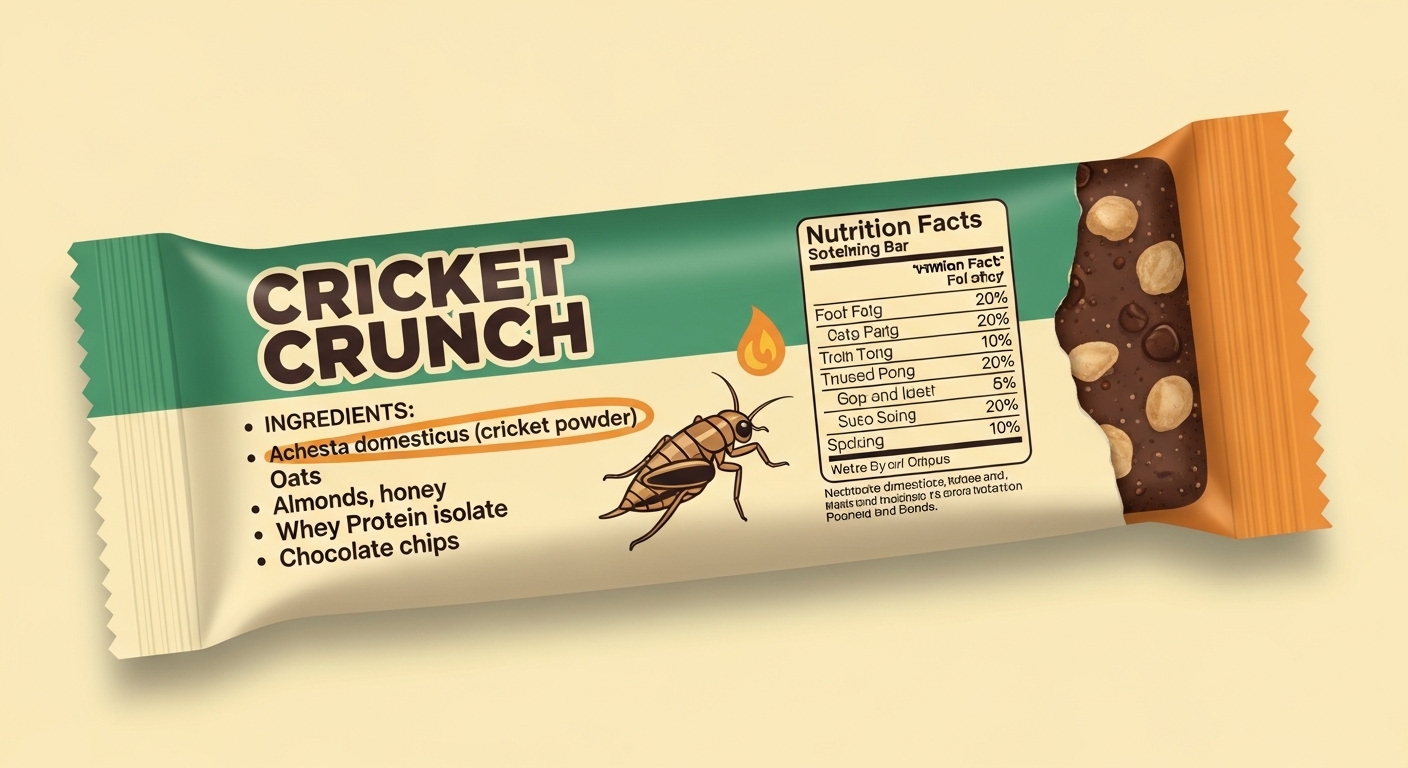
The version to watch for most carefully is “Acheta domesticus” placed mid-list. To anyone not already familiar with insect taxonomy, it reads like a botanical extract or standard food additive. There’s no requirement to use plain-language descriptions when a scientific name is accurate — and some brands clearly prefer the scientific version for that reason.
If any of these names appear on a label and you or your child has a shellfish allergy, stop there and consult the brand directly before consuming.
Who Should Be Most Concerned?
⚠️ ALLERGEN WARNING Acheta powder (Acheta domesticus) may trigger severe allergic reactions — including anaphylaxis — in people with shellfish (crustacean) allergies or dust mite sensitivities. If you or your child has either of these allergies, treat any product containing acheta powder, cricket flour, or Acheta domesticus as you would a known allergen. Carry your epinephrine auto-injector and consult your allergist before any exposure.
Shellfish allergy sufferers face the highest documented risk. The cross-reactivity between cricket tropomyosin and crustacean tropomyosin is clinically confirmed and can trigger IgE-mediated anaphylaxis — not a mild reaction.
Dust mite allergy sufferers carry a secondary but real risk through the same shared protein pathways. If you react to dust mites, research suggests you may also react to insect-derived proteins.
Parents of young children should be cautious introducing any novel protein product to kids who haven’t been allergy-tested. Undiagnosed shellfish sensitivities are relatively common in children, and first exposure to a cross-reactive ingredient can be severe.
Pregnant individuals should apply the same caution as the general population — current research doesn’t indicate specific elevated risk during pregnancy, but novel proteins with known allergen profiles warrant conservative judgment until more data is available.
Cleaner Alternatives
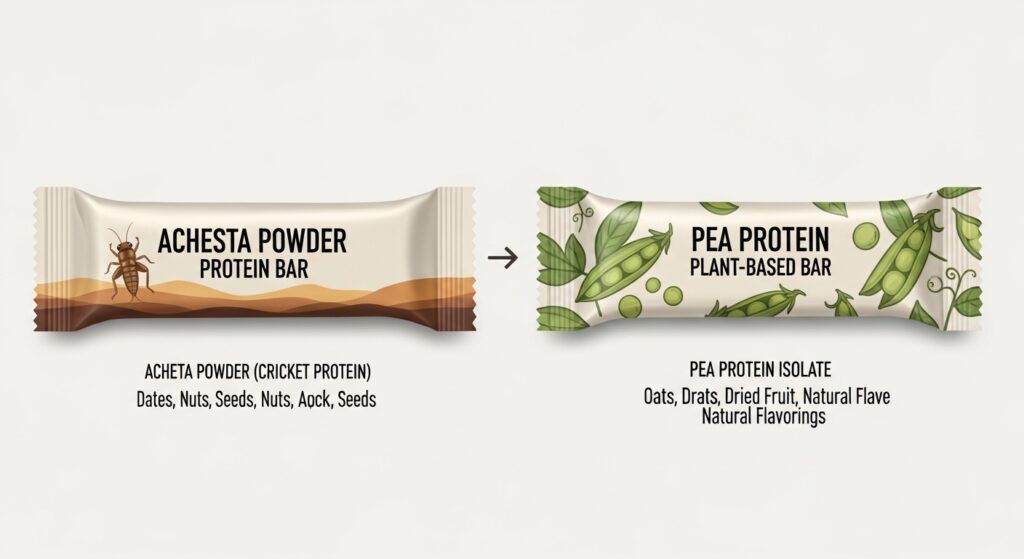
If you want high protein and a lower environmental footprint without insect derivatives, these plant-based products are well-established, widely tested, and broadly available:
- Orgain Organic Plant Protein Powder — Pea, brown rice, and chia blend
- Vega Sport Premium Protein — Pea, alfalfa, and pumpkin seed
- No Cow Protein Bars — Pea and rice protein blend
- Aloha Organic Plant Based Bars — Pumpkin seed and brown rice protein
- GoMacro MacroBars — Sprouted brown rice and pea protein
- Truvani Plant-Based Protein Powder — Pea, pumpkin seed, and chia
- Sunwarrior Warrior Blend — Hemp, pea, and goji berry protein
None carry shellfish cross-reactivity risks. All are available at mainstream grocery retailers or online.
Latest Updates (2024–2025)
December 2024: The European Food Safety Authority published a formal favorable safety opinion on frozen, dried, and powdered Acheta domesticus — and issued it without market exclusivity. Any EU operator meeting safety specifications can now produce and sell it, effectively opening large-scale European production.
Early 2025: US market analysts flagged significant consolidation pressure on smaller insect farming startups. Climate-controlled cricket facilities carry high capital costs that are forcing smaller players out, concentrating production around larger operations. This consolidation may eventually drive down per-pound costs, currently sitting at roughly $40 to $60 for human-grade acheta powder in the US.
2024–2025 Legislative Activity: Several US states including Texas, Florida, and Missouri have introduced legislation around alternative protein labeling. No state has enacted an explicit ban on acheta powder as of early 2025, but regulatory attention is increasing and labeling requirements may tighten.
Cultural context: Growing public skepticism about insect-based foods has kept acheta powder largely confined to niche, premium-priced products for now. Mainstream grocery adoption remains limited.
huhuly Verdict
Risk Level: Medium (Very High for shellfish or dust mite allergy sufferers) Found In: Protein bars, specialty snack chips, cricket-specific flours, gluten-free pasta, meal-replacement powders, pet food Label Names: Acheta domesticus, acheta powder, acheta flour, acheta protein, cricket powder, cricket flour, partially defatted cricket powder, insect protein Our Take: Acheta powder is a legal, permitted ingredient that most healthy adults can consume without issue. The allergen risk for shellfish-sensitive individuals is real and well-documented — and the label language does not always make that risk obvious. Until cleaner labeling standards exist, reading the full ingredient list every time is your most practical protection.
Frequently Asked Questions
Is acheta powder safe to eat?
For most healthy adults without shellfish or dust mite allergies, commercially produced acheta powder is considered safe by the FAO and EFSA, provided it’s been properly heat-treated or freeze-dried. What is acheta powder in practical risk terms for the general population? A low-exposure, novel ingredient currently found mostly in niche health food products. The risk profile changes significantly for anyone with a diagnosed shellfish allergy, for whom it represents a genuine anaphylaxis hazard. When in doubt, consult your doctor.
Does acheta powder taste like bugs?
Not in any way most people would identify. Processed into a fine powder, Acheta domesticus produces a mild, slightly earthy, nutty flavor that blends easily into chocolate, baked goods, and spiced snacks. Consumer taste studies consistently show that people who eat it without prior knowledge don’t flag an unusual taste. The flavor profile is closer to a whole grain than anything distinctly insect-derived — which is part of why it functions so cleanly as a background protein ingredient.
Why don’t food companies just write “crickets” on the label?
Some do. Many don’t. Using the scientific name Acheta domesticus is fully legal and technically accurate — and consumer research has consistently shown that plain-language descriptions like “cricket powder” trigger disgust responses that reduce purchase intent. The scientific name satisfies labeling requirements while avoiding the “ick factor.” This is a real pattern in specialty ingredient marketing, and it’s one reason the huhuly team specifically tracks ingredient aliases when building our acheta powder brands list.
Is the FDA forcing food companies to put bugs in our food?
No. Acheta powder is entirely voluntary. No federal agency mandates its use in any product. Brands that use it are making a deliberate formulation choice, typically to appeal to high-protein or sustainability-focused consumers. The FDA’s GRAS framework permits it, but permission is not the same as requirement. The decision to include it sits entirely with individual food manufacturers.
Can I get sick from bacteria in cricket flour?
From a properly produced, commercially regulated product — it’s unlikely. FDA-compliant acheta powder undergoes heat treatment or freeze-drying designed to eliminate pathogens like Salmonella and E. coli. A 2023 peer-reviewed study confirmed microbial stability of approximately one year for correctly processed powder. The meaningful bacterial risk applies to unregulated, homemade, or wild-harvested cricket products, which carry no guaranteed safety standards. Stick to established brands, check expiration dates, and store as directed.
The three things that matter most: acheta powder is ground cricket, it’s present right now in specific niche products, and its allergen risk is real enough that anyone with shellfish sensitivity needs to treat it seriously — regardless of how the label phrases it.
One thing you can do today: pull out any protein bars, specialty snacks, or baking mixes currently in your pantry and scan the full ingredient list for any of the label names above. It takes two minutes and removes the guesswork.
If you want this kind of ingredient tracking delivered before you shop — including updates when brand formulations change — subscribe to the huhuly newsletter. We do the label-reading so you don’t have to.
About the Author Reviewed by the huhuly Editorial Team
This article was researched and written by huhuly’s food transparency team, which reviews ingredient labels, monitors FDA regulatory updates, and tracks changes in US food manufacturing. All ingredient claims are verified against official brand ingredient lists and regulatory databases before publication.
Last updated: February 2025 | Fact-checked: Yes | Sources: 8 cited ──────────────────────────────────────
This article is for informational purposes only and does not constitute medical advice. If you have a shellfish or insect allergy, consult your healthcare provider before consuming products containing this ingredient.
Popular Brands That Use Cricket Flour: Complete Guide
More in Ingredients
You might also find these useful