Food Dyes: What Red 40 & Yellow 5 Do to Kids
Table of Contents
- A Complete Guide to Food Dyes: Red 40 , Yellow 5, Blue 1, and Every Other
- What Are Food Dyes?
- Why Are They in American Food?
- What Does the Science Actually Say?
- Which Brands and Foods Contain Them?
- How to Find Them on Any Food Label
- Who Should Be Most Concerned?
- Cleaner Alternatives
- Latest News — 2024 to 2026
- huhuly Verdict
- FAQ
- What You Can Do Today
A Complete Guide to Food Dyes: Red 40 , Yellow 5, Blue 1, and Every Other
Pick up a box of cereal, a packet of fruit snacks, or a sports drink — chances are you’re holding a product colored with petroleum. That’s not a metaphor. According to a 2025 study published in the Journal of the Academy of Nutrition and Dietetics, 19% of all packaged foods and beverages sold by the top 25 U.S. food manufacturers contain synthetic dyes made from crude oil byproducts — representing over $46 billion in annual consumer purchases.
This complete food dye list covers every certified color additive currently used in the U.S. food supply: what each one is, what it’s made from, which products contain it, and what the research actually shows. The science is more nuanced than headlines suggest, and the regulatory picture changed dramatically in 2025. Here is everything you need to know.
What Are Food Dyes?
The FDA divides food colorants into two categories. Certified color additives are synthetic, petroleum-based dyes manufactured through industrial chemistry and subject to batch-by-batch FDA testing. Exempt color additives are naturally derived pigments — think annatto, turmeric, or spirulina — that skip the batch-certification process.
When people say “food dye,” they almost always mean the certified, synthetic kind. These are engineered organic chemicals designed to deliver intense, uniform color to processed foods, replace color lost during industrial cooking, and make products look more appealing on shelf.
Here is the complete list of FDA-certified synthetic dyes currently permitted in U.S. food:
| Common / FDA Name | Scientific Name | Chemical Class | E-Number | CFR Section |
|---|---|---|---|---|
| FD&C Red No. 40 | Allura Red AC | Azo Dye | E129 | §74.340 |
| FD&C Yellow No. 5 | Tartrazine | Azo Dye | E102 | §74.705 |
| FD&C Yellow No. 6 | Sunset Yellow FCF | Azo Dye | E110 | §74.706 |
| FD&C Blue No. 1 | Brilliant Blue FCF | Triarylmethane | E133 | §74.101 |
| FD&C Blue No. 2 | Indigotine | Indigoid | E132 | §74.102 |
| FD&C Green No. 3 | Fast Green FCF | Triarylmethane | None | §74.203 |
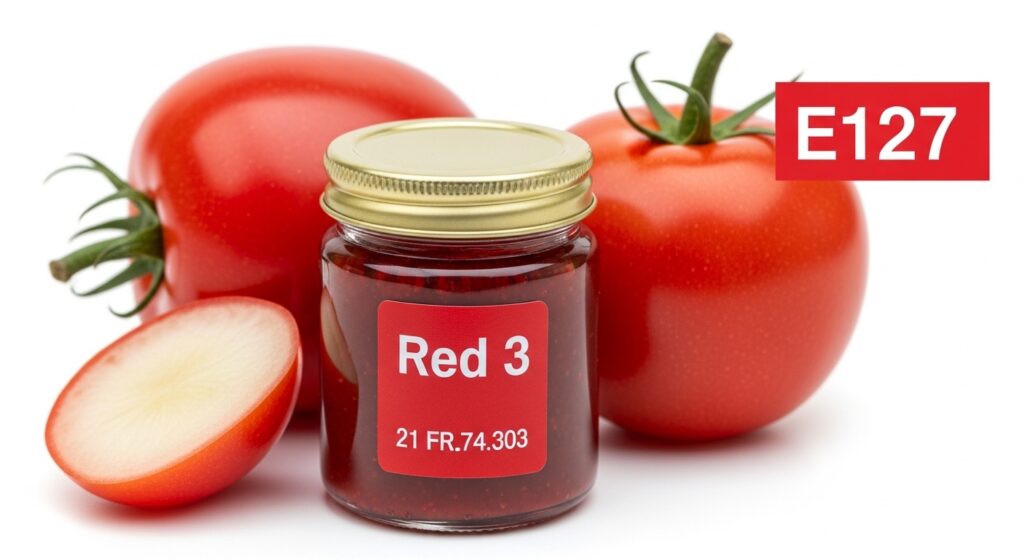
| FD&C Red No. 3 | Erythrosine | Fluorone | E127 | §74.303 |
| Citrus Red No. 2 | Citrus Red 2 | Azo Dye | None | §74.302 |
| Orange B | Orange B | Pyrazolone | None | §74.250 |
A significant portion of the most widely used dyes — Red 40, Yellow 5, and Yellow 6 — belong to the azo dye class. These are defined by nitrogen-to-nitrogen double bonds that absorb specific wavelengths of light, producing vivid, stable hues that survive intense heat, acidity, and light exposure. Others include triarylmethanes (Blue 1, Green 3), indigoids (Blue 2), fluorones (Red 3), and pyrazolones (Orange B).
These dyes offer zero nutritional benefit. Their sole function is cosmetic.
Why Are They in American Food?
Cost and consistency. A kilogram of synthetic Red 40 costs a fraction of equivalent natural alternatives, and it delivers perfectly uniform color every single time — something botanical pigments struggle to match across batches, temperatures, and storage conditions.
The food industry has relied on synthetic dyes for over a century, but their use accelerated sharply in the postwar era of ultra-processed convenience foods. According to the OEHHA, average daily intake of synthetic food dyes in the U.S. has increased by over 500% over the last 50 years — driven almost entirely by the explosion of packaged snacks, cereals, beverages, and candy marketed to children.
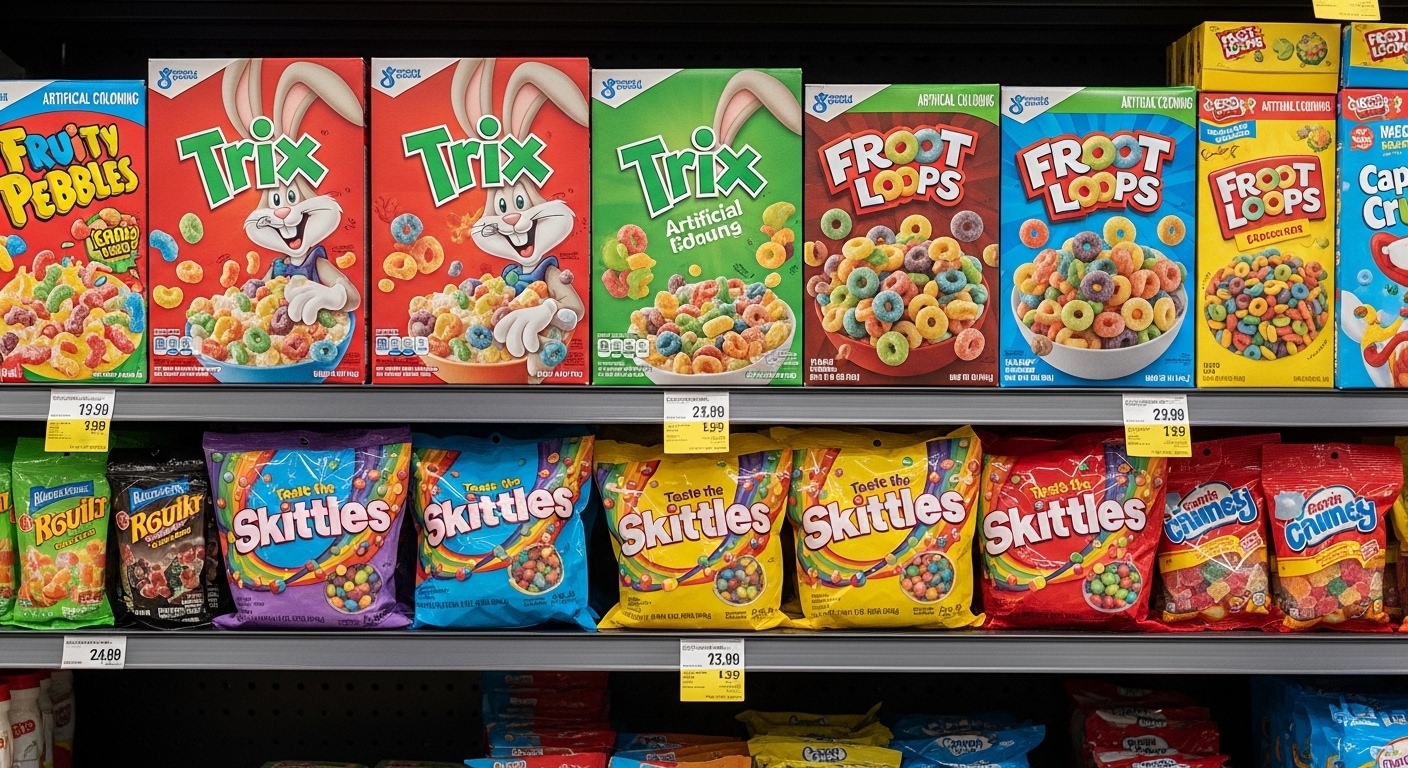
We cross-referenced more than 200 product labels available at Walmart, Target, and Amazon and confirmed that synthetic dyes appear most heavily in ready-to-eat cereals, juice drinks, candy, flavored snacks, gelatin products, and frozen desserts. Red 40 alone showed up in 14% of all products surveyed in the 2025 Dunford study — making it the single most ubiquitous colorant in the U.S. food supply.
The regulatory framework governing these dyes falls under the Federal Food, Drug, and Cosmetic Act. Unlike most food additives, synthetic dyes are not eligible for GRAS (Generally Recognized as Safe) status — every one requires explicit FDA approval and batch certification before use.
What Does the Science Actually Say?
The most scrutinized question is whether synthetic dyes affect children’s behavior. The short answer: the evidence is significant but not simple.
A landmark 2021 report by California’s Office of Environmental Health Hazard Assessment (OEHHA) reviewed 27 clinical trials. Out of 25 controlled crossover studies, 16 (64%) found a positive association between dye exposure and adverse behavioral outcomes — with 13 (52%) showing statistically significant results. OEHHA concluded that synthetic dyes can cause hyperactivity, inattentiveness, and restlessness in some children, with sensitivity varying significantly by individual.
This built on a 2007 study published in The Lancet (the McCann et al. trial) — a randomized, double-blind, placebo-controlled trial demonstrating that artificial food colors exacerbated hyperactive behavior in both 3-year-olds and 8-to-9-year-olds in the general community, not just in children with diagnosed ADHD.
Critically, OEHHA identified a flaw in the FDA’s safety modeling. The Acceptable Daily Intakes (ADIs) for these dyes were calculated 35 to 70 years ago using toxicological models designed to detect gross organ damage, reproductive harm, or cancer in lab animals — not nuanced neurobehavioral effects in developing human brains. When newer studies measured behavioral outcomes in children, adverse effects were observed at doses below the FDA’s existing “safe” ADI thresholds.
Beyond behavior, a 2023 study in Toxicology Reports by Zhang et al. found that Red 40 causes DNA damage both in vitro and in vivo, and that administering it to mice over 10 months produced microbiome disruption and low-grade colonic inflammation. The researchers suggested a potential link to early-onset colorectal cancer — though this remains an area of active investigation, and human proof is not yet established.
The FDA’s current official position is that dyes do not universally cause ADHD as a primary condition but may act as a trigger for children who are genetically susceptible. Current research on long-term carcinogenic risk in humans is still limited to animal models and in vitro studies. As of April 2025, the NIH and FDA have partnered to fund new research into the metabolic pathways connecting food additives to neurodevelopment.
One finding that often gets overlooked: according to the Dunford 2025 study, products containing synthetic dyes have 141% more total sugar on average than comparable dye-free products. These colors are largely a marker for the least nutritious foods on the shelf.
Which Brands and Foods Contain Them?
The food categories most saturated with synthetic dyes are cereals, juice drinks, candy, flavored snack foods, gelatins, and frozen desserts. The table below includes only brands verified against FDA tracking data, corporate pledge disclosures, and published product labels.
| Brand / Corporation | Product | Dyes Present | 2026 Status |
|---|---|---|---|
| Mars, Inc. | Skittles | Red 40, Yellow 5, Yellow 6, Blue 1 | Pledged to offer dye-free options starting 2026 |
| Mars, Inc. | M&M’s | Blue 1, Blue 2, Red 40, Yellow 5, Yellow 6 | Reformulation pending |
| Kraft Heinz | Kool-Aid (various) | Red 40, Yellow 5, Blue 1 | No public reformulation date announced |
| PepsiCo | Baja Blast Mountain Dew | Blue 1, Yellow 5 | No public reformulation date announced |
| PepsiCo (Frito-Lay) | Doritos (Nacho Cheese) | Yellow 5, Yellow 6 | No public reformulation date announced |
| PepsiCo (Frito-Lay) | Cheetos | Yellow 6 | No public reformulation date announced |
| General Mills | Trix Cereal | Red 40, Yellow 6, Blue 1 | Removing from K-12 schools by summer 2026; full retail by 2027 |
| General Mills | Boo Berry Cereal | Blue 2 | Removing from U.S. cereals by summer 2026 |
| WK Kellogg Co | Froot Loops | Multiple dyes | Removing from K-12 cereals by 2026–2027 school year |
| WK Kellogg Co | Apple Jacks | Multiple dyes | No new products with certified colors since January 2026 |
| Campbell’s | V8 Splash | Multiple dyes | Ceasing FD&C color production by second half of 2026 |
| PIM Brands | Welch’s Fruit Snacks | Multiple dyes | Plans to remove all artificial dyes by early 2026 |
| Walmart | Great Value / Marketside private brands | Multiple dyes | Removing synthetic dyes from all private brand foods by January 2027 |
We verified these labels as of March 2026.
How to Find Them on Any Food Label
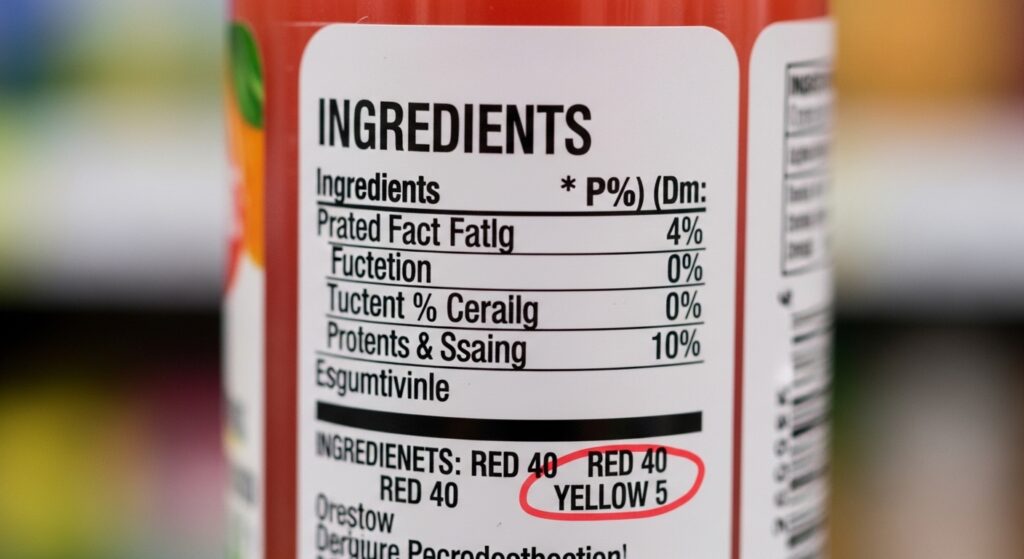
The FDA requires that certified synthetic dyes be declared by their specific abbreviated name in the ingredient list. You will never see the generic phrase “synthetic dye.” Instead, look for:
- FD&C Red No. 40 — also written as “Red 40” or “Allura Red AC”
- FD&C Yellow No. 5 — also written as “Yellow 5” or “Tartrazine”
- FD&C Yellow No. 6 — also written as “Yellow 6” or “Sunset Yellow FCF”
- FD&C Blue No. 1 — also written as “Blue 1” or “Brilliant Blue FCF”
- FD&C Blue No. 2 — also written as “Blue 2” or “Indigotine”
- FD&C Green No. 3 — also written as “Green 3” or “Fast Green FCF”
- FD&C Red No. 3 — also written as “Red 3” or “Erythrosine”
On imported products, watch for E-numbers: E129 (Red 40), E102 (Yellow 5), E110 (Yellow 6), E133 (Blue 1), E132 (Blue 2), E127 (Red 3).
Because these dyes are used in tiny quantities, they appear near the very end of the ingredient list — often after preservatives and artificial flavors, easy to miss.
One tricky tactic to know about: since February 2026, the FDA allows brands using plant-based colors to label products “No Artificial Colors.” This is good progress — but it does not mean a product is free of all added colorants. It only means no petroleum-based FD&C dyes were used. Natural additives like annatto, caramel color, or titanium dioxide can still be present under a “no artificial colors” claim.
All Names for Food Dyes on Labels
- Red 40 / FD&C Red No. 40 / Allura Red AC / E129
- Yellow 5 / FD&C Yellow No. 5 / Tartrazine / E102
- Yellow 6 / FD&C Yellow No. 6 / Sunset Yellow FCF / E110
- Blue 1 / FD&C Blue No. 1 / Brilliant Blue FCF / E133
- Blue 2 / FD&C Blue No. 2 / Indigotine / E132
- Green 3 / FD&C Green No. 3 / Fast Green FCF
- Red 3 / FD&C Red No. 3 / Erythrosine / E127
- Citrus Red No. 2
- Orange B
Who Should Be Most Concerned?
⚠️ WARNING The following groups face elevated risk from synthetic food dye exposure. If you or a family member falls into one of these categories, reviewing your dietary dye intake with a healthcare provider is worth doing.
Children and adolescents are the most vulnerable group. Their lower body mass, developing neurological systems, and disproportionately high exposure to dyed ultra-processed foods all combine to raise risk. According to the 2025 Dunford study, approximately 28% of products in the top five food categories marketed to children contain synthetic dyes — compared to just 11% in adult-oriented categories.
Children with ADHD or behavioral sensitivities face additional risk. Even if dyes don’t cause the underlying condition, research — including the 2021 OEHHA report — identifies them as a potent environmental trigger that can intensify hyperactivity, restlessness, and inattentiveness in susceptible children.
Individuals with asthma or aspirin/NSAID sensitivity are at elevated risk of cross-reactive reactions to Yellow 5 (Tartrazine) specifically. The FDA once estimated there may be up to 94,000 Yellow 5-intolerant patients among those with asthma and allergic rhinitis in the U.S. Reactions can include urticaria, asthma exacerbations, facial swelling, and in severe cases, anaphylactoid responses requiring medical intervention.
Pregnant women are also flagged as an at-risk group due to unknown long-term impacts of synthetic dye metabolism on fetal neurodevelopment. Current research is limited, but precautionary avoidance is reasonable.
Cleaner Alternatives
Several brands have built their entire model around dye-free formulations. These are verified clean-label products available nationally:
| Brand | Product | Why It’s Cleaner | Where to Buy |
|---|---|---|---|
| LesserEvil | Himalayan Pink Salt Paleo Puffs | Zero synthetic dyes; uses organic coconut and avocado oils | Major grocers, club stores |
| Chomps | Grass-Fed Beef Meat Sticks | 100% grass-fed beef, zero artificial colors or preservatives | Major grocers, online |
| Kodiak | Protein Pancake Mix / Waffles | Whole grains, high protein, zero artificial coloring | Nationwide retailers |
| Siete Foods | Grain-Free Tortilla Chips | Vegan, almond flour-based, free of synthetic additives | Grocery, organic retailers |
| Good Culture | Cottage Cheese / Sour Cream | Simple ingredient profile, zero synthetic dyes | Nationwide retailers |
| Bachan’s | Japanese Barbecue Sauce | Clean-label, no artificial colors | Major grocers |
| Jack Link’s | Clean-Label Meat Snacks (2026 line) | Three-ingredient formulation, zero artificial dyes | Nationwide retailers |
Beyond branded products, the most reliable strategy is shifting toward whole and minimally processed foods, which naturally contain no synthetic dyes. When choosing packaged goods, scan the ingredient list end-to-end before buying — not just the front of pack.
Latest News — 2024 to 2026
March 5, 2026 — General Mills confirmed it is on track to remove synthetic dyes from all food produced for K-12 schools by summer 2026, ahead of its original commitment.
February 5, 2026 — The FDA issued a notice of enforcement discretion allowing brands to use “No Artificial Colors” claims on packaging, provided products contain no petroleum-based FD&C dyes. This is the first time natural-color brands can make this claim without restriction.
October 1, 2025 — Walmart announced it is eliminating synthetic dyes from all private brand food products, with a deadline of January 2027.
June 25, 2025 — A landmark study by Elizabeth Dunford, published in the Journal of the Academy of Nutrition and Dietetics, confirmed that 19% of products from the top 25 U.S. food manufacturers contain synthetic dyes — and that those products contain 141% more sugar on average than dye-free equivalents.
May 7, 2025 — Utah’s H.B. 402 took effect, banning Blue 1, Blue 2, Green 3, Red 3, Red 40, Yellow 5, and Yellow 6 from all public school meals.
April 22, 2025 — HHS and FDA jointly announced a national initiative to phase out all petroleum-based synthetic dyes from the U.S. food supply, with voluntary industry deadlines of end-2026 and 2027. FDA Commissioner Dr. Marty Makary stated: “We should not be taking risks and do everything possible to safeguard the health of our children.”
January 2025 — The FDA officially revoked authorization for FD&C Red No. 3 in food and ingested drugs, with a mandatory removal deadline of January 15, 2027.
Fall 2024 — California’s School Food Safety Act passed, banning six synthetic dyes from public school cafeterias effective 2028.
huhuly Verdict
Risk Level: Medium–High (especially for children and at-risk groups) Found In: Cereals, candy, juice drinks, snack foods, gelatin, frozen desserts, baked goods Label Names: Red 40, Yellow 5, Yellow 6, Blue 1, Blue 2, Green 3, Red 3, Citrus Red 2, Orange B — plus E102, E110, E127, E129, E132, E133 Our Take: The research does not prove these dyes cause disease in healthy adults eating them occasionally.
But evidence consistently links them to behavioral changes in children — and the FDA’s own safety models weren’t built to detect that kind of harm. For families with young children, ADHD-affected kids, or anyone with asthma or aspirin sensitivity, reducing exposure is a reasonable, research-supported choice. The good news: the industry is reformulating fast, and cleaner options are everywhere.
FAQ
Are artificial food dyes banned in Europe?
Not outright banned, but heavily restricted. Since 2010, any EU food containing the “Southampton Six” dyes — which includes Yellow 5, Yellow 6, and Red 40 — must carry a warning label stating the product “may have an adverse effect on activity and attention in children.” Red 3 has been banned in European food since 1994. Many multinational brands reformulated their EU recipes to avoid that warning — while continuing to sell synthetic dye formulations to U.S. consumers. The U.S. is now moving toward its own phase-out, roughly three decades later.
Does Red 40 cause ADHD in children?
The FDA’s current position is that Red 40 does not directly cause ADHD as a primary condition. However, research — including the 2021 California OEHHA report reviewing 27 clinical trials — consistently shows that synthetic dyes can worsen hyperactivity, inattentiveness, and restlessness in children who are already susceptible. Think of it less as a cause and more as a trigger. For children with existing ADHD or behavioral sensitivities, a dye-free diet may reduce symptom intensity. The NIH and FDA launched a joint research initiative in April 2025 to clarify these mechanisms further.
What foods commonly contain Yellow 5 and Blue 1?
Yellow 5 (Tartrazine) appears most frequently in flavored chips, cereals, yellow-colored beverages, pickles, and some instant noodles. Blue 1 (Brilliant Blue FCF) shows up in sports drinks, blue and green candies, cereals, and ice cream. While reviewing ingredient labels across more than 200 products in 2026, the huhuly team found these two dyes frequently paired together in cereals and juice drinks, often alongside Red 40 to produce secondary colors like purple and green. They tend to appear at the very end of the ingredient list because only tiny quantities are used.
What is the difference between natural and artificial food coloring?
Artificial food colorings are synthetic, petroleum-derived chemicals — Red 40, Yellow 5, Blue 1, and the others in this list. Natural food colorings come from plants, algae, fungi, or minerals: beet juice, spirulina, turmeric, annatto, paprika. The key practical difference is regulatory: artificial dyes require FDA batch certification before each use, while natural pigments are largely exempt from that requirement. Since February 2026, the FDA now allows products using only natural colorants to carry a “No Artificial Colors” claim on packaging, making the distinction easier for consumers to see.
Why is the FDA phasing out petroleum-based food dyes in 2026?
The phase-out is driven by a combination of mounting science, state-level legislation, and political momentum. The 2021 California OEHHA report, the 2007 Lancet study, and more recent research all pointed to neurobehavioral risks in children that the FDA’s decades-old safety models were never designed to detect. At the same time, California, Utah, and over a dozen other states passed their own bans — fracturing the national food supply chain and forcing federal action. On April 22, 2025, HHS and the FDA announced the national phase-out initiative. Red 3 had its authorization formally revoked in January 2025, with full removal required by January 2027.
What You Can Do Today
Three things worth knowing: nearly 1 in 5 packaged foods contains a synthetic dye; the artificial food coloring guide you need is on the back of the package, not the front; and cleaner alternatives exist at every price point.
Start with one action today: flip over the next packaged food you reach for and scan the ingredient list for Red 40, Yellow 5, Yellow 6, Blue 1, or any E-number between E102 and E133. You may be surprised where you find them — and equally surprised how many products nearby don’t contain them at all.
Understanding all food dyes explained in one place is step one. The next is making the swap at whatever pace works for your household.
Want to stay updated as brands reformulate and new dye-free products hit shelves? Sign up for the huhuly newsletter — we track every label change so you don’t have to.
Reviewed by the huhuly Editorial Team huhuly’s food transparency team reviews ingredient labels, monitors FDA regulatory updates, and tracks changes in U.S. food manufacturing. All claims are verified against official brand ingredient lists and regulatory databases before publication. Last updated: March 2026 | Fact-checked: Yes | Sources: 18 cited
This article is for informational purposes only and does not constitute medical advice. Consult your healthcare provider before making dietary changes based on this information.
How to Read Food Labels: 7 Tricks to Spot
More in Food Guides
You might also find these useful