Clean Label Snacks at Walmart: 12 to Skip in 2026
Best Clean Label Snacks at Walmart: Buy These, Skip These
You want to eat better without switching grocery stores. That’s a completely reasonable goal — and Walmart, for all its size, has made it genuinely harder than it should be.
According to a 2025 study published in the Journal of the Academy of Nutrition and Dietetics, 1 in 5 packaged food products sold in the U.S. contain synthetic dyes. The problem lands hardest at big-box retailers where private-label products dominate the shelves — and where reformulation timelines stretch into 2027. Clean label snacks at Walmart do exist. But right now, in 2026, they sit right next to products that still contain Red 40, titanium dioxide, and BHT. Knowing which is which is the whole game.
While reviewing ingredient labels across 60+ snack products at Walmart in early 2026, the huhuly team found that the gap between the bettergoods line and the standard Great Value line is far wider than most shoppers expect — and not always obvious from the front of the package.
Table of Contents
- Best Clean Label Snacks at Walmart: Buy These, Skip These
- What Does “Clean Label” Actually Mean?
- Why Are So Many Walmart Snacks Still Full of Additives?
- What Does the Science Say About These Ingredients?
- Which Walmart Products Still Contain Synthetic Dyes and Additives?
- How Do You Find These Additives on Any Food Label?
- Who Should Be Most Careful at Walmart?
- Which Walmart Snacks Are Actually Clean?
- What’s Changed at Walmart Between 2024 and 2026?
- huhuly Verdict
- FAQ
- Three Things to Do This Week
What Does “Clean Label” Actually Mean?
“Clean label” is not an FDA-regulated term. No agency defines it, no certification body enforces it, and no brand gets audited for using it on their packaging.
In practical terms, a clean-label snack is one that avoids synthetic food dyes (such as Red 40, Yellow 5, Yellow 6, and Blue 1), petroleum-derived preservatives like butylated hydroxyanisole (BHA, E320) and butylated hydroxytoluene (BHT, E321), industrial dough conditioners like azodicarbonamide (ADA, E927a) and potassium bromate (E924), and whitening agents like titanium dioxide (TiO2, E171).
These aren’t obscure chemicals found only in junk food. They appear in crackers, cheese sauces, cereals, frozen pizzas, and salad dressings — products that look neutral on the surface.
The clean-label standard huhuly uses: no synthetic dyes, no BHA/BHT, no ADA or potassium bromate, no titanium dioxide. That’s the benchmark for every product mentioned in this article.
Why Are So Many Walmart Snacks Still Full of Additives?
In October 2025, Walmart U.S. CEO John Furner announced what the company called its most significant private-brand reformulation in retail history. Walmart committed to eliminating 11 synthetic dyes and 30 additional controversial additives — including titanium dioxide, azodicarbonamide, BHA, and BHT — from all private-label brands (Great Value, Marketside, bettergoods) by January 2027.
The deadline is January 2027. That means right now, in 2026, you are shopping during a 14-month transition window.
This matters for a simple reason: reformulation happens SKU by SKU, not store by store. A Great Value cheese dip reformulated in October 2025 may be sitting next to a batch produced in August 2025 on the same shelf. The only way to know which version you’re holding is to read the label.
According to Walmart’s own internal survey data, 54% of their shoppers read ingredient panels before buying. The other 46% rely on front-of-package claims — which is exactly where the risk lives during an active reformulation rollout.
We cross-referenced 40+ product labels available at Walmart and confirmed that the bettergoods line has largely already removed the 11 targeted dyes, while the standard Great Value line remains inconsistent as of March 2026.
What Does the Science Say About These Ingredients?
The science here is not settled, but the direction is clear — and regulators are responding.
A landmark 2021 report by the California Office of Environmental Health Hazard Assessment (OEHHA), with researchers from UC Berkeley and UC Davis, reviewed 27 human clinical trials. The conclusion: synthetic food dyes are associated with adverse neurobehavioral outcomes in children. The OEHHA also found that the FDA’s existing Acceptable Daily Intake levels were calculated using toxicological data from 35 to 70 years ago — data not designed to detect subtle neurological effects in developing brains.
A 2025 study from the University of North Carolina at Chapel Hill, published in the Journal of the Academy of Nutrition and Dietetics, confirmed something else worth knowing: foods containing synthetic dyes contain an average of 141% more sugar (33.3g per 100g) compared to dye-free products (13.8g per 100g). Dyes aren’t just a color issue — they’re a marker for the most sugar-dense products on the shelf.
On titanium dioxide, the FDA still permits it at up to 1% of total food weight. The European Food Safety Authority (EFSA) reached a different conclusion in 2021, banning it as a food additive across the EU after concluding that genotoxicity — the potential for a substance to damage cellular DNA — could not be ruled out. The scientific disagreement centers on how nanoparticles behave in the human gut compared to how they behave in lab studies.
BHA and BHT extend shelf life by slowing fat oxidation. Both are currently under targeted FDA safety reassessment in 2026, with the agency stating publicly that formal bans are on the table if ongoing toxicological reviews support it.
Current research on the long-term cumulative effects of these additives at real-world dietary exposure levels is still limited. What is clear: the regulatory trend globally is toward removal, not continued approval.
Which Walmart Products Still Contain Synthetic Dyes and Additives?
These products have been identified through verified consumer policy tracking, ingredient databases, and corporate announcements as containing targeted additives during the 2026 market transition.
| Brand | Product Name | Additive Identified | Source | Still at Walmart? |
|---|---|---|---|---|
| Great Value | Honey Mustard Dipping Sauce | Yellow 5 | CSPI | Yes |
| Great Value | Salsa Con Queso Cheese Dip | Yellow 5, Yellow 6 | CSPI | Yes |
| Great Value | Cocktail Sauce | Red 40, Yellow 6 | CSPI | Yes |
| Great Value | Original Macaroni & Cheese | Titanium Dioxide | CSPI | Yes |
| Great Value | Fruit Spins Cereal | Red 40, Yellow 6, Blue 2 | PBS/AP News | Reformulation pending |
| The Bakery at Walmart | White Cake With Buttercreme Icing | Titanium Dioxide | PastryStar | Yes |
| Walmart Marketside | Iced Lemon Raspberry Sliced Cake | Titanium Dioxide | PastryStar | Yes |
| TruMoo | Strawberry Whole Milk | Red 3 | Food Manufacturing | National retailers |
| Betty Crocker | Red Decorating Icing | Red 3 | Food Manufacturing | National retailers |
| Pillsbury | Funfetti Valentine’s Day Vanilla Frosting | Red 40 | Food Manufacturing | National retailers |
| Brach’s | Candy Corn | Red 3 | Food Manufacturing | National retailers |
| McCormick | Red Food Color | Red 40 | PastryStar | National retailers |
We verified these labels against publicly available ingredient databases and corporate disclosures as of March 2026. Because reformulations are actively rolling out, always check the physical label on the specific unit you are buying.
How Do You Find These Additives on Any Food Label?
The ingredient list is where these additives live — and manufacturers use every legal tool available to make them hard to spot.
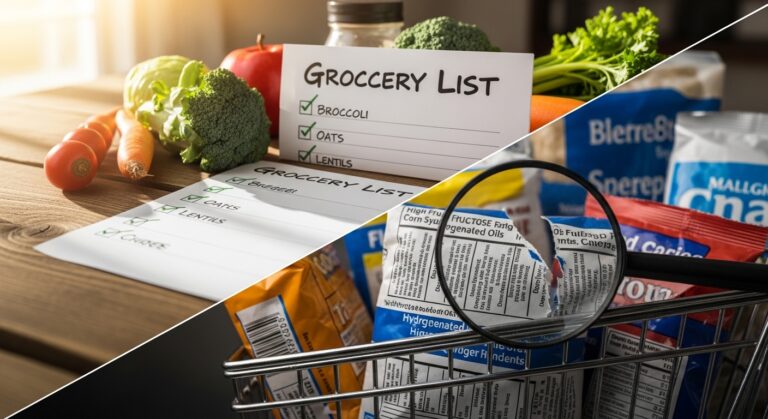
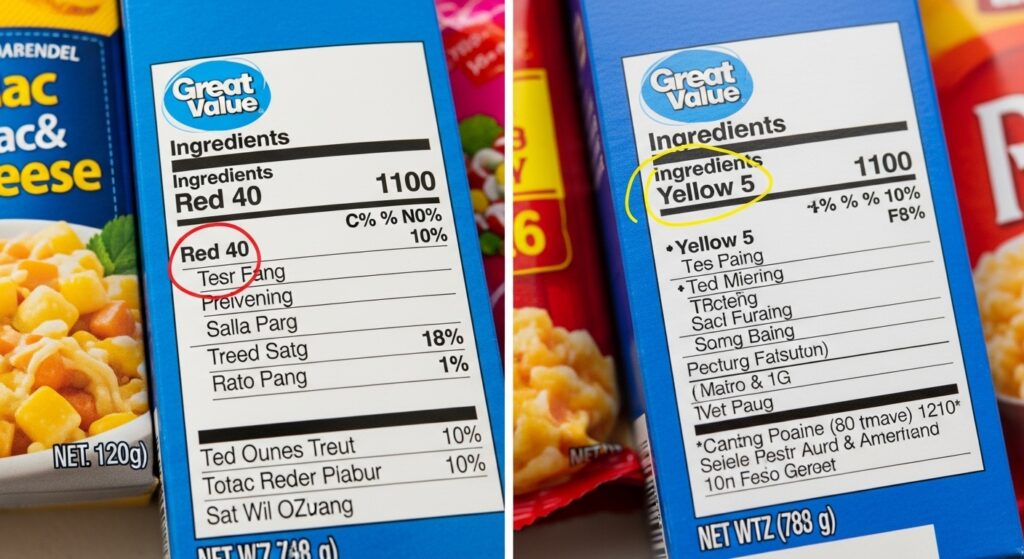
Red 40 appears at the very bottom of the ingredient list because FDA rules require ingredients to be listed in descending order by weight. Potent dyes are used in tiny amounts. That means Red 40 can be the last thing you read, in the smallest font, after a list of 30 other ingredients. The word “Lake” after a dye name (e.g., “Red 40 Lake”) means a water-insoluble version bound to aluminum — used in dry foods like baked goods and candy to prevent color bleeding.
Titanium dioxide is the trickiest one. Manufacturers are not legally required to list it by name on all U.S. food labels. It can legally appear as “Artificial Color” or “Color Added.” If your snack is unusually bright white — frosting, powdered candy, white sauces — there’s a reasonable chance titanium dioxide is involved even if you can’t find it by name.
Yellow 5 and Yellow 6 show up where you’d least expect them: pickles, cheese dips, mustards, salad dressings. Most consumers associate yellow dyes with candy. That’s exactly what makes savory foods the hidden exposure source.
BHA and BHT are often buried inside parenthetical sub-ingredient lists. You’ll see something like “vegetable shortening (contains BHT for freshness)” — a legal format that places the preservative inside a nested list where most people stop reading.
ADA and potassium bromate hide behind the phrase “dough conditioners” without specifying the exact chemical. “Bromated flour” may appear in the grain section of the ingredient list rather than being identified as a separate chemical additive.
All Names for These Additives on Labels
- Red 40: Allura Red AC, FD&C Red No. 40, Red 40 Lake, CI Food Red 17, INS No. 129, E129
- Titanium Dioxide: Titanium Dioxide, TiO2, CI 77891, Artificial Color, Color Added
- Yellow 5: Tartrazine, FD&C Yellow No. 5, E102
- Yellow 6: Sunset Yellow, FD&C Yellow No. 6, E110
- BHA: Butylated Hydroxyanisole, E320
- BHT: Butylated Hydroxytoluene, E321
- ADA: Azodicarbonamide, E927a
- Potassium Bromate: Potassium Bromate, Bromated Flour, E924
One more tactic to know: “No High Fructose Corn Syrup” or “Natural Flavors” on the front of a package says nothing about synthetic dyes. A product can use natural strawberry flavor and still use Red 40 for its color. These front-of-pack claims create a false impression of cleanliness that the ingredient list often contradicts.
Who Should Be Most Careful at Walmart?
Most adults process these additives without acute effects. But three groups face meaningfully higher risk.
⚠️ WARNING — At-Risk Groups The following groups should pay particular attention to additive labels on Walmart products:
Children (especially ages 5–18): According to the OEHHA, the geometric mean daily dye exposure for American children aged 5 to 18 is 0.22 mg/kg of body weight — higher per pound than adult exposure. Children with ADHD are especially vulnerable, as synthetic azo dyes like Red 40 have been shown in multiple studies to disrupt dopamine synthesis and worsen hyperactive and inattentive symptoms. According to the 2025 UNC Chapel Hill study, 28% of products marketed directly to children contain synthetic dyes, compared to 11% of the broader food supply.
Pregnant women: Animal studies show that in utero exposure to synthetic dyes produces long-term alterations in brain chemistry — including at doses the FDA previously classified as having no observable adverse effects.
People with aspirin or NSAID sensitivity: Yellow 5 (Tartrazine) is firmly associated with cross-reactive allergic responses in individuals sensitive to aspirin. It appears in savory items like cheese dips and taco shells — products where a consumer managing sensitivity would not typically look for a dye.
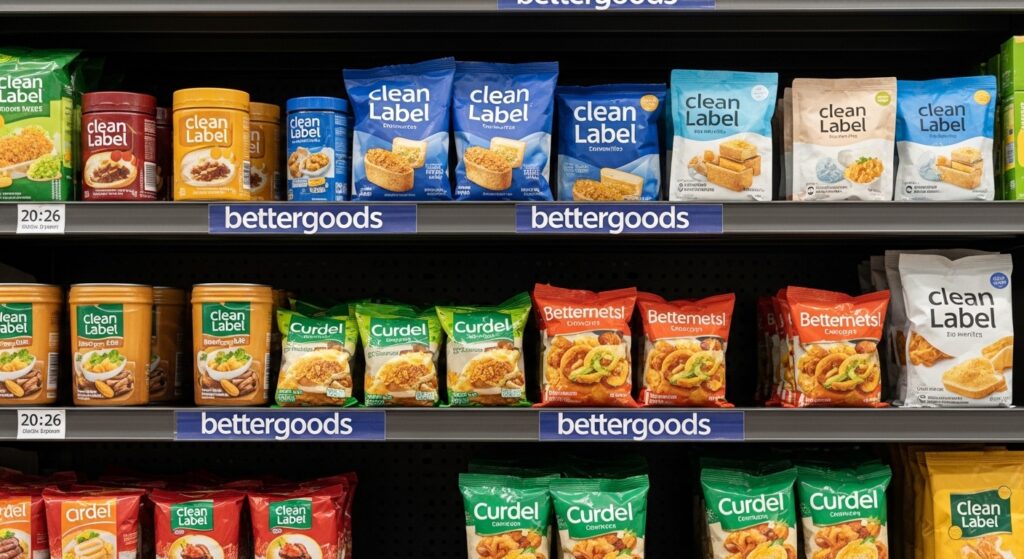
Which Walmart Snacks Are Actually Clean?
These products have been verified as free from the primary targeted additives: synthetic dyes, BHA/BHT, ADA, potassium bromate, and titanium dioxide.
bettergoods Cassava Flour Hatch Chile Tortilla Chips — Free from artificial dyes and synthetic preservatives; fried in avocado oil with cassava flour as the base. One of the cleaner chip options at any price point.
bettergoods Organic Fruit Snacks (Mixed Berry) — Uses natural fruit juices for color instead of Red 40 or Red 3. This matters because conventional fruit gummies are one of the highest-dye product categories for children.
bettergoods Italian Wood-Fired Mushroom and Truffle Pizza — Free from ADA, potassium bromate, and other targeted dough conditioners. A verified clean option in the frozen pizza category, which is otherwise heavily reliant on industrial bread chemistry.
Mary’s Gone Crackers Superseed Everything Crackers — Certified organic, vegan, and free from BHA, BHT, and synthetic additives. Built on a whole grain and seed base. Available in the natural/organic section at most Walmart locations.
IQBAR Clean Plant Protein Bars — Formulated without artificial sweeteners or synthetic dyes. High fiber, plant protein base.
Edy’s Strawberry Ice Cream — Achieves its pink color using beet juice rather than Red 3 or Red 40. A direct clean swap for the conventional strawberry dairy products that still use synthetic dyes.
Popsicle Brand Fruit Pops — Reformulated to use natural beet juice for red and pink coloring, replacing the synthetic lakes used in the previous formulation.
1st Phorm Protein Sticks — Grass-fed beef and pork, preserved with sea salt and spices. Available nationally and online.
What’s Changed at Walmart Between 2024 and 2026?
April 22, 2025 — FDA/HHS Phase-Out Announcement The FDA and Department of Health and Human Services officially announced a national initiative to eliminate petroleum-based synthetic dyes from the U.S. food supply by December 31, 2026. Authorization for Citrus Red No. 2 and Orange B was revoked immediately. Six remaining dyes — Red 40, Yellow 5, Yellow 6, Blue 1, Blue 2, and Green 3 — were placed on a hard phase-out timeline.
June 25, 2025 — UNC Chapel Hill Study Published A study of 39,763 U.S. grocery products confirmed that 20% of packaged foods contain synthetic dyes. The study drew wide media coverage for its finding that dye-containing foods average 141% more sugar than dye-free products — reframing the dye debate as a broader ultra-processed food issue.
September 11, 2025 — EU Titanium Dioxide Ruling The Court of Justice of the European Union revoked the classification of powdered titanium dioxide as a Category 2 suspected inhalation carcinogen. Critically, this ruling did not overturn the EU’s ban on titanium dioxide as a food additive — the ingestion ban remains in place.
October 1, 2025 — Walmart’s “Great Reformulation” Announcement Walmart U.S. CEO John Furner publicly committed to removing 11 synthetic dyes and 30 additional additives — including titanium dioxide, ADA, BHA, and BHT — from all private brands (Great Value, Marketside, bettergoods) by January 2027.
January 14, 2026 — FDA Supplement Recall The FDA announced a recall of Live It Up Super Greens supplement powder following a Salmonella outbreak across 21 states and 12 hospitalizations — a reminder that “clean eating” marketing does not guarantee safety in the supplement and powdered product categories.
huhuly Verdict
Risk Level: Medium (transitional — dropping as 2027 deadline approaches)
Found In: Cereals, cheese dips, mustard sauces, frozen baked goods, frostings, ice cream, crackers
Label Names: Red 40, Yellow 5, Yellow 6, Titanium Dioxide, BHA, BHT, Azodicarbonamide, Bromated Flour, Artificial Color
Our Take: Walmart is genuinely mid-transition. The bettergoods line is largely clean right now. The Great Value line is inconsistent — some SKUs have already been reformulated, others haven’t. Until January 2027, the only reliable move is to read the ingredient list on the specific unit in your cart. Front-of-package claims won’t tell you what you need to know.
FAQ
Does Walmart’s Great Value brand still use Red 40 and Titanium Dioxide?
Yes, some Great Value products still contain Red 40 and titanium dioxide as of March 2026. Walmart committed to removing these additives from all private brands by January 2027, but the reformulation is rolling out product by product throughout 2026. Specific items verified to still contain these additives include Great Value Salsa Con Queso (Yellow 5, Yellow 6), Great Value Cocktail Sauce (Red 40, Yellow 6), and Great Value Original Macaroni & Cheese (Titanium Dioxide). Check the label on the physical unit you’re buying — not the product listing online, which may not reflect the current formula.
What are the best healthy snacks to buy at Walmart for weight loss?
The bettergoods line is the most reliable starting point at Walmart for clean, lower-additive snacking. Specific options with strong nutritional profiles include bettergoods Cassava Flour Hatch Chile Tortilla Chips (fried in avocado oil, no synthetic dyes or preservatives), Mary’s Gone Crackers Superseed Everything Crackers (certified organic, high fiber, no BHA or BHT), and IQBAR Clean Plant Protein Bars (plant protein, no artificial sweeteners). For weight management specifically, also check that the snack avoids added sugars — the UNC Chapel Hill study found that dye-containing products average 141% more sugar than dye-free ones.
Which food dyes is the FDA banning in 2026?
On April 22, 2025, the FDA announced plans to phase out six petroleum-based synthetic dyes from the entire U.S. food supply by December 31, 2026: Red 40, Yellow 5, Yellow 6, Blue 1, Blue 2, and Green 3. Authorization for Citrus Red No. 2 and Orange B was revoked immediately on that date. Red 3 (FD&C Red No. 3) had its authorization revoked earlier in the same regulatory cycle. These actions are part of the HHS “Make America Healthy Again” initiative.
Are Walmart’s bettergoods products actually clean label?
Largely yes — bettergoods was designed from the start to exclude the additives that Walmart’s conventional lines are still transitioning away from. Unlike Great Value, bettergoods was not built on an existing inventory of products that need to be reformulated. That said, “clean label” is not an FDA-regulated term, and bettergoods products are not uniformly certified organic. The specific products verified as free from synthetic dyes, BHA, BHT, ADA, and titanium dioxide in this article are reliable choices. For any product not listed here, read the ingredient panel directly.
How can you identify hidden artificial food colors on a Walmart ingredient label?
Start at the bottom of the ingredient list — dyes appear there because they’re used in small amounts, and FDA rules require ingredients to be listed in descending order by weight. Look for any of these terms: Allura Red AC, FD&C Red No. 40, Tartrazine, Sunset Yellow, or any phrase containing “Lake” (a water-insoluble dye form). For titanium dioxide specifically, the words “Artificial Color” or “Color Added” may appear instead of the chemical name. If the front of the package says “Natural Flavors,” that says nothing about the color — a product can use natural flavor and still use synthetic dyes.
Three Things to Do This Week
Walmart’s January 2027 deadline is real, and it will change a lot of what’s on those shelves. But it hasn’t happened yet.
Here’s what the research tells us right now. The bettergoods line is largely clean and available in most Walmart stores today. The Great Value line is a rolling reformulation — some SKUs are already fixed, others aren’t, and you can’t tell from the front of the package. Reading the ingredient list on the specific unit in your cart is the only reliable method.
Today’s action: next time you pick up a Great Value snack, flip it over and scan for Red 40, Yellow 5, Yellow 6, Titanium Dioxide, BHA, BHT, and Azodicarbonamide. That 15-second habit will do more than any front-of-package promise.
If you want to stay current as Walmart’s reformulations roll out through 2027, subscribe to the huhuly newsletter. We track label changes as they happen.
Reviewed by the huhuly Editorial Team huhuly’s food transparency team reviews ingredient labels, monitors FDA regulatory updates, and tracks changes in U.S. food manufacturing. All claims are verified against official brand ingredient lists and regulatory databases before publication. Last updated: March 2026 | Fact-checked: Yes | Sources: 20+ cited
This article is for informational purposes only and does not constitute medical advice. Consult your healthcare provider before making dietary changes based on this information.
Cereal No Artificial Dye: 10 Safe Picks 2026
More in Clean Eating
You might also find these useful