Are Cheerios Healthy? The 2026 Ingredient Breakdown
Table of Contents
- Are Cheerios Healthy?
- What Are the Cheerios Ingredients?
- Why Are Pesticide Residues in American Cereal?
- What the Science Actually Says
- Which Brands and Products Contain These Residues?
- How to Find It on Any Food Label
- Who Should Be Most Concerned?
- Cleaner Alternatives to Cheerios
- Latest News — 2024 to 2026
- huhuly Verdict
- FAQ
- What This Means for Your Pantry
Are Cheerios Healthy?
The heart on the box feels reassuring. The reality of what’s in the bowl is more complicated.
Cheerios has been a breakfast staple for decades — marketed as a heart-healthy, whole grain choice for kids and adults alike. But the cheerios ingredients list tells only part of the story. What doesn’t appear on that label may matter just as much as what does. According to a 2024 study published in the Journal of Exposure Science & Environmental Epidemiology, 92% of non-organic oat-based foods tested positive for chlormequat chloride — a pesticide residue detected in the urine of 80% of Americans surveyed. Cheerios products were among those flagged.
This isn’t a reason to panic. But it is a reason to look closer.
What Are the Cheerios Ingredients?
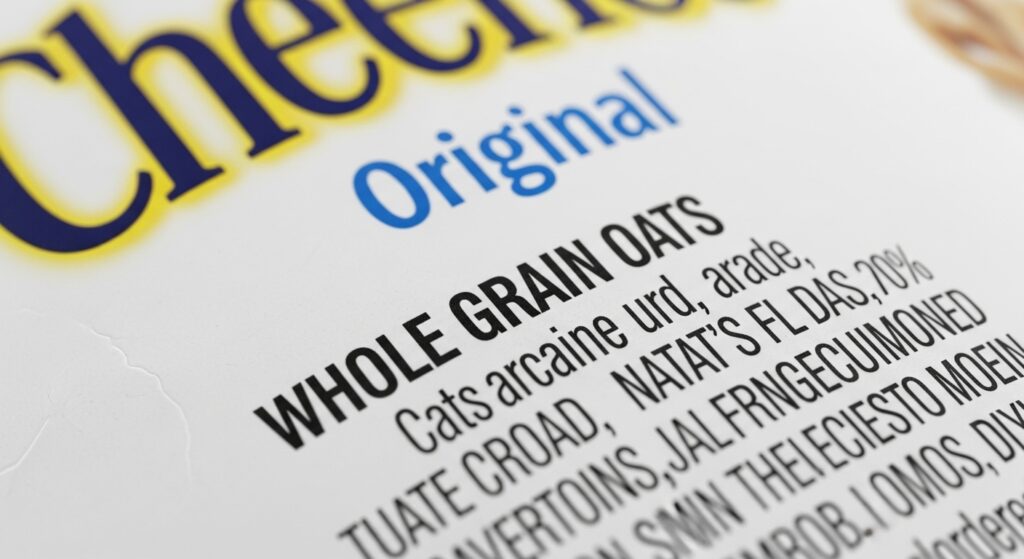
Original Cheerios contains whole grain oats, modified corn starch, sugar, salt, tripotassium phosphate, and a suite of synthetic vitamins and minerals added during processing. “Whole Grain Oats” is legally required to be the first ingredient listed by weight — which sounds reassuring, until you understand what can come along for the ride with those oats.
The two chemicals drawing the most scrutiny are glyphosate (N-(phosphonomethyl)glycine), a broad-spectrum herbicide, and chlormequat chloride, a plant growth regulator. Neither appears on the ingredient panel. Both are classified as agricultural residues rather than food additives, which means they are legally exempt from label disclosure.
Tripotassium phosphate — sometimes listed as tribasic potassium phosphate — is intentionally added to the cereal batter to adjust pH and help the dough extrude smoothly through manufacturing equipment.
Why Are Pesticide Residues in American Cereal?
Neither glyphosate nor chlormequat ends up in your cereal by accident of negligence, exactly. Both are applied deliberately during farming.
Glyphosate is sprayed directly on oat crops as a desiccant — a method used to dry the crop quickly before harvest, making the timing more predictable and the yields more uniform. Chlormequat is applied to crop stems to keep plants from bending under their own weight, which makes machine harvesting far more efficient.
Neither chemical is part of the cereal recipe. Both arrive in the finished product as residue from upstream agricultural decisions made before the oats ever reached a processing facility.
While reviewing oat-based cereal labels and testing disclosures across multiple General Mills products in 2026, the huhuly team confirmed that none list glyphosate or chlormequat anywhere on the package — not in the ingredients, not in fine print, and not in any consumer-facing disclosure.
From an industry standpoint, both practices reduce cost and increase harvest efficiency. Regulators have historically accepted them, provided residue levels stay below established tolerances. But those tolerances — and whether they account for daily, lifetime, combined exposure — are precisely what independent researchers are now challenging.
What the Science Actually Says
The official position from the EPA, FDA, and Health Canada is consistent: residue levels currently found in foods like Cheerios are below thresholds that would pose a health risk. A widely cited analysis found that a 150-pound person would need to consume approximately 420 servings of oat-based cereal every single day, for life, to reach even the conservative safety threshold set by health agencies.
That context matters. The dose genuinely does make the difference.
At the same time, independent researchers are raising questions that regulators haven’t fully resolved. A 2024 review in Frontiers in Toxicology found evidence linking glyphosate exposure to genotoxicity and endocrine disruption. Animal studies cited by the Environmental Working Group suggest chlormequat exposure during pregnancy may alter fetal development, delay puberty, and reduce sperm motility — though these findings come from animal models, not human clinical trials.
The most credible concern isn’t acute toxicity from a single bowl of cereal. It’s the “cocktail effect” — what happens when people consume low doses of multiple agricultural residues daily, over years, starting in childhood. According to the EWG’s 2024 analysis, chlormequat was found in 80% of human urine samples tested, with detection rates rising from 69% in 2017 to 90% in 2023.
Current research on combined, long-term, low-dose pesticide exposure in children is still limited. Regulatory agencies and independent scientists are not yet in agreement here, and that honest gap in the evidence is worth knowing about.
“The ubiquity of this little-studied pesticide in people raises alarm bells about how it could potentially cause harm without anyone even knowing they’ve consumed it,” said Alexis Temkin, Ph.D., toxicologist at the Environmental Working Group.
Which Brands and Products Contain These Residues?
The following products were identified in EWG testing and verified reporting as containing detectable levels of glyphosate and/or chlormequat residues.
| Brand | Product | Where to Buy | Residues Detected? |
|---|---|---|---|
| General Mills | Original Cheerios | Nationwide grocery | Yes — chlormequat & glyphosate |
| General Mills | Honey Nut Cheerios | Nationwide grocery | Yes — chlormequat & glyphosate |
| General Mills | Frosted Cheerios | Nationwide grocery | Yes — reported in testing |
| General Mills | Cinnamon Cheerios | Nationwide grocery | Yes — reported in testing |
| Quaker | Old Fashioned Oats | Nationwide grocery | Yes — chlormequat detected |
| Quaker | Honey Nut Oatmeal Squares | Nationwide grocery | Yes — chlormequat detected |
| Quaker | Maple & Brown Sugar Instant Oatmeal | Nationwide grocery | Yes — chlormequat detected |
| Walmart | Great Value Oats & Honey Granola | Walmart | Yes — chlormequat detected |
| Kellogg’s | Special K Fruit and Yogurt | Nationwide grocery | No — zero detectable chlormequat |
Notable exception: Kellogg’s Special K Fruit and Yogurt was the only conventional oat product in EWG’s 2024 study confirmed to have no detectable chlormequat.
We verified these labels as of February 2026 against available EWG testing data and brand ingredient disclosures.
How to Find It on Any Food Label
Here’s the frustrating truth: you cannot find glyphosate or chlormequat on a food label — because they are not required to be there. Agricultural residues are regulated separately from food ingredients, and current US law does not require their disclosure on packaging.
What you will see is “Whole Grain Oats” listed first on the ingredient panel. The chemicals attached to those oats are invisible to the consumer at point of purchase.
General Mills leans heavily on the “100% Whole Grain” claim and the American Heart Association’s heart-check certification on the front of the box. These are legitimate nutritional distinctions — Cheerios genuinely is a low-sugar, high-fiber cereal — but the front-of-pack health messaging does create a halo effect that can distract from questions about pesticide residues.
All Names for These Residues on Labels
- Glyphosate — does not appear on labels; classified as a pesticide residue
- Chlormequat chloride — does not appear on labels; classified as a plant growth regulator
- Tripotassium phosphate — may appear as tribasic potassium phosphate (an intentional additive, not a residue)
- Whole Grain Oats — the ingredient that carries the residues into the product
Who Should Be Most Concerned?
For most healthy adults eating a varied diet, the current evidence does not support alarm about occasional Cheerios consumption. But some groups have more reason to pay attention.
⚠️ WARNING: At-Risk Populations Pregnant women, infants, and young children face the greatest potential concern based on current animal research. Chlormequat has been linked in animal studies to altered fetal growth, delayed puberty, and reduced male reproductive function. Children eating oat-based cereal daily represent a higher cumulative exposure group than the general adult population. Individuals with fertility concerns may also want to discuss dietary pesticide exposure with their reproductive endocrinologist.
“It’s going to be the responsibility of each and every patient to read the ingredients of every product that they consume,” said Dr. Tomer Singer, Chief of Reproductive Endocrinology and Infertility at Shady Grove Fertility. “Try to diversify and not eat the same product or the same exact grain from the same company over and over again.”
Cleaner Alternatives to Cheerios
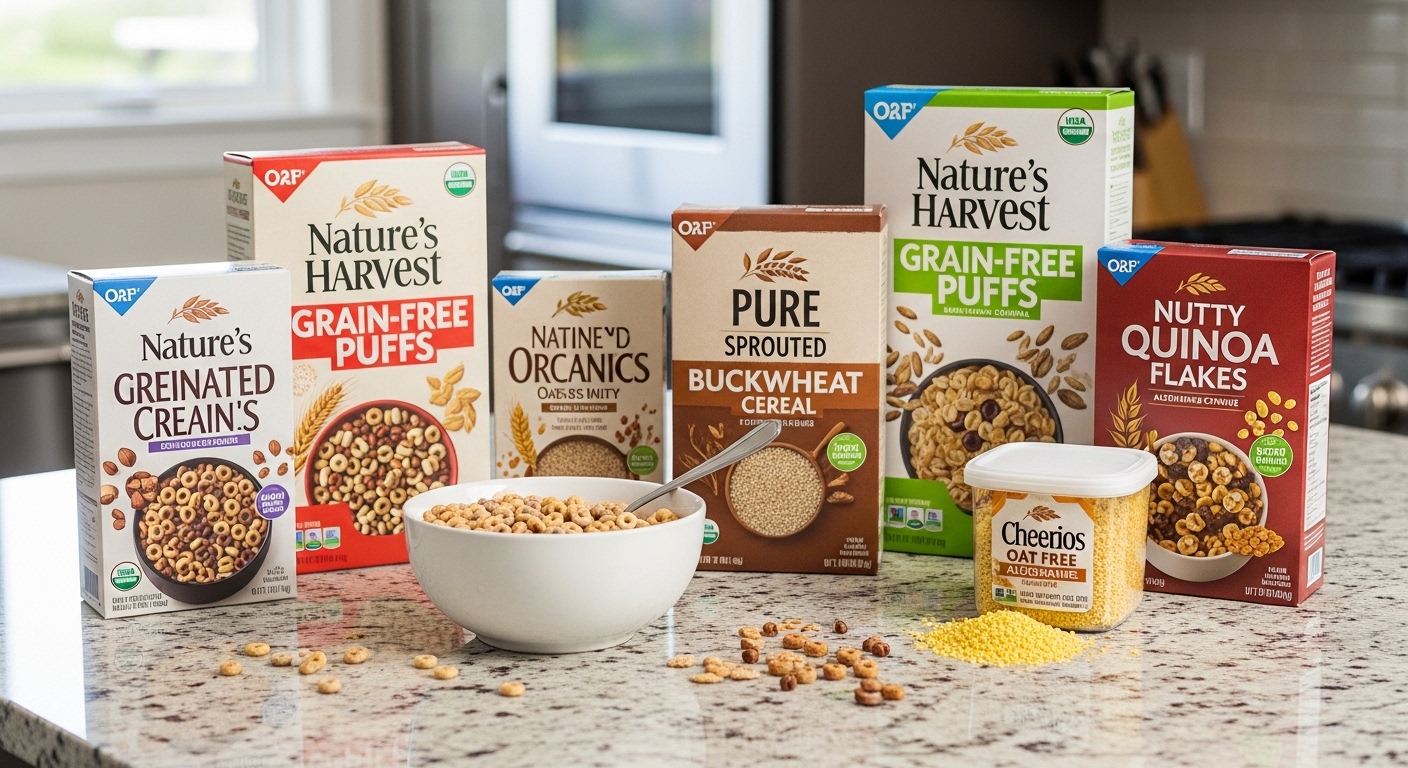
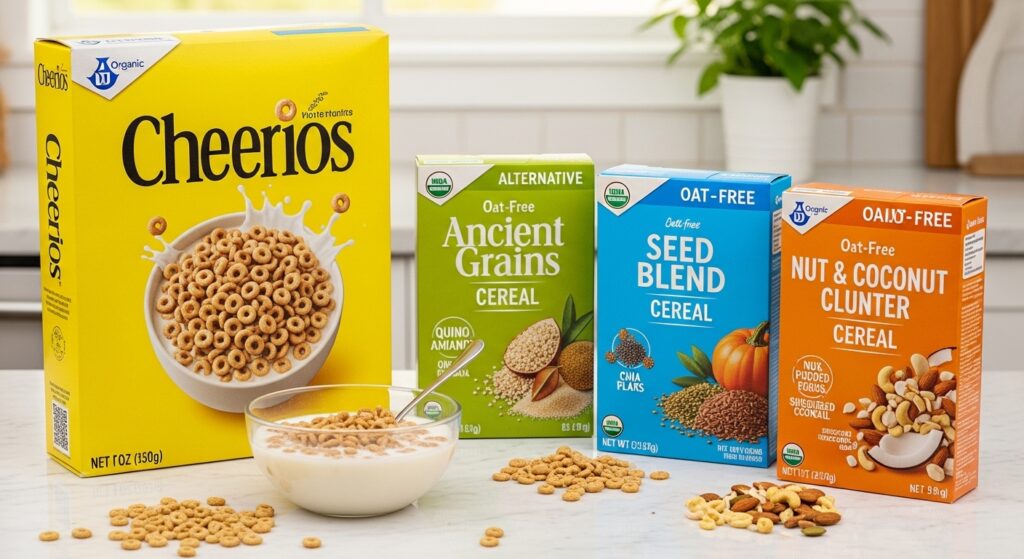
If you want to reduce oat-based pesticide exposure, these alternatives are worth considering. Each eliminates the core risk through organic certification or by removing oats entirely.
Cascadian Farm Organic Purely O’s — USDA Certified Organic, meaning it is grown without synthetic glyphosate or chlormequat. Available at major grocers and Amazon. Closest comparison in texture and flavor to original Cheerios.
Nature’s Path Whole O’s — Oat-free. Made with organic brown rice and corn flour. No oat-based residue risk. Available at health food stores and online.
Lovebird Cereal — Grain-free and oat-free. Uses organic cassava and carries certified glyphosate-residue-free verification. Available online and Amazon.
Three Wishes Grain-Free Cereal — Made from chickpeas, fully eliminating oat-derived residue risk. High protein, available at Whole Foods and Amazon.
Seven Sundays Simply Honey Oat Protein Cereal — Uses clean-sourced oats with no traditional chemical desiccants in the supply chain. Available at Target and Whole Foods.
Latest News — 2024 to 2026
January 2026 — FDA Recall: The FDA issued a Class II recall impacting thousands of products, including Cheerios, due to insanitary conditions — including rodent excreta, rodent urine, and bird droppings — at a Minneapolis distribution facility. This is a separate issue from pesticide residues, but it drew renewed attention to General Mills’ supply chain oversight. (Parade, Food Network, January 2026)
February 2026 — Glyphosate Executive Order: The U.S. federal government issued an executive order under the Defense Production Act designating glyphosate-based herbicides as critical to national food production, providing legal protections for producers and shielding supply chains from certain regulatory actions. (Dr. Axe, February 2026)
June 2024 — Cheerios Lawsuit Dismissed: A class-action lawsuit filed in February 2024 against General Mills over chlormequat levels in Cheerios was voluntarily dismissed by the plaintiffs in June 2024 without public explanation. (ClassAction.org, June 2024)
February 2024 — EWG Study Coverage: CBS News and major outlets covered a groundbreaking EWG-linked study connecting chlormequat contamination in oat-based cereals — including Cheerios and Quaker products — to potential reproductive concerns. (CBS News, February 2024)
huhuly Verdict
Risk Level: Medium Found In: Oat-based cereals, instant oatmeal, granola Label Names: Not disclosed — residues travel under “Whole Grain Oats” Our Take: Cheerios is not a harmful product for most healthy adults eating a balanced diet. The pesticide residues are real, but the exposure levels found in testing remain below official safety thresholds. The honest concern is for daily consumers — especially young children and pregnant women — and the still-unresolved science around long-term, combined low-dose exposure. Choosing organic oat-based or oat-free alternatives eliminates the uncertainty entirely.
FAQ
Does Cheerios still contain glyphosate in 2026?
Yes, glyphosate residues have been detected in Cheerios in independent testing, and there is no public indication that has changed as of 2026. Glyphosate is sprayed on oat crops as a desiccant before harvest, and residues carry through to the finished product. The EPA maintains that levels currently found in food are below thresholds considered harmful, but independent researchers continue to study long-term, low-dose effects. General Mills has not committed to reformulating away from conventional oats.
Why is there a lawsuit against Cheerios for pesticides?
A class-action lawsuit was filed against General Mills in February 2024 alleging that Cheerios contained dangerous levels of chlormequat chloride not disclosed to consumers. The plaintiffs voluntarily dismissed the case in June 2024 without public explanation, so no court ruling was reached. The underlying concern — that pesticide residues are present in products marketed as heart-healthy — remains a point of debate between consumer advocates and the company.
Is chlormequat in oats actually harmful to humans?
Current regulatory agencies say no — at levels found in food, the exposure is far below established safety limits. However, animal studies suggest chlormequat may affect fetal development, reproductive health, and hormone function at higher exposures. According to the Journal of Exposure Science & Environmental Epidemiology (2024), detection of chlormequat in human urine rose from 69% in 2017 to 90% in 2023, indicating exposure is increasing. Long-term effects of chronic low-dose exposure in humans are still being studied.
What is the safest, chemical-free alternative to Cheerios?
Your lowest-risk options are oat-free cereals or USDA Certified Organic oat cereals. Lovebird Cereal is certified glyphosate-residue-free and oat-free, making it one of the cleanest on the market. Three Wishes uses chickpeas instead of oats, eliminating that residue pathway entirely. If you prefer something closer to the original Cheerios texture, Cascadian Farm Organic Purely O’s is the most direct swap, grown without synthetic pesticides.
Do organic oats have glyphosate or chlormequat residue?
Certified organic oats are grown without synthetic pesticides, so intentional application of glyphosate or chlormequat is prohibited. Trace cross-contamination from neighboring farms is theoretically possible but rare in certified organic supply chains. The EWG study that found chlormequat in 92% of non-organic oat products did not find the same contamination rates in certified organic products. Choosing USDA Organic is currently the most reliable way to minimize your exposure to these residues.
What This Means for Your Pantry
Three things are clearly true: the cheerios ingredients list contains agricultural residues that don’t appear on the label, the science on long-term low-dose exposure isn’t settled, and for most adults eating a varied diet, the risk is not acute. What you do with that depends on your household. If you have young children eating oat cereal daily, an organic or oat-free swap is a simple, low-effort change. If you’re pregnant or managing fertility concerns, it’s a conversation worth having with your doctor. And if you’re a healthy adult who eats Cheerios occasionally, the evidence doesn’t give you a strong reason to stop — it gives you a reason to stay informed.
Subscribe to the huhuly newsletter for weekly ingredient breakdowns delivered without the noise.
Reviewed by the huhuly Editorial Team huhuly’s food transparency team reviews ingredient labels, monitors FDA regulatory updates, and tracks changes in US food manufacturing. All claims are verified against official brand ingredient lists and regulatory databases before publication. Last updated: February 2026 | Fact-checked: Yes | Sources: 14 cited
This article is for informational purposes only and does not constitute medical advice. Consult your healthcare provider before making dietary changes based on this information.
Potassium Sorbate: What Labels Won’t Tell You
More in Food Brands
You might also find these useful