Are Cheerios Healthy? What the Box Doesn’t Tell You
Are Cheerios Healthy?
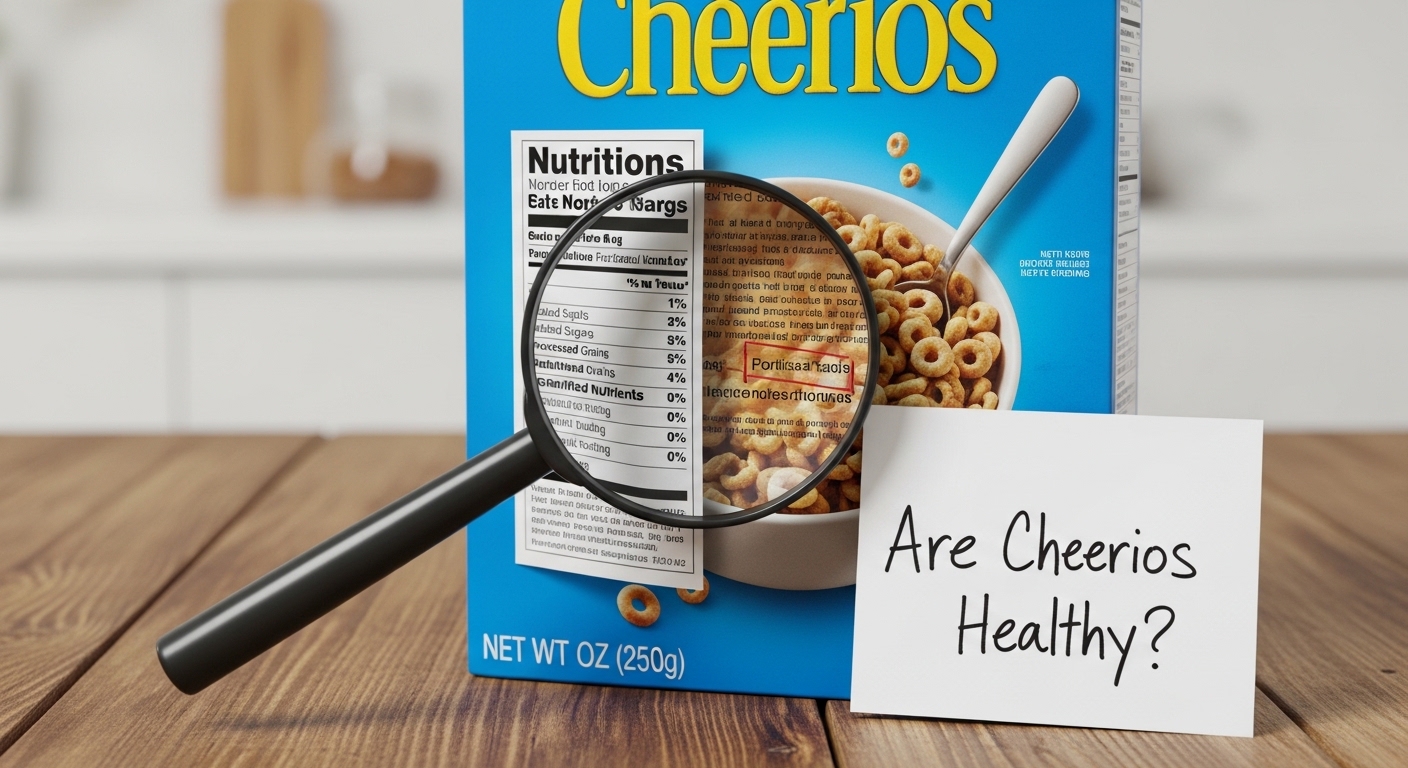
Fifty million Americans start their morning with a bowl of Cheerios — and most of them genuinely believe it is one of the healthiest choices they can make. The heart-check symbol on the box, the whole grain oats, the “good source of fiber” claim — it all adds up to a powerful health story. But in 2026, that story has become considerably more complicated.
Original Cheerios contains only 1 gram of added sugar per serving and a genuinely solid fiber profile from whole grain oats. That part is real. What is also real: independent lab tests have detected a growth-regulating pesticide called chlormequat in Cheerios, a herbicide residue (glyphosate) in multiple varieties, and a highly alkaline industrial processing aid — Tripotassium Phosphate — that your body absorbs at rates approaching 100%. The question “are Cheerios healthy” no longer has a simple yes or no answer. Here is what the research actually shows.
Table of Contents
- Are Cheerios Healthy?
- What Is Actually in a Bowl of Cheerios?
- Why Does Cheerios Contain Tripotassium Phosphate?
- What the Science Actually Says
- Which Cheerios Varieties and Competing Brands Contain These Compounds?
- How to Find These Ingredients on Any Food Label
- Who Should Be Most Concerned?
- Cleaner Alternatives to Cheerios
- Latest News: 2024–2026
- huhuly Verdict
- FAQ
- What You Can Do Today
What Is Actually in a Bowl of Cheerios?
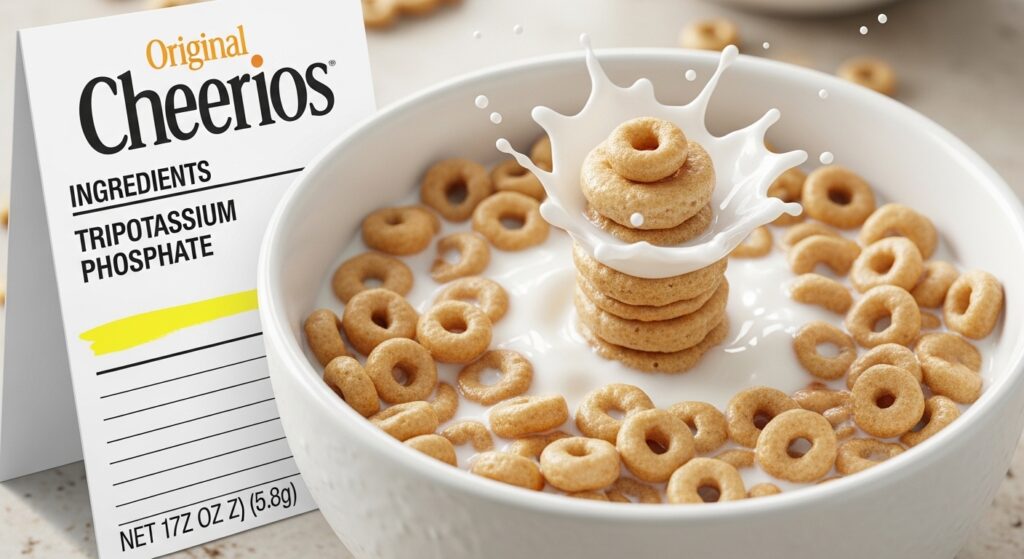
Original Cheerios lists whole grain oats as its primary ingredient, followed by modified corn starch, sugar, oat bran, maltodextrin, calcium carbonate, salt, disodium phosphate, and Tripotassium Phosphate (TKP) — followed by a fortified vitamin and mineral blend.
Tripotassium Phosphate is an inorganic potassium salt with a chemical formula of K₃PO₄. In a 1% aqueous solution, it produces a strongly basic pH of 11.5 to 12.5. It is not a food in any natural sense — it is an industrial processing agent with four functions inside the cereal extruder:
- It accelerates gelatinization of the oat dough so the o-shape forms correctly
- It drives the Maillard reaction that creates the cereal’s golden color and roasted flavor
- It prevents the dough from sticking to machinery during high-heat processing
- It acts as a binder to keep all ingredients evenly distributed throughout each batch
Beyond TKP, the oats themselves carry two additional residues that do not appear on the ingredient list because they are not intentional additions — they are agricultural byproducts. Chlormequat chloride is a systemic plant growth regulator sprayed on oat crops to shorten and stiffen stalks before harvest. Glyphosate is a broad-spectrum herbicide applied to oat fields as a pre-harvest desiccant. Both penetrate the grain tissue systemically and survive the high-heat extrusion process intact.
Why Does Cheerios Contain Tripotassium Phosphate?
TKP is not in Cheerios to improve nutrition. It is there to make industrial-scale cereal manufacturing economically viable.
Producing roughly 1.8 million pounds of Cheerios every single day requires that oat dough flow predictably through automated extruders at high temperatures without sticking, clumping, or browning unevenly. TKP solves all three problems simultaneously. It is cheaper than reformulating the process, and it has held GRAS (Generally Recognized as Safe) status under FDA regulation 21 CFR 182.6285 since the 1970s — meaning General Mills was never legally required to submit safety data for independent federal review. The GRAS framework essentially allowed the company to self-certify its own ingredient.
That framework is now under formal challenge. In January 2026, the FDA’s Human Foods Program published its priority deliverables and proposed a new rule requiring mandatory submission of formal safety notices for all GRAS substances — closing the self-certification loophole for the first time in decades.
While reviewing Cheerios ingredient labels across all seven product varieties in early 2026, the huhuly team confirmed that TKP appears in Original, Honey Nut, Multi Grain, and Apple Cinnamon Cheerios. It does not appear to have been removed from any current formulation.
What the Science Actually Says
This is where the conversation gets more nuanced — and more important.
On Tripotassium Phosphate: The key issue is not phosphorus itself, which is an essential mineral. The issue is the form and bioavailability. Organic phosphorus from whole foods like oats, beans, and nuts is only partially absorbed — roughly 30% to 60% reaches your bloodstream because it is bound to proteins. Inorganic phosphorus from additives like TKP is highly soluble and unbound. According to peer-reviewed literature published in the American Journal of Clinical Nutrition, inorganic phosphate additives are absorbed at rates approaching 90% to 100%, causing unnatural spikes in serum phosphate that organic food phosphorus simply does not produce.
Research published in PMC (NIH) links chronically elevated dietary phosphate to vascular calcification, elevated cardiovascular risk, and impaired glucose metabolism — even in people with healthy kidney function. These findings apply specifically to inorganic phosphate additives, not to the phosphorus that naturally occurs in whole oats. Current research on long-term outcomes from food-additive phosphate at typical dietary doses is still limited, and it is important not to overstate what the data definitively proves at this stage.
On Chlormequat: A landmark 2024 biomonitoring study by Temkin et al., published in the Journal of Exposure Science and Environmental Epidemiology, detected chlormequat in 80% of human urine samples tested — 77 out of 96 people. Concentrations spiked significantly in the 2023 cohort. Animal models show that chlormequat exposure during gestation disrupts fetal growth and skeletal development. Whether these animal findings translate to the same effects in humans at typical dietary exposure levels is not yet established.
On Glyphosate: The WHO’s IARC classifies glyphosate as a Group 2A probable human carcinogen. The EPA maintains current dietary residue levels fall below acute toxicity thresholds. The honest answer is that scientific and regulatory bodies genuinely disagree, and the long-term epidemiological picture is still developing. According to the EWG’s 2023 report, while average glyphosate levels in oat products had declined from 2018 peaks, roughly 30% of tested products still exceeded independent health benchmarks.
On Heavy Metals: Third-party laboratory testing coordinated by Lead Safe Mama in 2024 and 2025 confirmed the presence of lead, cadmium, and arsenic in commercial batches of Cheerios. According to the CDC and the American Academy of Pediatrics, there is no established safe blood lead level for children.
Which Cheerios Varieties and Competing Brands Contain These Compounds?
We cross-referenced product ingredient labels available at Walmart, Target, and Amazon alongside EWG’s 2023 and 2024 test data to compile the following table.
| Brand / Manufacturer | Product Name | Primary Issue Verified | Verification Source |
|---|---|---|---|
| General Mills | Original Cheerios | Contains TKP; chlormequat detected | Ingredient label; EWG 2024 Study |
| General Mills | Honey Nut Cheerios | Contains TKP; glyphosate detected (833 ppb); 12g added sugar | Ingredient label; EWG 2023 Study |
| General Mills | Multi Grain Cheerios | Contains TKP | Ingredient label |
| General Mills | Apple Cinnamon Cheerios | Contains TKP | Ingredient label |
| General Mills | Chocolate Peanut Butter Cheerios | Glyphosate detected (400 ppb) | EWG 2023 Study |
| General Mills | Nature Valley Crunchy Granola Bars (Maple Brown Sugar) | Glyphosate detected (566 ppb) | EWG 2023 Study |
| General Mills | Nature Valley Baked Oat Bites | Glyphosate detected (389 ppb) | EWG 2023 Study |
| PepsiCo / Quaker | Old Fashioned Oats | Chlormequat detected | EWG 2024 Study |
| PepsiCo / Quaker | Oatmeal Squares | High chlormequat and glyphosate detected | EWG 2023/2024 Study |
| Hero Group | Beech-Nut Oatmeal Whole Grain Baby Cereal | Glyphosate and chlormequat traces detected | EWG 2023 Study |
| Kellogg’s | Special K Fruit & Yogurt | Non-detect for chlormequat (clean result) | EWG 2024 Study |
| Whole Foods Market | 365 Fruit & Nut Muesli | Non-detect for chlormequat (verified clean) | EWG 2024 Study |
We verified these labels as of April 2026. Note: WK Kellogg Co committed to phasing out glyphosate across its supply chains by end of 2025. General Mills has not made an equivalent commitment, stating instead that it is encouraging farmers to adopt alternative desiccation methods.
How to Find These Ingredients on Any Food Label
Tripotassium Phosphate is typically listed near the end of the ingredient list, just before the vitamin and mineral fortification blend. Its placement there signals its role as a processing aid rather than a core food ingredient.
Watch for all of these label names for TKP:
- Tripotassium phosphate (most common in the US)
- Potassium phosphate tribasic
- Tribasic potassium phosphate
- Phosphoric acid, tripotassium salt
- Tripotassium orthophosphate
- E-number: E340(iii) (found on imported products and European packaging)
The hidden phosphorus problem: Under current FDA regulations, manufacturers are not required to list the quantitative amount of phosphorus on the Nutrition Facts panel. This forces you to scan the ingredient list manually. Any word containing the root “phos” — pyrophosphate, polyphosphate, disodium phosphate, calcium phosphate — signals inorganic phosphorus addition with near-100% bioavailability.
Ingredient splitting on sweetened varieties: Honey Nut Cheerios lists “Sugar,” “Honey,” and “Brown Sugar Syrup” as separate ingredients. Splitting sweeteners this way pushes each one further down the list by weight. If they were combined as a single “Added Sweeteners” entry, sugar would rival whole grain oats as the primary ingredient by mass.
All Names for TKP on Labels
- Tripotassium phosphate
- Potassium phosphate tribasic
- Tribasic potassium phosphate
- Phosphoric acid, tripotassium salt
- Tripotassium orthophosphate
- E340(iii)
Who Should Be Most Concerned?
Most healthy adults eating Cheerios occasionally face a different risk profile than those below. But some groups face genuine, significant concern.
⚠️ WARNING — Chronic Kidney Disease Patients: If you have CKD or are on dialysis, avoid products containing any inorganic phosphate additive. Healthy kidneys filter excess phosphorus efficiently. Compromised kidneys cannot. According to the American Association of Kidney Patients, 80% of dialysis patients already require daily phosphate-lowering medication to manage exposure from standard diets. TKP-containing foods dramatically increase that burden and carry a real risk of hyperphosphatemia, vascular calcification, and fatal cardiovascular events.
Children and Infants face heightened exposure to chlormequat and heavy metals because their food-to-bodyweight ratio is much higher than adults — meaning proportional exposure to contaminants is mathematically magnified. Developmental windows in early childhood are particularly sensitive to endocrine-disrupting compounds, and animal models confirm chlormequat alters bone and cranial development in young mammals.
Pregnant women should be aware that animal studies show chlormequat can cross the placental barrier. Maternal glyphosate exposure in epidemiological studies correlates with shorter gestation periods and lower birth weights. Current research is still limited to animal and epidemiological data — but the precautionary case for switching to certified organic oat products during pregnancy is strong.
The general adult population is not off the hook either. According to a letter submitted to the FDA by the American Society of Nephrology in November 2025, phosphate additives now account for an estimated 12% to 50% of total daily phosphorus intake for average American consumers — adding an extra 500 to 1,000 mg per day that the body absorbs almost entirely.
Tree nut allergy sufferers: Honey Nut Cheerios contains natural almond flavor and explicitly lists almonds on the allergen warning. This presents an anaphylaxis risk that should not be overlooked despite the “nut” branding seeming familiar and innocuous.
Cleaner Alternatives to Cheerios
Switching to certified USDA Organic oats eliminates the chlormequat and glyphosate problem entirely — organic certification prohibits the use of synthetic pre-harvest desiccants and growth regulators. For TKP specifically, look for minimal ingredient lists with no words ending in “phosphate.”
| Brand | Product Name | Why It Is a Better Choice | Where to Find It |
|---|---|---|---|
| Cascadian Farm (General Mills) | Organic Purely O’s | USDA Organic; no TKP; no synthetic desiccants or growth regulators | Whole Foods, Target, major grocers |
| Back Roads Granola | Just Oats | Certified Glyphosate Residue Free by the Detox Project; organic; gluten-free | Direct-to-consumer, specialty health stores |
| Love Grown | Power O’s Original Cereal | Grain-free; made from navy, lentil, and garbanzo beans; zero added sugar; no inorganic phosphate | Sprouts, Whole Foods, online retailers |
| Nature’s Path | Heritage O’s | USDA Organic; ancient grain matrix (Kamut, spelt, quinoa); no synthetic preservatives | Whole Foods, Target, major grocers |
| Grandy Oats | Organic Coconola | Certified Glyphosate Residue Free; heavily audited supply chain | Specialty stores, online retailers |
| Barbara’s | Morning Oat Crunch | Non-GMO Project Verified; minimal processing; no inorganic phosphate texturizers | Whole Foods, regional health grocers |
| Whole Foods Market | 365 Fruit & Nut Muesli | Independently tested by EWG in 2024 and verified as a non-detect for chlormequat residues | Whole Foods Market |
Latest News: 2024–2026
January 29, 2026 — Multi-state recall for rodent contamination The FDA elevated a massive recall by Gold Star Distribution, Inc. to a Class II health hazard after inspectors found widespread evidence of rodent excreta, rodent urine, and bird droppings at a Minneapolis distribution facility. The recall affected nearly 2,000 household products — including Cheerios distributed across Minnesota, Indiana, and North Dakota. The FDA flagged risks of Salmonella and Leptospirosis infection from airborne particulates.
February 17, 2026 — California introduces AB 2034 to close the GRAS loophole California Assemblymember Dawn Addis introduced AB 2034, requiring food manufacturers to publicly disclose all post-1958 food additives to the state’s Department of Public Health. California would gain authority to ban additives used in EU-restricted products. This bill directly targets the self-certification system that keeps TKP in Cheerios without independent federal safety review.
February 2025 — FDA postpones updated “Healthy” label rule The FDA finalized a rule in December 2024 updating what foods can legally claim to be “healthy,” with strict new limits on added sugars. A presidential regulatory freeze extended the effective date to April 2025. Under the updated criteria, Honey Nut Cheerios — with 12 grams of added sugar per serving — is legally disqualified from carrying the “healthy” claim.
February 20, 2024 — Landmark chlormequat biomonitoring study published A peer-reviewed study by Temkin et al. in the Journal of Exposure Science and Environmental Epidemiology detected chlormequat in 80% of human urine samples tested between 2017 and 2023. The EWG simultaneously reported chlormequat in 92% of conventional oat-based grocery products tested, naming Cheerios and Quaker Oats specifically as primary vectors.
huhuly Verdict
Risk Level: Medium (Original) / Medium-High (Honey Nut and sweetened varieties)
Found In: Breakfast cereals, granola bars, oat-based snacks, baby cereals
Label Names: Tripotassium phosphate, E340(iii), potassium phosphate tribasic, tribasic potassium phosphate
Our Take: Original Cheerios is a real whole grain food with legitimate fiber benefits and low added sugar — and for most healthy adults, occasional consumption is not cause for serious concern. The honest issue is the combination of an industrial phosphate additive with near-100% bioavailability, agricultural residues (chlormequat and glyphosate) that are now detectable in most Americans’ bodies, and heavy metals confirmed in independent lab testing. Kidney patients, young children, and pregnant women have specific reasons to choose certified organic alternatives. Everyone else should simply know what is in the box.
FAQ
Are Cheerios heavily processed and full of chemicals?
Yes, Cheerios is technically an ultra-processed food — the whole grain oats are extruded through industrial machinery using a pH-modifying chemical additive (Tripotassium Phosphate) to shape, color, and texture the cereal at scale. That said, “heavily processed” does not automatically mean dangerous. The oat base provides real fiber and nutrition. The concerns center on specific additives and agricultural residues — particularly for vulnerable groups like kidney patients, young children, and pregnant women — rather than a blanket toxicity for all adults.
Do Honey Nut Cheerios have too much sugar to eat if you have diabetes or prediabetes?
Honey Nut Cheerios contains 12 grams of added sugar per serving, which is significant for blood sugar management. Under the FDA’s updated December 2024 “healthy” labeling rule, this level of added sugar legally disqualifies Honey Nut Cheerios from carrying the “healthy” claim. People managing diabetes or prediabetes would be better served by Original Cheerios, which contains only 1 gram of added sugar per serving, or by switching to an unsweetened certified organic oat cereal entirely. Consult your healthcare provider for guidance specific to your situation.
Do Cheerios really contain glyphosate (weed killer)?
Yes, multiple independent tests have confirmed glyphosate residues in several Cheerios varieties. According to EWG’s 2023 testing, Honey Nut Cheerios showed glyphosate levels of 833 parts per billion and Chocolate Peanut Butter Cheerios tested at 400 ppb. Glyphosate is applied to oat crops as a pre-harvest desiccant, and it persists through the high-heat manufacturing process. While the EPA maintains that levels in food fall below acute safety thresholds, the WHO’s IARC classifies glyphosate as a probable human carcinogen, and the debate remains unresolved in peer-reviewed literature.
Are Cheerios actually effective at lowering cholesterol?
The soluble fiber (beta-glucan) in whole grain oats has genuine, well-established research behind it for reducing LDL cholesterol. The FDA has permitted a heart health claim on oat products since 1997, and that underlying science has not changed. The recommended 3 grams of soluble beta-glucan per day — equivalent to roughly 1.5 cups of Cheerios — can meaningfully reduce LDL in the context of an otherwise low-fat diet. The cholesterol benefit is real. It does not, however, cancel out the concerns about TKP, pesticide residues, and heavy metals discussed elsewhere in this article.
Is it safe for children to eat Cheerios every day?
This is genuinely the most important question, and the most complicated. For most older children eating a varied diet, occasional Cheerios is unlikely to cause acute harm. The concern with daily consumption is cumulative: children have a higher food-to-bodyweight ratio than adults, magnifying their proportional exposure to chlormequat, glyphosate, and heavy metals per kilogram of body weight. Animal studies confirm that chlormequat affects bone and cranial development in young mammals. Lead Safe Mama’s 2024 independent testing confirmed lead, cadmium, and arsenic in commercial Cheerios batches. The CDC states there is no safe blood lead level for children. If you feed Cheerios to young children daily, switching to a certified organic alternative is a straightforward, low-cost change that eliminates most of the agrochemical risk.
What You Can Do Today
Cheerios is not poison, and this article is not asking you to panic. But three things are now clear from the 2024–2026 research: the industrial additive in your cereal box absorbs into your bloodstream at nearly 100%, the oats it is made from carry pesticide residues now detectable in 80% of Americans, and the label does not give you enough information to know the phosphorus load you are actually consuming.
If you are healthy and eat Cheerios occasionally, the risk is low. If you have kidney disease, are pregnant, or feed this to young children daily — the case for switching to a certified organic alternative is strong, immediate, and inexpensive. Look for “USDA Organic” and check the ingredient list for any word ending in “phosphate.”
Search the huhuly database to check the ingredients in your specific cereal, and subscribe to our newsletter for verified ingredient alerts as the FDA’s GRAS reform moves forward in 2026.
Reviewed by the huhuly Editorial Team huhuly’s food transparency team reviews ingredient labels, monitors FDA regulatory updates, and tracks changes in US food manufacturing. All claims are verified against official brand ingredient lists and regulatory databases before publication. Last updated: April 2026 | Fact-checked: Yes | Sources: 14 cited
This article is for informational purposes only and does not constitute medical advice. Consult your healthcare provider before making dietary changes based on this information.
Twizzlers Ingredients: What’s Really in That Red Candy?
More in Food Brands
You might also find these useful