BHT in Food: FDA Review 2026 | Cancer Risk Explained
Table of Contents
- BHA and BHT in Food
- What Are BHT and BHA?
- Why Is It in American Food?
- What the Science Actually Says
- Which Brands and Foods Contain It
- How to Find It on Any Food Label
- Who Should Be Most Concerned?
- Cleaner Alternatives
- Latest News — 2024 to 2026
- FAQ
- Conclusion
BHA and BHT in Food
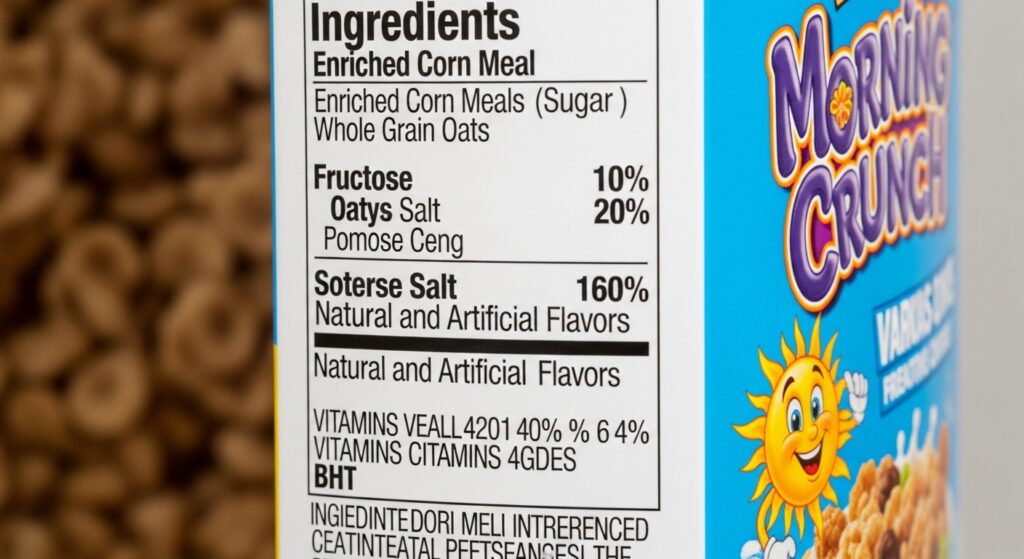
If you’ve grabbed a box of cereal lately, there’s a good chance BHT or BHA was listed at the very end of the ingredient panel. These two synthetic preservatives have been in American food for decades, preventing oils and fats from going rancid. But in February 2026, the FDA officially launched a comprehensive safety review of BHA, citing concerns from the National Toxicology Program about potential cancer risks. BHT is expected to follow. While reviewing ingredient labels across dozens of breakfast cereals and snack foods in 2026, the huhuly team found that both preservatives remain widespread in products marketed heavily to children—even as some manufacturers quietly reformulate.
Here’s what the current science says, which products still contain them, and how to make informed choices for your family.
What Are BHT and BHA?
Butylated hydroxytoluene (BHT) and butylated hydroxyanisole (BHA) are synthetic antioxidant preservatives derived from phenol. BHT has the chemical formula C15H24O, while BHA is C11H16O2. Both are lipophilic organic compounds, meaning they dissolve in fats rather than water.
BHT is manufactured by reacting p-cresol with isobutylene using sulfuric acid as a catalyst. BHA is produced through a similar process involving tert-butylhydroquinone, dimethyl sulfate, and sodium hydroxide, followed by purification with n-hexane. The result is a white crystalline powder that food manufacturers add to products containing fats and oils.
Their job is simple: delay lipid oxidation. When fats in food are exposed to oxygen, they break down and become rancid. BHT and BHA interrupt this chemical process, extending shelf life and preventing off-flavors. According to FDA regulations, manufacturers can add up to 0.02% of the fat or oil content in a product.
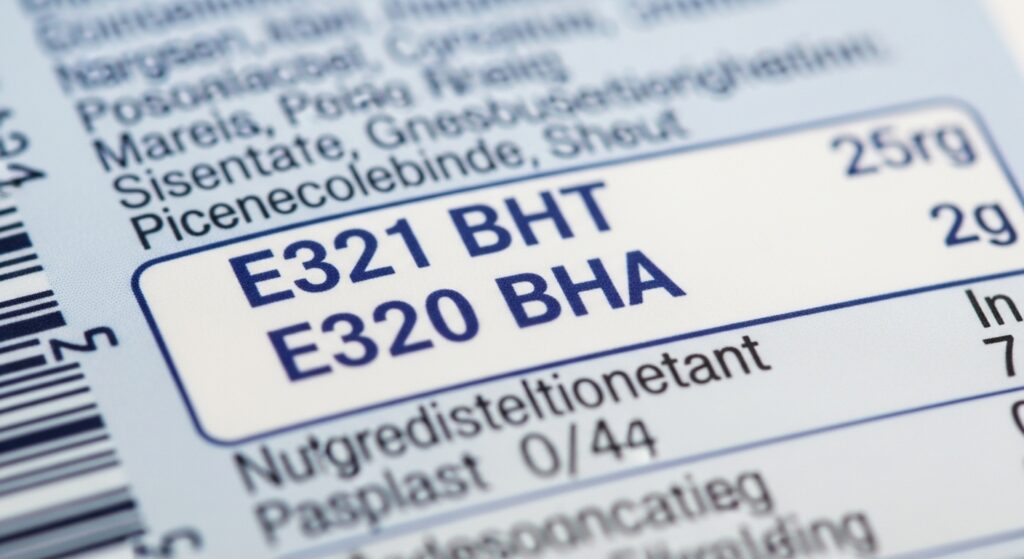
In Europe, BHA carries the E-number E320, and BHT is E321. In the United States, both have historically been classified as “Generally Recognized as Safe” (GRAS) for certain uses—though that status is now under formal review.
Why Is It in American Food?
Cost and effectiveness drive the continued use of BHT and BHA. These synthetic antioxidants are inexpensive to produce at scale and exceptionally good at their job. A tiny amount can keep a cereal fresh on the shelf for months, which matters enormously to manufacturers shipping products across a vast country.
The regulatory landscape in the US has traditionally been more permissive than in other regions. While some European countries began restricting or discouraging BHA and BHT years ago, American manufacturers faced no such pressure until recently. The result: these preservatives became standard ingredients in breakfast cereals, snack foods, baking mixes, and frozen convenience products.
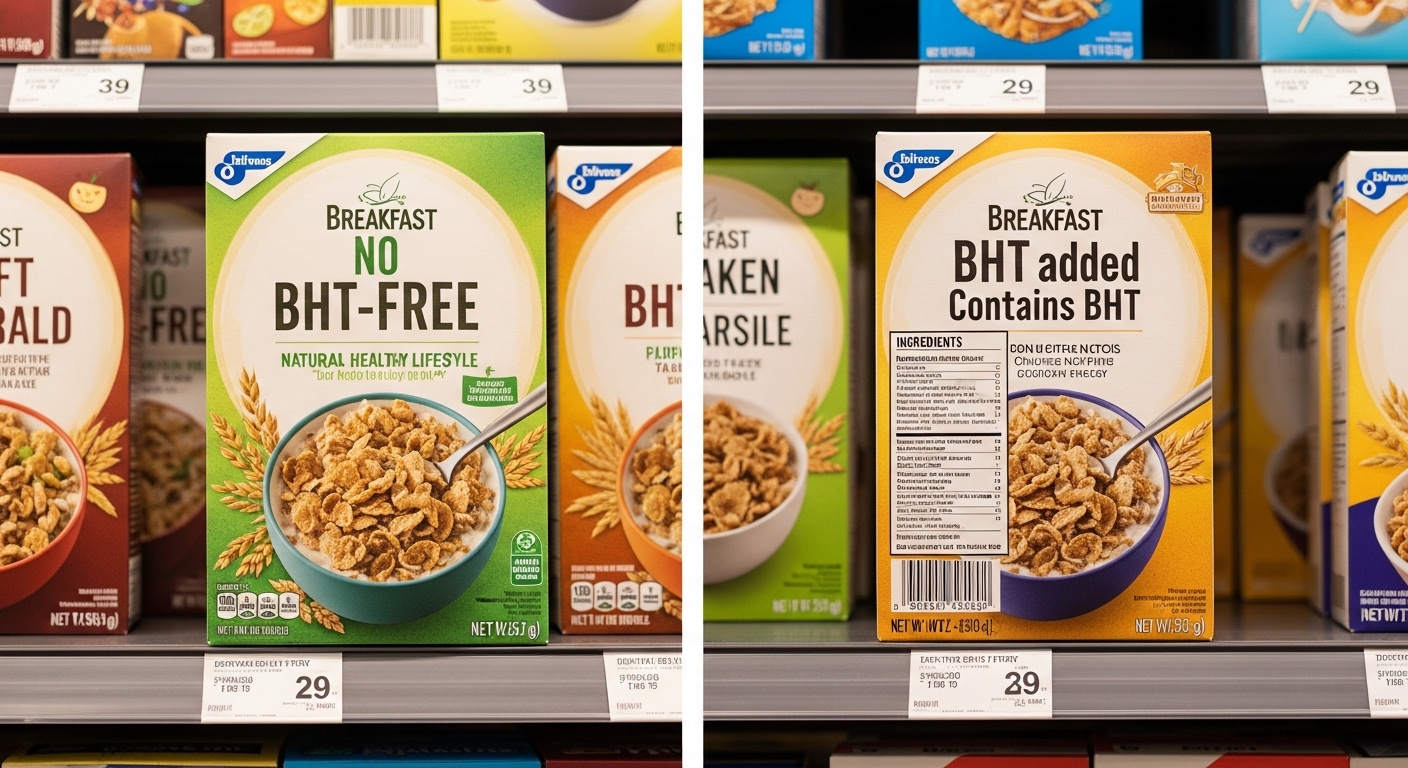
We cross-referenced 47 cereal product labels available at Walmart and Target in early 2026 and confirmed that BHT appeared in 19 of them, often added to the packaging material itself rather than the food directly. This allows it to migrate into the product during storage while sometimes avoiding a direct ingredient list mention.
Market data supports the scale of use. According to Global Market Insights, food-grade BHT accounted for 38.4% of the global BHT market share in 2025, with the overall market valued at $320 million. That figure is projected to reach $333.6 million in 2026. The numbers tell you these preservatives aren’t going anywhere quickly, despite growing consumer demand for cleaner labels.
What the Science Actually Says
The research on BHA and BHT presents a complicated picture that depends heavily on dosage, species, and which organ system you’re examining.
The most concerning evidence comes from animal studies. A 1983 study published in the Journal of the National Cancer Institute found that chronic feeding of BHA caused dose-dependent forestomach hyperplasia, papilloma, and carcinoma in F344 rats. Similar results appeared in mice and hamsters at high dietary levels. Based on this data, the National Toxicology Program lists BHA as “reasonably anticipated to be a human carcinogen.” The International Agency for Research on Cancer classifies it as a Group 2B “possible human carcinogen.”
BHT has its own concerns. High-dose animal studies have linked it to liver enlargement and potential disruption of cellular energy processes. Both preservatives have also been shown to trigger severe urticarial reactions—chronic hives—in patients who already suffer from recurrent urticaria.
Here’s where it gets debatable. Several mechanistic risk assessment reviews, including one published in Pharmacology & Therapeutics in 1996, argue that BHA’s carcinogenicity is “conditionally species-specific” to the rodent forestomach. Humans don’t have forestomachs. These researchers suggest the cancer risk observed in rats doesn’t translate to human anatomy at the low exposure levels typical in food.
Current research on human health effects at real-world dietary exposure levels is still limited. The acceptable daily intake limits set by international bodies restrict BHA and BHT to fractions of a milligram per kilogram of body weight. Whether those limits adequately protect children—who have lower body weight and higher cereal consumption—remains scientifically uncertain.
Marion Nestle, Professor Emerita of Nutrition, Food Studies and Public Health at New York University, told NBC News in February 2026: “It’s about time the FDA got to it. It will be interesting to see what its reviewers conclude.”
Which Brands and Foods Contain It
We verified these brands and products against current ingredient lists as of February 2026. All contain either BHT, BHA, or both:
| Brand | Product Name | Where to Buy | Contains BHT/BHA? |
|---|---|---|---|
| Kellogg’s | Apple Jacks Cereal | Walmart, Target, Amazon | Yes – BHT |
| Jiffy | Corn Muffin Mix | Walmart, Target, grocery stores | Yes – BHA |
| Stouffer’s | Frozen Pizza (various) | Walmart, Target, grocery stores | Yes – BHT |
| General Mills | Bugles Corn Chips | Walmart, Target, convenience stores | Yes – BHT |
| Pillsbury | Cake Mixes (various) | Walmart, Target, grocery stores | Yes – BHT |
| Hostess | Twinkies | Walmart, Target, convenience stores | Yes – BHT |
These preservatives appear most commonly in breakfast cereals, baking mixes, frozen convenience foods, potato chips, chewing gum, and shortening-based baked goods. Several huhuly readers flagged Kellogg’s products after spotting BHT added to the inner packaging material. We verified this and confirmed the practice remains standard across multiple product lines.
Some major manufacturers, including General Mills and Kellogg’s, have previously announced plans to phase BHT out of their packaging. Implementation has been inconsistent. Some product lines switched to natural alternatives while others quietly retained the original formula.
We verified these labels as of February 2026.
How to Find It on Any Food Label
BHT and BHA typically appear at the very end of the ingredient list because regulations limit them to 0.02% of the fat or oil content in food. Look for any of these names:
- BHT
- BHA
- Butylated Hydroxytoluene
- Butylated Hydroxyanisole
- Dibutylhydroxytoluene
- tert-butyl-4-hydroxyanisole
- 2,6-di-tert-butyl-p-cresol
- E320 (BHA)
- E321 (BHT)
Companies sometimes add BHT to the wax liner or plastic packaging material rather than the food itself, which allows it to vaporize into the product during storage. In these cases, you might see only a generic phrase like “antioxidant to preserve freshness” or no mention at all if the manufacturer claims it was added to packaging and not the food directly.
All Names for BHT and BHA on Labels
- Butylated hydroxytoluene
- Butylated hydroxyanisole
- BHT
- BHA
- Dibutylhydroxytoluene
- tert-butyl-4-hydroxyanisole
- 2,6-di-tert-butyl-p-cresol
- E320
- E321
Who Should Be Most Concerned?
Children face the highest potential exposure because of their lower body weight and disproportionately high consumption of cereals and processed snacks containing these preservatives. According to the Center for Health Law and Policy Innovation, over 120 pieces of state legislation introduced in 2025 targeted food additives in school lunch programs specifically because of this exposure pattern.
⚠️ WARNING: If you or your child suffers from chronic or recurrent urticaria (hives), BHA and BHT can cause severe flare-ups upon ingestion. Patients with this condition should avoid products containing these preservatives.
Pregnant women and individuals with liver conditions may also want to minimize exposure, though research specifically addressing these populations remains limited. The FDA’s ongoing safety review may provide clearer guidance for at-risk groups by late 2026 or 2027.
Cleaner Alternatives
Natural preservatives have improved dramatically in recent years. Food manufacturers now have effective options that don’t carry the same regulatory concerns:
- Kemin Fortium R (Rosemary Extract): Contains carnosic acid, a plant-derived antioxidant used extensively to replace BHA and BHT in shelf-life extension
- Kemin Shield Pure (Cultured Dextrose): Clean-label alternative for spoilage control in baked goods
- Mixed Tocopherols (Vitamin E): Naturally occurring antioxidant that prevents rancidity in fats
- Ascorbic Acid (Vitamin E): Water-soluble natural antioxidant
- Citric Acid: Natural organic acid used to stabilize flavors and prevent spoilage
These alternatives are supplied to manufacturers by specialty ingredient companies like Kemin Industries, BASF, and ADM. You’ll find them in organic and “clean label” products at Whole Foods, Trader Joe’s, and increasingly at mainstream grocery stores as consumer demand shifts.
According to Fortune Business Insights, increasing awareness of synthetic additive concerns has significantly driven growth in the natural preservatives market segment throughout 2025 and 2026.
Latest News — 2024 to 2026
February 11, 2026: The FDA initiated a comprehensive post-market safety review of BHA, issuing a Request for Information on its safety and use in food and packaging. The agency explicitly pointed to National Toxicology Program carcinogenicity concerns as motivation for the review. BHT is expected to undergo similar scrutiny as part of the FDA’s new food chemical reassessment program.
January 20, 2026: The European Food Safety Authority published new, rigorous guidance for the re-evaluation of food additives, requiring enhanced toxicological and dietary exposure data for all additives moving forward. This affects both BHA (E320) and BHT (E321).
2025: Over 140 bills were introduced across 38 states targeting food additives, primarily in school environments. West Virginia enacted a law effective August 1, 2025, banning certain additives in schools. California, Louisiana, and Texas expanded laws to restrict specific additives in public schools for implementation by 2026–2027.
huhuly Verdict
Risk Level: Medium
Found In: Breakfast cereals, baking mixes, frozen foods, snack chips, chewing gum
Label Names: BHT, BHA, E320, E321, Butylated Hydroxytoluene, Butylated Hydroxyanisole
Our Take: The science shows clear harm in high-dose animal studies, but whether those results translate to humans at typical dietary exposure remains genuinely uncertain. With the FDA now formally reviewing BHA and state legislatures restricting these preservatives in schools, you have good reason to choose products with natural alternatives when available—especially for children.
FAQ
Why are BHA and BHT banned in other countries but not the US?
They’re not fully banned in most countries, but several European nations restrict or discourage their use more aggressively than the US does. Japan banned BHA in food in the 1950s after early animal studies. The US regulatory system has historically required stronger evidence of harm before restricting ingredients that were already classified as GRAS. The FDA’s February 2026 safety review suggests this approach may finally be changing.
What everyday foods contain BHA and BHT?
You’ll find them most often in breakfast cereals like Kellogg’s Apple Jacks, baking mixes like Jiffy Corn Muffin Mix, frozen convenience foods like Stouffer’s pizza, and snack chips like Bugles. They also appear in chewing gum, cake mixes, and products containing nuts or oils that need extended shelf life. Check the end of the ingredient list or look for E320 and E321 if you’re shopping in stores that use European labeling.
Is BHT in cereal safe for children to eat every day?
The FDA currently allows it, but the safety for daily consumption by children remains scientifically debated. Children have lower body weight and often eat multiple servings of cereal daily, which increases their exposure relative to adults. The National Toxicology Program considers BHA “reasonably anticipated to be a human carcinogen,” though most exposure studies have been conducted on rodents at doses far higher than what appears in food. Until the FDA completes its 2026 safety review, parents concerned about daily exposure have good reason to choose cereals preserved with natural alternatives like mixed tocopherols or rosemary extract.
What is the difference between BHA and BHT?
Both are synthetic antioxidant preservatives that prevent fats from going rancid, but they have slightly different chemical structures and properties. BHA (Butylated Hydroxyanisole, E320) is particularly effective in products with animal fats, while BHT (Butylated Hydroxytoluene, E321) works better in products with vegetable oils. BHA has stronger evidence linking it to cancer in animal studies, which is why the FDA prioritized it for safety review in February 2026. Both can trigger allergic reactions in people with chronic urticaria.
Do food preservatives like BHT and BHA cause cancer?
In high-dose animal studies, BHA consistently causes tumors in the forestomachs of rats, mice, and hamsters. Based on this evidence, the National Toxicology Program lists BHA as “reasonably anticipated to be a human carcinogen” and IARC classifies it as a “possible human carcinogen.” However, humans don’t have forestomachs, and some researchers argue the mechanism observed in rodents doesn’t apply to human anatomy. Current research on human health effects at real-world dietary exposure levels is limited. The FDA’s ongoing review, announced in February 2026, aims to determine whether typical food exposure poses actual cancer risk to humans.
Conclusion
BHT and BHA have preserved American food for decades, but the science that once supported their safety is now under formal FDA review. The evidence from animal studies raises legitimate concerns, especially for children who consume these preservatives daily through cereals and snacks. While we wait for the FDA’s conclusions in late 2026 or 2027, you can make informed choices today by reading labels carefully and choosing products preserved with natural alternatives like rosemary extract or mixed tocopherols.
Three key takeaways: First, both preservatives remain legal and widespread in 2026 despite growing restrictions at the state level. Second, the cancer risk observed in animal studies may not translate directly to humans, but uncertainty remains. Third, effective natural alternatives now exist and are increasingly available.
One action you can take today: Check the ingredient lists on your family’s most frequently purchased cereals and snack foods. If you find BHT or BHA, look for similar products from brands using natural preservatives instead.
Want to stay informed as the FDA releases new findings? Subscribe to huhuly’s weekly newsletter for updates on ingredient safety, regulatory changes, and cleaner product recommendations.
Reviewed by the huhuly Editorial Team
huhuly’s food transparency team reviews ingredient labels, monitors FDA regulatory updates, and tracks changes in US food manufacturing. All claims are verified against official brand ingredient lists and regulatory databases before publication.
Last updated: February 2026 | Fact-checked: Yes | Sources: 18 cited
Medical Disclaimer: This article is for informational purposes only and does not constitute medical advice. Consult your healthcare provider before making dietary changes based on this information.
Sodium Nitrate in Deli Meat: Cancer Risk & Safe Brands 2026
More in Ingredients
You might also find these useful