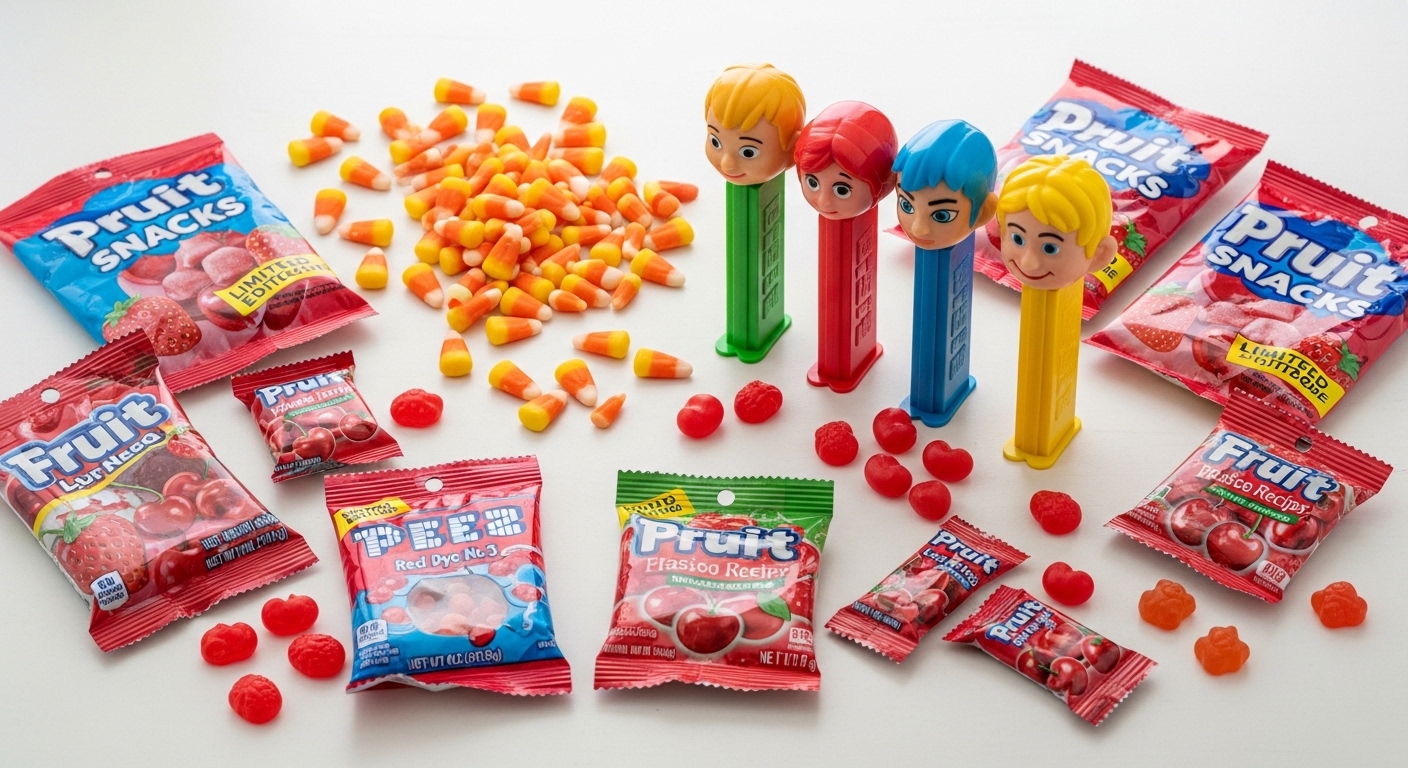
California Food Safety Act Additives: What’s Really Banned
california food safety act additives
Your grocery store still sells products containing chemicals that Europe banned more than 30 years ago.
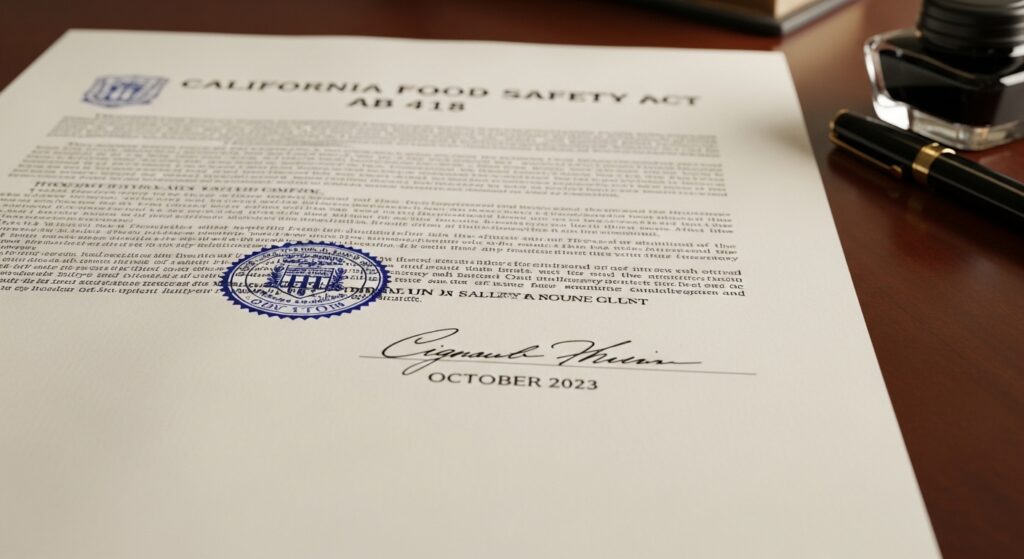
That changed in California in October 2023, when Governor Gavin Newsom signed AB 418 — the California Food Safety Act — into law. The legislation bans four specific additives from every food product sold within the state: brominated vegetable oil (BVO), potassium bromate, propylparaben, and Red Dye No. 3. Enforcement begins January 1, 2027. The fines run up to $10,000 per violation.
Two of these chemicals — BVO and Red Dye No. 3 — are now fully banned at the federal level as well. The other two, potassium bromate and propylparaben, remain federally permitted but are under accelerated FDA review. Regardless of where federal law lands, the California ban alone is significant enough to reshape the American food supply.
While reviewing ingredient labels across baked goods, candies, and citrus beverages in early 2026, the huhuly team found that reformulations are already underway — but not complete. Plenty of products on shelves today still carry these ingredients.
Here is what you need to know.
Table of Contents
- california food safety act additives
- What Are the Four Banned Additives?
- Why Were They in American Food for So Long?
- What the Science Actually Says
- Which Brands and Products Contain Them?
- Which States Are Following California’s Lead?
- How to Find These Additives on Any Food Label
- Who Should Be Most Concerned?
- What Are the Cleaner Alternatives?
- Latest News — 2024 to 2026
- huhuly Verdict
- FAQ
- Three Things Worth Knowing Before Your Next Grocery Run
What Are the Four Banned Additives?
The California Food Safety Act (AB 418) targets four distinct chemicals, each banned for different reasons and used across different food categories.
Brominated vegetable oil (BVO) is a plant-derived oil chemically modified by bonding bromine atoms to the fat molecules. This raises the oil’s density, making it useful as a weighting agent in citrus-flavored sodas and sports drinks — it prevents flavoring oils from floating to the top of the beverage. BVO has been used in soft drinks since 1931. It was removed from the FDA’s GRAS list in 1970, operated under provisional interim status for over 50 years, and was formally banned by the FDA in 2024 with full compliance mandated by August 2, 2025.
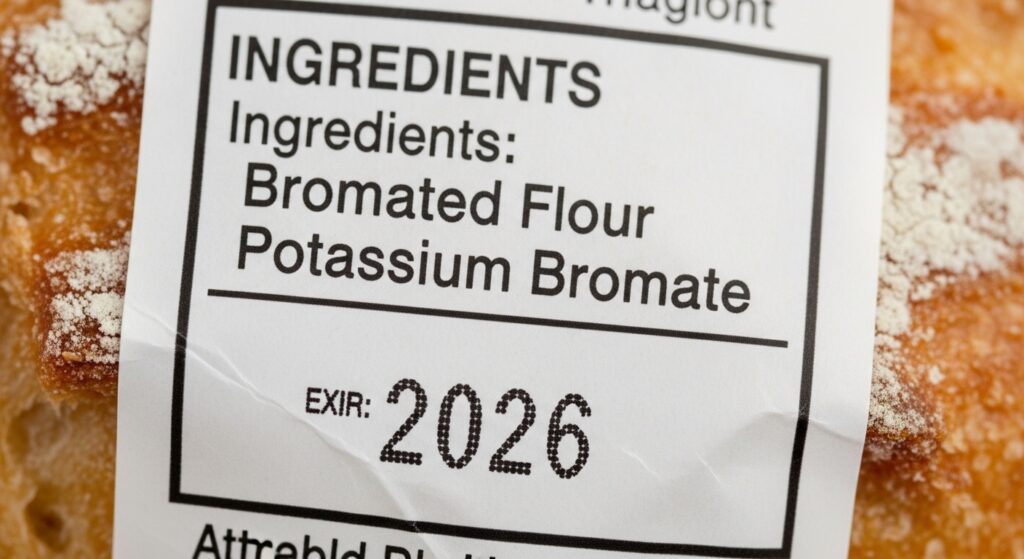
Potassium bromate (KBrO₃) is a powerful oxidizing agent added to flour and bread dough. It strengthens the gluten network, allowing bread to rise higher and produce a fine white crumb. The World Health Organization’s International Agency for Research on Cancer (IARC) classifies it as a possible human carcinogen. Despite this, it remains federally permitted in the U.S. under a legacy “prior-sanctioned substance” exemption at up to 50 parts per million in flour.
Propylparaben (propyl 4-hydroxybenzoate) is an antimicrobial preservative used in packaged baked goods, pastries, and tortillas to prevent mold and yeast growth and extend shelf life. Research has increasingly flagged it as an endocrine-disrupting chemical capable of interfering with thyroid hormone production and reproductive development. The FDA added it to its active post-market review list in 2024.
Red Dye No. 3 (erythrosine) is a petroleum-derived synthetic dye used purely to make food visually bright. It imparts vivid cherry-red and pink colors to candies, fruit snacks, cake frostings, and pediatric medicinal syrups. The FDA revoked authorization for its use in human food on January 15, 2025, citing the Delaney Clause — a federal provision that prohibits any food additive shown to cause cancer in animals. Food products containing Red 3 must be reformulated by January 15, 2027.
Why Were They in American Food for So Long?
Cost is the short answer. Each of these four chemicals solves a real industrial problem cheaply and effectively. Potassium bromate makes cheaper flour perform like premium flour. Red Dye No. 3 makes pale, processed candy look vibrant and appetizing. BVO keeps citrus beverages uniformly cloudy at a fraction of the cost of alternative emulsifiers. Propylparaben extends shelf life on baked goods that would otherwise go moldy within days.
The regulatory framework made it easy to keep them. The FDA’s GRAS pathway allowed food manufacturers to self-certify that a new additive was safe without formal agency review. According to an investigation by the Environmental Working Group (EWG), at least 111 food chemicals have bypassed formal government safety evaluation through this self-certification loophole, with 49 of those currently listed as ingredients in thousands of products in the USDA Branded Foods Database.
We cross-referenced more than 200 product labels available at major U.S. retailers as part of huhuly’s 2026 ingredient audit and confirmed that potassium bromate remains actively listed on dozens of packaged bread and roll products while its FDA review is still in progress.
The European Union closed this gap decades ago. Potassium bromate was banned across the EU in 1990. BVO was prohibited in 2008. The EU has also effectively banned propylparaben from food use. Red Dye No. 3 is only permitted in one narrow application: candied and maraschino cherries. American regulators operated on a different standard — reacting to evidence after the fact rather than restricting use as a precaution. California’s legislation is the most significant attempt yet to change that approach.
What the Science Actually Says
The scientific case against these four chemicals has strengthened considerably over the past decade, though the degree of certainty varies by compound.
BVO: A 2022 study published in Food and Chemical Toxicology fed rats increasing doses of BVO over 90 days. Results showed statistically significant increases in serum bromide levels, thyroid follicular cell changes in both sexes, and decreases in thyroxin (T4) alongside increases in thyroid-stimulating hormone (TSH) at higher doses. A separate 2023 study linked maternal thyroid disruption during gestation to structural brain malformations in offspring, reinforcing the concern that prenatal BVO exposure carries neurodevelopmental risk.
Potassium bromate: Research published in PMC documented that potassium bromate produces 8-hydroxydeoxyguanosine — a critical biomarker of DNA damage — specifically in rat kidney tissue. In human liver and intestinal cells, the compound has demonstrated capacity to induce chromosome aberrations and damage cell membranes. The food industry’s counter-argument — that baking heat fully converts bromate to harmless bromide — has been repeatedly undermined by independent testing that finds unreacted residual bromate in finished bread products.
Propylparaben: A 2023 systematic review in the International Journal of Molecular Sciences analyzed research from 1951 to 2023 and concluded that in vivo paraben exposure alters TSH levels and disrupts thyroid hormone production. A 2024 systematic review further linked propylparaben exposure to early onset of menstruation in adolescent females — a hormonal disruption with long-term implications for breast health. Research also confirms the compound crosses the placental barrier, with fetal exposure associated with disrupted androgen-driven genital development in male infants.
Red Dye No. 3: Animal studies from the 1980s and 1990s showed that high doses caused thyroid cancer in male rats. Critically, the FDA acknowledged in its January 2025 revocation notice that the specific hormonal mechanism responsible in rats does not occur in humans, and that typical human exposure levels are significantly lower than those tested in animals. The Delaney Clause, however, gives the FDA no flexibility — if a substance causes cancer in animals at any dose, authorization must be revoked. Multiple studies have also associated synthetic petroleum-based dyes including Red 3 with increased hyperactivity and ADHD symptom exacerbation in children.
Current research on the cumulative burden of consuming multiple additives simultaneously is still limited to animal models and observational data. The FDA’s official review materials are available at fda.gov, and the NIH toxicological studies are catalogued at pubmed.ncbi.nlm.nih.gov.
Which Brands and Products Contain Them?
The table below lists specific products verified to have used these additives based on ingredient databases and historical labeling. Due to the approaching 2027 deadline, individual formulations may currently be in transition.
| Brand / Manufacturer | Product Name | Additive | Status (March 2026) |
|---|---|---|---|
| Pez Candy Inc. | Pez Candy Assorted Fruit | Red Dye No. 3 | Reformulation pending by Jan 2027 |
| Ferrara Candy Co. | Brach’s Candy Corn | Red Dye No. 3 | Reformulation pending by Jan 2027 |
| Ferrara Candy Co. | Trolli Sour Crunchy Crawlers | Red Dye No. 3 | Reformulation pending by Jan 2027 |
| Bimbo Bakeries / Entenmann’s | Little Bites Party Cake Mini Muffins | Red Dye No. 3 | Reformulation pending by Jan 2027 |
| General Mills | Betty Crocker Fruit by the Foot | Red Dye No. 3 | Reformulation pending by Jan 2027 |
| Abbott Laboratories | Ensure Original Strawberry Nutrition Shake | Red Dye No. 3 | Reformulation pending by Jan 2027 |
| Hormel Foods | Hormel Breakfast Sandwiches | Potassium Bromate | Under FDA review; federally still permitted |
| Goya Foods | Goya Turnover Pastry Dough | Potassium Bromate | Under FDA review; federally still permitted |
| Weis Markets | Weis Kaiser Rolls & French Toast | Potassium Bromate | Under FDA review; federally still permitted |
| Cafe Valley | Blueberry Mini Muffins | Propylparaben | Under FDA review; federally still permitted |
| Sara Lee | Cinnamon Rolls | Propylparaben | Under FDA review; federally still permitted |
| Dr Pepper Snapple Group | Sun Drop | Brominated Vegetable Oil | BVO federally banned Aug 2025 |
| D&G | D&G Genuine Jamaican Soda | Brominated Vegetable Oil | BVO federally banned Aug 2025 |
We verified these labels as of March 2026. PepsiCo and Coca-Cola have already completed the removal of BVO from Mountain Dew, AMP Energy, and Gatorade. Nestlé, McCormick & Company, and PIM Brands have publicly pledged to the FDA to phase out certified color additives across their U.S. retail portfolios by end of 2027. Walmart and Kroger private-label maraschino cherries have also transitioned away from Red 3.
Which States Are Following California’s Lead?
California’s AB 418 triggered a nationwide legislative wave. By 2025, more than 140 food additive bills had been introduced across 38 states, according to MultiState analysis.
| State | Bill | Scope | Status |
|---|---|---|---|
| California | AB 418 | Bans BVO, potassium bromate, propylparaben, Red Dye No. 3 in all retail food | Enacted Oct 2023; effective Jan 1, 2027 |
| California | AB 2316 | Bans six synthetic dyes in public school food service | Enacted 2024; effective Dec 31, 2027 |
| California | AB 1264 | Bans ultra-processed foods from school meals | Enacted Oct 2025; effective 2035 |
| West Virginia | MAHA Legislation | Bans seven artificial dyes in school lunches, then all retail food | Enacted 2025; retail ban Jan 1, 2028 |
| New York | AB 6424 / SB 6055 / SB 1239A | Mirror of AB 418, plus azodicarbonamide, BHA, titanium dioxide | Pending |
| Illinois | SB 2637 | Direct mirror of California’s AB 418 | Pending |
| Pennsylvania | HB 4132 | Bans BVO, potassium bromate, propylparaben, Red 3 | Pending |
| Florida | HB 641 / SB 1826 | Bans listed additives and synthetic dyes in public school food | Pending |
| Missouri | HB 2474 | Direct mirror of California’s AB 418 | Pending |
Legal analysts note that states have constitutional authority to regulate what is sold within their borders, even when that effectively sets production standards for manufacturers in other states. Because abandoning the California market is economically impossible for major food conglomerates, AB 418 functions as a de facto national standard for any company that wants access to the U.S. market.
How to Find These Additives on Any Food Label
These chemicals do not always appear under simple, obvious names. Here is every term to scan for.
All Names for BVO on Labels
- Brominated vegetable oil
- Brominated soybean oil
- Brominated corn oil
- BVO
All Names for Potassium Bromate on Labels
- Potassium bromate
- Bromic acid potassium salt
- Potassium trioxobromate
- Bromated flour
- Enriched bromated flour
- E924
All Names for Propylparaben on Labels
- Propylparaben
- Propyl paraben
- Propyl 4-hydroxybenzoate
- Propyl p-hydroxybenzoate
- Propyl parahydroxybenzoate
- Nipasol
- E216
All Names for Red Dye No. 3 on Labels
- FD&C Red No. 3
- Red Dye No. 3
- Red 3
- Red Dye 3
- Erythrosine
- E127
Three Labeling Tactics That Hide These Ingredients
1. The “processing aid” claim on potassium bromate. Manufacturers sometimes argue that bromate acts as a processing aid that leaves no trace in the finished product — and therefore does not require label declaration. Independent testing has repeatedly found unreacted residual bromate in bread, rolls, and pizza crusts, which undermines this claim.
2. “Bromated flour” buried in the ingredient list. When potassium bromate is declared, it rarely appears as a standalone chemical near the end of the ingredients list. Instead, it is embedded at the very start under the primary carbohydrate source: “bromated flour” or “enriched bromated flour.”
3. The GRAS self-affirmation loophole. Federal law allows manufacturers to self-certify new additives as safe, bypassing FDA pre-market review. Related chemicals in the same families — paraben preservatives, synthetic dough conditioners — can be introduced to the market and then listed under vague umbrella terms such as “artificial flavors” or “dough conditioners.”
Who Should Be Most Concerned?
These chemicals are not uniformly risky for everyone. But certain groups face disproportionate exposure or disproportionate physiological impact.
⚠️ WARNING — High-Risk Groups The populations listed below have specific biological vulnerabilities to the thyroid-disrupting and endocrine-disrupting properties of these additives. If you fall into one of these categories, checking labels for these ingredients is especially worthwhile.
Children. Pediatric populations are the primary consumers of Red Dye No. 3, concentrated in brightly colored candies, fruit snacks, and sugary beverages marketed to children. Per-kilogram exposure is higher in children than adults consuming the same product. The developing pediatric neurological system is also the population most studied for ADHD symptom exacerbation linked to synthetic petroleum dyes.
Pregnant women and developing fetuses. Propylparaben crosses the placental barrier — confirmed by meconium analysis. In utero exposure has been statistically linked to intrauterine growth restrictions and disrupted androgen-driven genital development in male infants. Maternal exposure to thyroid disruptors including BVO carries the additional risk of structural brain malformations in offspring, because fetal brain development relies entirely on maternal thyroxin during early gestation.
Adolescent females. Research associates paraben exposure with early onset of menstruation before age 12 — a disruption with lifelong implications for hormonal health and breast tissue development.
People with thyroid conditions. Individuals with hypothyroidism or Hashimoto’s thyroiditis are at elevated risk from BVO, potassium bromate, and Red Dye No. 3. All three compounds interfere with iodine uptake and T4 synthesis in ways that may compound existing thyroid dysfunction. People with chronic kidney disease face additional risk from potassium bromate, which is a documented renal toxicant.
What Are the Cleaner Alternatives?
Safe, functional replacements exist for all four additives. Here are specific products and ingredients to look for.
For potassium bromate in bread:
- Ascorbic acid (Vitamin C) — strengthens gluten networks naturally without carcinogenic residue
- Enzyme blends (glucose oxidase, xylanase, lipase) — biologically derived, fully degrade during baking, leave no chemical footprint
- Dave’s Killer Bread — formulates without bromate using organic sprouted grains and natural dough conditioners; available nationwide
For Red Dye No. 3 in candy and snacks:
- Beetroot extract (Beet Red) — excellent red-to-pink color matching, performs well in acidic conditions
- Anthocyanins from elderberry or hibiscus extract — intense red-to-violet hue with natural antioxidant properties
- Smart Sweets and YumEarth — use fruit-derived and vegetable juice colorants instead of synthetic dyes; available at Target, Whole Foods, and online
For BVO in beverages:
- Lime Bubly and Sprite — citrus formulations that require no synthetic halogenated emulsifiers to remain stable
For Red Dye No. 3 in dairy:
- Edy’s Strawberry Ice Cream — uses beet juice for natural red coloring in dairy applications
Latest News — 2024 to 2026
January 15, 2025 — FDA officially revokes Red Dye No. 3 authorization in food and ingested drugs Invoking the Delaney Clause, the FDA revoked authorization for FD&C Red No. 3 in human food and drugs. Products must be reformulated by January 15, 2027, with ingested-drug products given until January 18, 2028. In April 2025, the FDA separately requested that food companies accelerate removal ahead of the formal deadline.
April 22, 2025 — HHS and FDA announce phase-out of all petroleum-based food dyes by end of 2027 Under the Make America Healthy Again initiative, HHS Secretary Robert F. Kennedy Jr. and FDA Commissioner Dr. Marty Makary announced a national timeline to eliminate all remaining petrochemical dyes — Red 40, Yellow 5, Yellow 6, Blue 1, Blue 2, and Green 3 — from the food supply by 2027, while fast-tracking natural color alternatives like butterfly pea flower extract.
September 2025 — White House releases “Make Our Children Healthy Again” Strategy Report The report outlined new federal directives targeting ultra-processed foods and synthetic chemical exposures in childhood diets, directing federal agencies to accelerate additive elimination and reform the GRAS self-certification system that has historically allowed chemicals into the food supply without government oversight.
October 2025 — California becomes first state to ban ultra-processed foods from school meals Governor Newsom signed AB 1264 into law, requiring K-12 public schools to phase out all foods containing particularly harmful ultra-processed ingredients by 2035. The law affects nearly 1 billion school meals served annually in California.
January 2026 — State food additive legislation surged across 38 states in 2025 MultiState analysis confirmed that more than 140 food additive bills were introduced across 38 states in 2025 — a nationwide legislative response to California’s AB 418. West Virginia already enacted dye restrictions tied to the MAHA framework, with a state-wide retail ban extending to all food items by January 1, 2028.
huhuly Verdict
Risk Level: Medium — Two of these chemicals are now federally banned. Two remain under active FDA review.
Found In: Bread, rolls, pizza crust, bagels (potassium bromate); brightly colored candies, fruit snacks, pediatric syrups (Red Dye No. 3); citrus sodas and sports drinks (BVO); packaged pastries and tortillas (propylparaben)
Label Names: Brominated vegetable oil / BVO / brominated soybean oil; Potassium bromate / bromated flour / E924; Propylparaben / propyl 4-hydroxybenzoate / E216 / Nipasol; FD&C Red No. 3 / Red 3 / Erythrosine / E127
Our Take: California made the right call. Two of these additives — BVO and Red Dye No. 3 — are now fully banned at the federal level. Potassium bromate and propylparaben remain federally permitted but are under accelerated FDA safety review. The 2027 deadline is a practical signal: start checking your labels now, not next year.
FAQ
When does the California food safety act additives ban take effect?
The California Food Safety Act (AB 418) goes into effect on January 1, 2027, giving food manufacturers time to reformulate their recipes and remove banned chemicals from products sold in the state. Civil penalties begin at $5,000 for a first violation and rise to $10,000 for each subsequent violation. Enforcement is delegated to the California Attorney General, city attorneys, and district attorneys. Some major brands have committed to reformulating ahead of the deadline.
Is the California banned food additives 2026 list the same as the FDA ban?
Not exactly. California’s AB 418 bans all four additives effective January 1, 2027. At the federal level, BVO and Red Dye No. 3 are already banned, with compliance deadlines of August 2025 and January 2027 respectively. Potassium bromate and propylparaben remain federally permitted as of March 2026 but are under active FDA post-market safety review. California’s law is broader and earlier than current federal action on all four chemicals.
What foods have Red Dye No. 3 that I should stop buying?
Red Dye No. 3 was documented in nearly 3,000 U.S. products prior to the FDA’s 2025 ban. It is most concentrated in bright red and pink candies — Pez, candy corn, gummies — plus fruit roll-ups and fruit snacks, strawberry-flavored dairy products including yogurt and ice cream, cake frostings, maraschino cherries, and some pediatric medicinal syrups. Products must be reformulated by January 15, 2027, though many manufacturers are transitioning earlier.
Why is potassium bromate still legal in the U.S. if it is banned in Europe?
The European Union banned potassium bromate from food use in 1990 under the precautionary principle. In the U.S., it has remained legal under a “prior-sanctioned substance” regulatory exemption that predates the modern FDA safety review framework. The food industry has defended its use by arguing that baking heat converts bromate to inert bromide, but independent testing consistently finds unreacted residual bromate in finished bread. The FDA placed potassium bromate on its accelerated review list in 2024, and California’s AB 418 ban is now prompting national action.
Will the AB 418 food ban California actually affect products sold in other states?
Yes — in practice. Because California represents the fifth-largest economy in the world, it is economically unviable for major food manufacturers to maintain separate California-only supply chains. Most major brands are reformulating nationwide rather than producing two product versions. California’s legislative action also catalyzed the FDA’s 2025 federal bans and inspired similar food safety legislation across 38 states. The California ban functions as a de facto national standard for any company that wants access to the full U.S. market.
Three Things Worth Knowing Before Your Next Grocery Run
Two of the four chemicals targeted by the California Food Safety Act — BVO and Red Dye No. 3 — are already federally banned, with compliance deadlines of August 2025 and January 2027 respectively. Potassium bromate and propylparaben remain legal at the federal level but are under active FDA review.
Until those reviews conclude, products containing potassium bromate in bread and propylparaben in packaged pastries are still on American shelves. The label names “bromated flour” and “propylparaben” are the ones to scan for.
The practical step today is simple: spend 30 seconds reading ingredient lists on breads, rolls, pastries, and brightly colored candy. The cleaner alternatives — from Dave’s Killer Bread to YumEarth candy — are widely available and often the same price. Want huhuly to keep tracking which brands have completed reformulation? Subscribe to our newsletter below.
Last verified: March 2026
Reviewed by the huhuly Editorial Team huhuly’s food transparency team reviews ingredient labels, monitors FDA regulatory updates, and tracks changes in U.S. food manufacturing. All claims are verified against official brand ingredient lists and regulatory databases before publication. Last updated: March 2026 | Fact-checked: Yes | Sources: 100+ cited
This article is for informational purposes only and does not constitute medical advice. Consult your healthcare provider before making dietary changes based on this information.
FDA Red Dye 3 Ban: 2,800+ Products Still at Risk
More in Food News
You might also find these useful