Capri Sun Ingredients: What the Label Won’t Tell You
Capri Sun Ingredients: 7 Things Parents Should Know (2026)
Your kid has been drinking Capri Sun for years. So have tens of millions of other kids. But the formula has quietly changed — and the ingredient list deserves a second look.
Capri Sun ingredients now include manufactured citric acid, stevia leaf extract, monk fruit concentrate, and a relatively new addition called mushroom extract. These aren’t household names. According to a 2021 study published in Pediatric Obesity, only 3.1% of parents correctly assessed that Capri Sun Roarin’ Waters contains no actual fruit juice — and most had no idea the pouches relied on non-nutritive sweeteners at all.
This article breaks down exactly what’s in these pouches, what the current science says, and which products belong in which category. No fearmongering. Just the facts.
Table of Contents
- Capri Sun Ingredients: 7 Things Parents Should Know (2026)
- What Is Actually in a Capri Sun Pouch?
- Why Did Capri Sun Switch to Mushroom Extract?
- What Does the Science Say About Stevia in Kids’ Drinks?
- Which Capri Sun Products Contain These Ingredients?
- How Do You Find These Ingredients on Any Food Label?
- Who Should Be Most Careful About Capri Sun Ingredients?
- Are There Cleaner Alternatives to Capri Sun?
- What’s the Latest News on Capri Sun Ingredients (2024–2026)?
- huhuly Verdict
- FAQ
- Three Things Worth Acting On
What Is Actually in a Capri Sun Pouch?
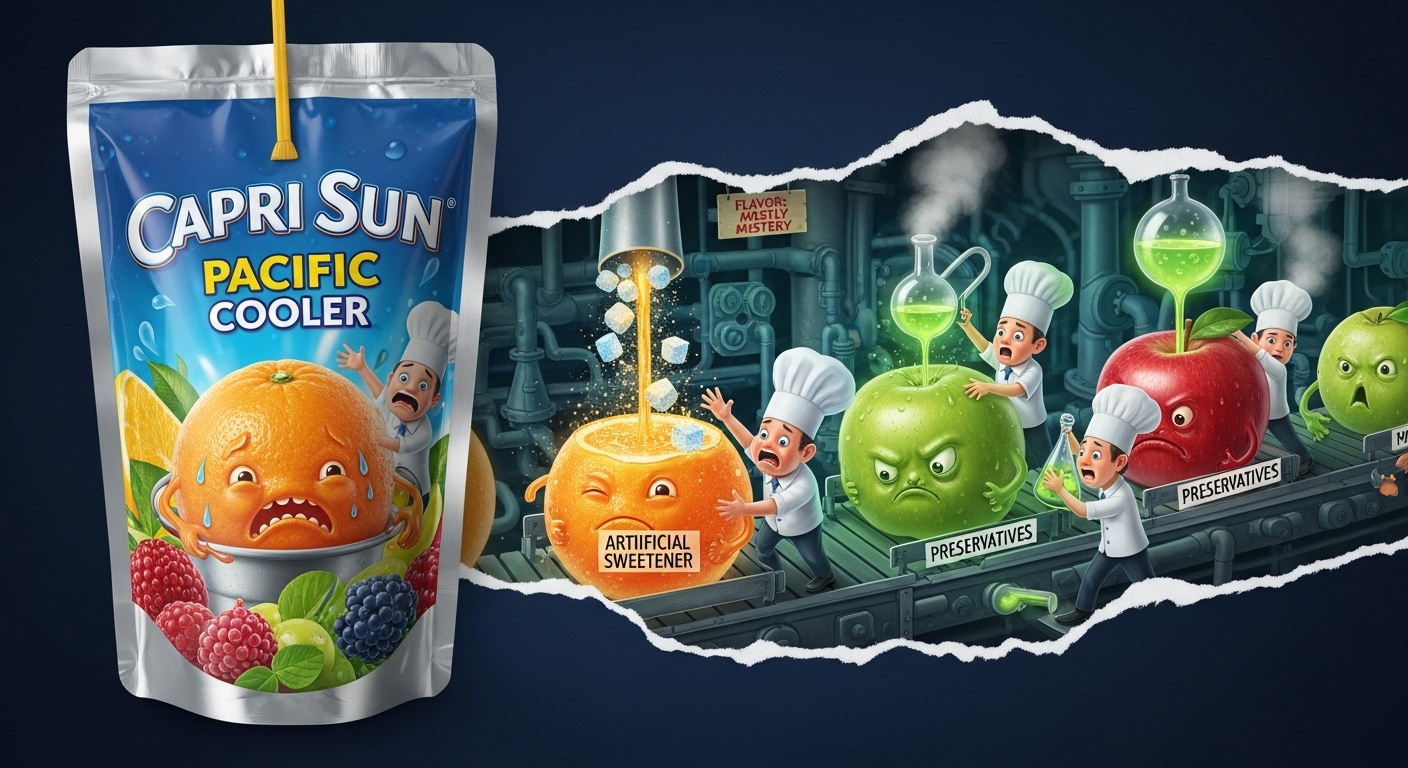
Most Capri Sun pouches are built around three functional additives: manufactured citric acid (for tartness and shelf stability), a non-nutritive sweetener like stevia or monk fruit (to replace sugar), and mushroom extract (to inhibit microbial growth). Water and juice concentrate or natural flavor round out the base. The exact combination varies by product line.
The citric acid in Capri Sun is not the same as the acid naturally present in a lemon. Manufactured citric acid (MCA) is produced industrially by fermenting a carbohydrate substrate — typically GMO corn-derived glucose — using a strain of black mold called Aspergillus niger. This fermentation method has been the industry standard since Pfizer scaled it in 1919, and today approximately 99% of the world’s commercial citric acid is made this way.
On the label, it appears simply as “Citric Acid.” The FDA does not require manufacturers to distinguish between naturally derived and industrially fermented citric acid. It carries GRAS status under 21 CFR 184.1033 and the European E-number E330.
Stevia leaf extract — listed as Stevia Leaf Extract, Steviol Glycosides, or Rebaudioside A (Reb A) — is derived from the Stevia rebaudiana plant. The active compound Reb A is up to 300 times sweeter than sugar by weight, contributing zero calories. It holds GRAS status from the FDA and the E-number E960.
Why Did Capri Sun Switch to Mushroom Extract?
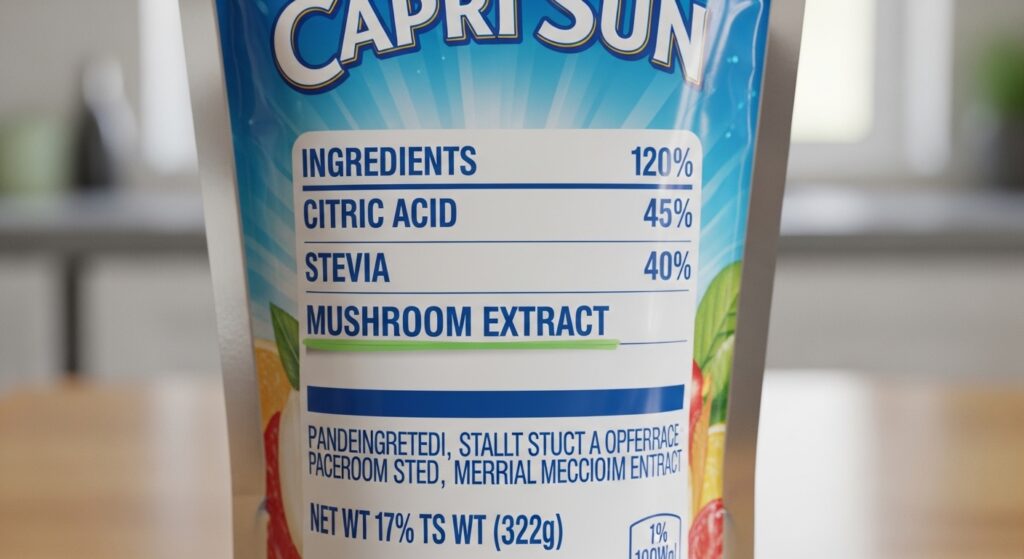
Capri Sun added mushroom extract — technically chitosan from white button mushrooms (Agaricus bisporus) — to replace synthetic preservatives. It’s an antimicrobial compound approved by the FDA under GRAS Notice GRN 997, permitted at levels between 0.015g and 0.15g per 100g of food. The goal was a cleaner ingredient panel without sacrificing shelf stability.
Kraft Heinz has been publicly repositioning Capri Sun toward a “clean label.” Alongside the mushroom extract addition, the brand cut average sweetener levels across its portfolio by 40%, substituting sucrose with monk fruit concentrate and stevia. The 100% Juice Blends and Mixed Fruit Splash Cooler lines now carry mushroom extract prominently — sometimes listed as “Mushroom Extract (to protect quality).”
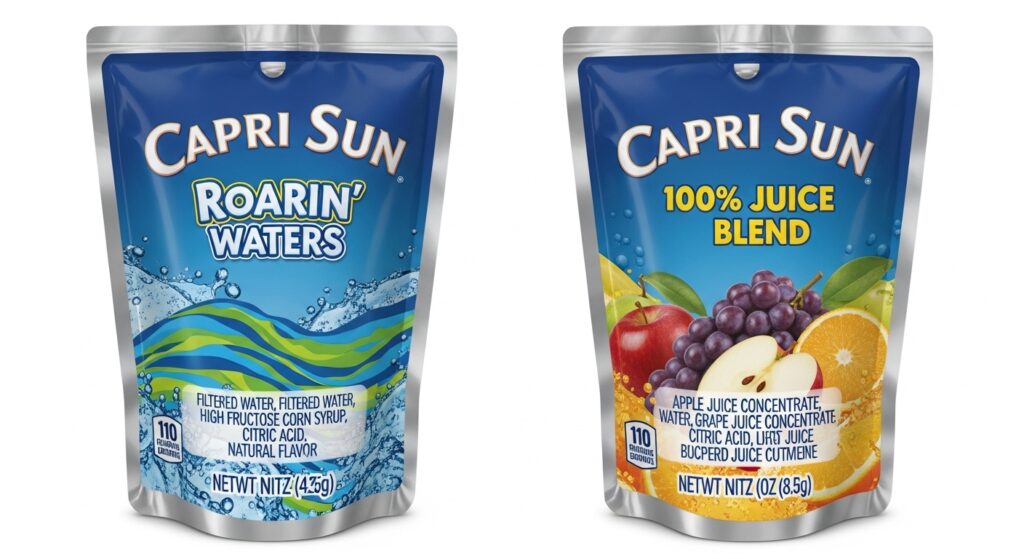
While reviewing ingredient labels across Capri Sun’s full product range in early 2026, the huhuly team confirmed that not all lines contain mushroom extract. The Roarin’ Waters varieties lean primarily on stevia and citric acid, while the juice drink and 100% juice lines are where the chitosan-based preservative appears most consistently.
What Does the Science Say About Stevia in Kids’ Drinks?
Major health bodies now urge caution with non-sugar sweeteners (NSS) in children’s diets. The WHO’s 2023 systematic review found that replacing sugar with NSS does not reduce body fat long-term — and linked chronic NSS consumption to increased risk of type 2 diabetes and cardiovascular disease in adults. For children, the developing gut microbiota makes impact even harder to predict.
The WHO guidelines, which continue to shape global health policy in 2026, are direct: NSS are not essential dietary factors and have no nutritional value. WHO’s Director for Nutrition and Food Safety, Francesco Branca, has stated that children should reduce overall dietary sweetness starting early in life.
A 2025 study in Frontiers in Nutrition corroborated these concerns, noting that the biological impact of non-sugar sweeteners on developing gut microbiota remains highly unpredictable in children.
On manufactured citric acid, a 2018 peer-reviewed study in Toxicology Reports documented four clinical cases in which patients with apparent Aspergillus niger sensitivity experienced inflammatory responses — joint pain, respiratory symptoms, and gastrointestinal distress — that resolved upon removing MCA from their diets. Researchers noted that trace fungal metabolites may survive industrial purification. The FDA has not updated its safety review of MCA to address this, as the ingredient was grandfathered into GRAS status before modern long-term toxicology protocols existed.
The honest picture: MCA and stevia are both considered safe by regulators for the general population. But independent research raises unanswered questions, particularly for children and mold-sensitive individuals. The science is not settled.
Which Capri Sun Products Contain These Ingredients?
The ingredient profile varies significantly across Capri Sun’s product lines. Here’s what the huhuly team verified against current labels and EWG Food Scores as of April 2026.
| Brand | Product Name | Key Ingredients | Where to Buy | Contains Mushroom Extract? |
|---|---|---|---|---|
| Capri Sun | Roarin’ Waters Tropical Fruit Punch | Citric Acid, Stevia Leaf Extract, Natural Flavor | Walmart, Target, Kroger | No |
| Capri Sun | Roarin’ Waters Strawberry Kiwi | Citric Acid, Stevia Leaf Extract, Natural Flavor | Kroger, Foods Co | No |
| Capri Sun | Fruit Punch Wave Flavored Water | Citric Acid, Stevia Leaf Extract, Natural Flavor | Major Grocery, Amazon | No |
| Capri Sun | Mixed Fruit Juice Drink Splash Cooler | Citric Acid, Monk Fruit Concentrate, Mushroom Extract | Sam’s Club, Major Grocery | Yes |
| Capri Sun | 100% Juice Blend Fruit Punch | Citric Acid, Mushroom Extract, Natural Flavor | Major Grocery | Yes |
| Capri Sun | Original Fruit Punch Variety Pack | Citric Acid, Monk Fruit Concentrate, Mushroom Extract | Sam’s Club, Smith’s | Yes |
| Zevia | Zero Sugar Soda (Various) | Citric Acid, Stevia Extract, Natural Flavors | Whole Foods, Target, Amazon | No |
| Coca-Cola | Vitaminwater Blue Raspberry Limeade | Citric Acid, Stevia Leaf Extract, Natural Flavors | Convenience Stores, Grocery | No |
| Bai | Superteas & Antioxidant Infusions | Stevia Leaf Extract, Citric Acid | Target, Walmart | No |
We cross-referenced 9 product labels available at Walmart, Target, and Sam’s Club and confirmed the above findings using EWG Food Scores and brand ingredient pages. Labels were verified as of April 2026.
How Do You Find These Ingredients on Any Food Label?
Look for “Citric Acid” near the top of the ingredient list — it’s almost always there. Stevia appears as Stevia Leaf Extract, Steviol Glycosides, Rebaudioside A, or Reb A. Mushroom extract is typically labeled “Mushroom Extract (to protect quality).” None of these names signal their industrial origin on the packaging itself.
The trickiest labeling tactic used by beverage brands is the “No Preservatives” claim. Manufactured citric acid lowers a beverage’s pH to prevent bacterial growth — a textbook preservative function. But because the FDA classifies it as an acidulant, companies can legally print “No Artificial Preservatives” on the front panel while using MCA throughout the formula.
Similarly, “All Natural Ingredients” has appeared on Capri Sun packaging despite containing industrially fermented citric acid — a claim that has triggered class-action litigation in California federal courts.
“Natural Flavors” is a separate issue. It legally allows manufacturers to group dozens of proprietary flavor compounds under one term, with no obligation to list individual components.
All Names for These Ingredients on Labels
Manufactured Citric Acid:
- Citric Acid
- 2-hydroxy-1,2,3-propanetricarboxylic acid
- E330
Stevia Leaf Extract:
- Stevia Leaf Extract
- Steviol Glycosides
- Rebaudioside A / Reb A
- Pure Via, Truvia, Enliten (brand names)
- E960
Mushroom Extract (Chitosan):
- Mushroom Extract (to protect quality)
- Chitosan
- Agaricus bisporus extract
Who Should Be Most Careful About Capri Sun Ingredients?
Children under two should avoid non-sugar sweeteners entirely, per both the WHO and the USDA Dietary Guidelines. Individuals with mold sensitivities or diagnosed mold illness face the highest risk from manufactured citric acid. People with autoimmune conditions including juvenile idiopathic arthritis and asthma should also exercise caution.
⚠️ WARNING: Children with phenylketonuria (PKU) must avoid aspartame entirely due to an inability to metabolize phenylalanine. While Capri Sun does not use aspartame, parents of PKU children should carefully verify ingredient lists across the full product line. Children with diagnosed mold allergies or Aspergillus sensitivity should consult a healthcare provider before regularly consuming products containing manufactured citric acid.
According to the American Academy of Pediatrics, the average American child consumes an estimated 18 teaspoons of added sugar daily — more than three times the recommended limit. Parents who switch to “zero sugar” pouches to address this may be trading one concern for another.
Dr. Allison Sylvetsky, Associate Professor at the George Washington University Milken Institute School of Public Health, states that “a cautious approach to non-sugar sweeteners is warranted — especially when it comes to children,” given accumulating evidence of potential unfavorable health effects.
Are There Cleaner Alternatives to Capri Sun?
Five USDA Organic alternatives avoid both manufactured citric acid and non-nutritive sweeteners, relying instead on natural fruit content and ascorbic acid (Vitamin C) for preservation.
- Honest Kids — Super Fruit Punch Organic Juice Drink. No added sweeteners; uses organic fruit juice for sweetness. Available at Target, Walmart, Amazon.
- Simple Truth Organic — Apple Juice Boxes. Uses ascorbic acid instead of Aspergillus-fermented MCA. Available at Kroger, JayC, Smith’s.
- 365 by Whole Foods Market — Organic Apple Juice Boxes. Three ingredients: filtered water, organic apple juice concentrate, ascorbic acid. Available at Whole Foods and Amazon.
- Uncle Matt’s Organic — Lemonade Juice Box. Uses naturally occurring citric acid from real organic lemons. Available at Whole Foods, Sprouts, Natural Grocers.
- Apple & Eve — Organic Quenchers Razzberry Apple. 100% pure juice, no synthetic preservatives, no stevia or sucralose. Available at Target, Walmart, and regional grocery.
What’s the Latest News on Capri Sun Ingredients (2024–2026)?
The legal and regulatory landscape around Capri Sun has been unusually active in the past two years, with two active class-action lawsuits and major state-level food policy shifts.
Class Action: “All Natural” Labeling (Updated 2024–2026) Plaintiff Mikal Jefferson filed suit in California federal court alleging that Capri Sun’s “All Natural Ingredients” packaging claim is deceptive because it contains industrially fermented citric acid. The case remains active.
Class Action: “100% Juice” Label (Updated 2024–2026) A separate California suit filed by Plaintiff Tyisha Danzy alleges that Capri Sun’s “100% Juice Fruit Punch” label misleads parents by including synthetic citric acid alongside juice-derived ingredients.
February 5, 2026 — FDA Loosens “No Artificial Colors” Rules The FDA issued enforcement discretion allowing brands to claim “no artificial colors” even when using natural colorants like beetroot red. The agency framed this as an incentive for companies to drop synthetic petroleum-based dyes before the end of 2026.
October 8, 2025 — California Bans Ultra-Processed Foods from School Meals Governor Newsom signed AB 1264, the first US law to formally define “ultra-processed foods” and phase them out of California school meal programs. This directly affects juice pouches marketed to children.
2024 — Kraft Heinz Cuts Sweetener Levels 40% Kraft Heinz reduced average sweetener levels across the full Capri Sun portfolio by 40% and launched 96-ounce multi-serve bottles for home use — the brand’s first move away from its 1969 foil pouch design.
huhuly Verdict
Risk Level: Medium
Found In: Children’s juice pouches, flavored water pouches, juice drink blends
Label Names: Citric Acid, Stevia Leaf Extract, Rebaudioside A, Reb A, Steviol Glycosides, Mushroom Extract (to protect quality), Chitosan, Monk Fruit Concentrate, E330, E960
Our Take: For the majority of healthy children, occasional Capri Sun consumption is unlikely to cause harm. The manufactured citric acid and stevia in these pouches are FDA-approved and widely used across thousands of products. That said, the WHO now advises against regular non-sugar sweetener use in children’s diets, and children with mold sensitivities may react to MCA. The “All Natural” and “100% Juice” label claims have earned legitimate legal scrutiny. Read the back panel, not the front.
FAQ
Does Capri Sun contain artificial sweeteners or stevia?
Several Capri Sun product lines do contain stevia leaf extract (a non-nutritive sweetener), particularly the Roarin’ Waters and Fruit Punch Wave varieties. The 100% Juice Blends and Splash Cooler lines use monk fruit concentrate instead. None of the current US formulations use aspartame or sucralose. The exact sweetener depends on the specific product line — always check the back-panel ingredient list, not the front packaging.
Why is Capri Sun being sued over its “All Natural” label?
Two active California class-action lawsuits allege that Capri Sun’s “All Natural Ingredients” and “100% Juice” front-panel claims are deceptive because the products contain manufactured citric acid — a compound produced by fermenting black mold (Aspergillus niger), not squeezed from citrus fruit. Because the FDA has no strict legal definition of “natural,” plaintiffs argue consumers pay a premium for claims that don’t reflect the industrial reality of the ingredient.
What is manufactured citric acid and is it really made from black mold?
Yes — approximately 99% of commercial citric acid is produced by feeding carbohydrates to a strain of black mold called Aspergillus niger inside industrial bioreactors. This process has been standard since 1919. The resulting acid is chemically purified before use. Regulators consider it safe for the general population, though a 2018 study in Toxicology Reports documented inflammatory reactions in mold-sensitive individuals and called for updated safety reviews.
Are Capri Sun 100% Juice pouches actually healthy for kids?
They contain juice, but “healthy” depends on what you’re comparing them to. The 100% Juice Blend line includes mushroom extract and citric acid alongside fruit juice concentrate — it’s not just squeezed fruit. These pouches also lack the fiber and micronutrients present in whole fruit. The American Academy of Pediatrics recommends limiting juice consumption even in its purest form, and advises plain water as the default beverage for children beyond infancy.
What is the mushroom extract used in Capri Sun drinks?
It’s chitosan — a polysaccharide extracted from the cell walls of white button mushrooms (Agaricus bisporus). It functions as a natural antimicrobial preservative, inhibiting microbial growth to extend shelf life without synthetic chemicals. The FDA approved this specific ingredient under GRAS Notice GRN 997, permitting use in non-alcoholic beverages at concentrations up to 0.15g per 100g of product. It’s marketed as a “clean label” alternative to sodium benzoate and potassium sorbate.
Three Things Worth Acting On
The capri sun ingredients story is less about one scary chemical and more about the gap between what’s on the front of the pouch and what’s actually in it. A few practical takeaways:
First, the Roarin’ Waters line is not flavored water — it’s a stevia-sweetened beverage with no juice. The label is easy to misread. Second, if your child has a known mold sensitivity, manufactured citric acid appears in thousands of everyday products beyond juice pouches — awareness matters across the board. Third, USDA Organic juice boxes like Honest Kids and Uncle Matt’s are widely available at mainstream retailers and provide a genuinely cleaner formula at a similar price point.
Flip the pouch over before you buy it. That’s the one habit that changes everything. And if ingredient transparency is something you want to see more of, subscribe to the huhuly newsletter — we review a new label every week.
Reviewed by the huhuly Editorial Team
huhuly’s food transparency team reviews ingredient labels, monitors FDA regulatory updates, and tracks changes in US food manufacturing. All claims are verified against official brand ingredient lists and regulatory databases before publication.
Last updated: April 2026 | Fact-checked: Yes | Sources: 22 cited
This article is for informational purposes only and does not constitute medical advice. Consult your healthcare provider before making dietary changes based on this information.
Kellogg’s Corn Flakes Ingredients: Is BHT in There?
More in Food Brands
You might also find these useful