Carmine E120: The “Natural” Dye No One Explains
Table of Contents
- What Is Carmine (E120)?
- What Is Carmine?
- Why Is It in American Food?
- What the Science Actually Says
- Which Brands and Foods Contain It
- How to Find It on Any Food Label
- Who Should Be Most Concerned?
- Cleaner Alternatives
- Latest News — 2024 to 2026
- huhuly Verdict
- FAQ
- Three Things Worth Remembering
What Is Carmine (E120)?
That bright pink strawberry yogurt you picked up this morning? There’s a decent chance the color came from a crushed insect. Carmine in food is more common than most people realize — and it’s about to get even more widespread.
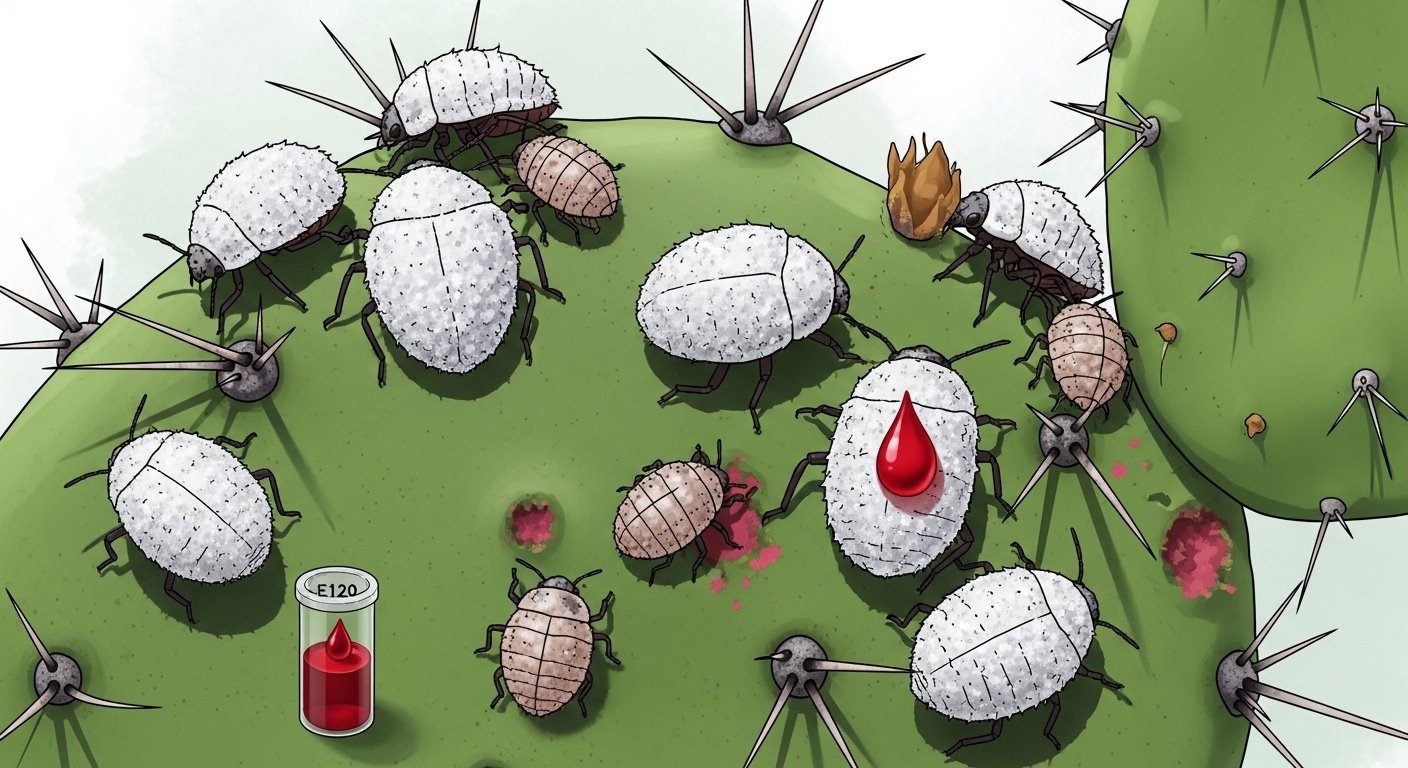
The red dye known as carmine, or E120, is extracted from female cochineal insects (Dactylopius coccus) harvested from cacti in Peru and the Canary Islands. It takes roughly 70,000 insects to produce one pound of dye. And right now, thanks to a major federal push to eliminate synthetic dyes, food companies across the U.S. are adding it to products that never used it before.
This isn’t a scare story. For most people, carmine is perfectly safe. But if you’re vegan, allergic to shellfish, or follow a Halal or Kosher diet, this is an ingredient you need to know how to find.
What Is Carmine?
Carmine is a natural red pigment derived from the aluminum or calcium salts of carminic acid — a compound found in the bodies of female cochineal insects. Its chemical base, carminic acid (C₂₂H₂₀O₁₃), is what gives it that vivid red color.
The manufacturing process is simple but not subtle. Insects are dried, ground into powder, and boiled in water or an alkaline solution. The liquid is then treated with alum to precipitate the red pigment into a solid — what the industry calls “carmine lake.” The result is one of the most stable natural colorants available. Unlike beet juice, carmine doesn’t fade under heat, light, or oxidation.
That stability is why the food industry has used it for centuries. In your ingredient list, it shows up under several names: carmine, cochineal extract, carminic acid, Natural Red 4, and the European code E120. The FDA classifies it as a color additive exempt from certification under CAS Reg No. 1390-65-4.
Why Is It in American Food?
Carmine has always been around in processed food, but 2025 changed everything. In April of that year, the HHS and FDA jointly announced a goal to voluntarily phase out six petroleum-based synthetic dyes — including Red 40, Red 3, and Yellow 5 — from the U.S. food supply by end of 2026.
Carmine, being a natural dye, became an immediate beneficiary. Companies that spent decades formulating products around Red 40 now need an alternative that performs similarly, and carmine is the most color-stable natural option available.
State legislatures accelerated the shift further. California’s AB418 banned synthetic Red Dye No. 3 starting January 1, 2027. Texas and Louisiana passed laws in June 2025 requiring warning labels on products containing certain artificial additives. The message to food manufacturers was clear: go natural, or add a warning.
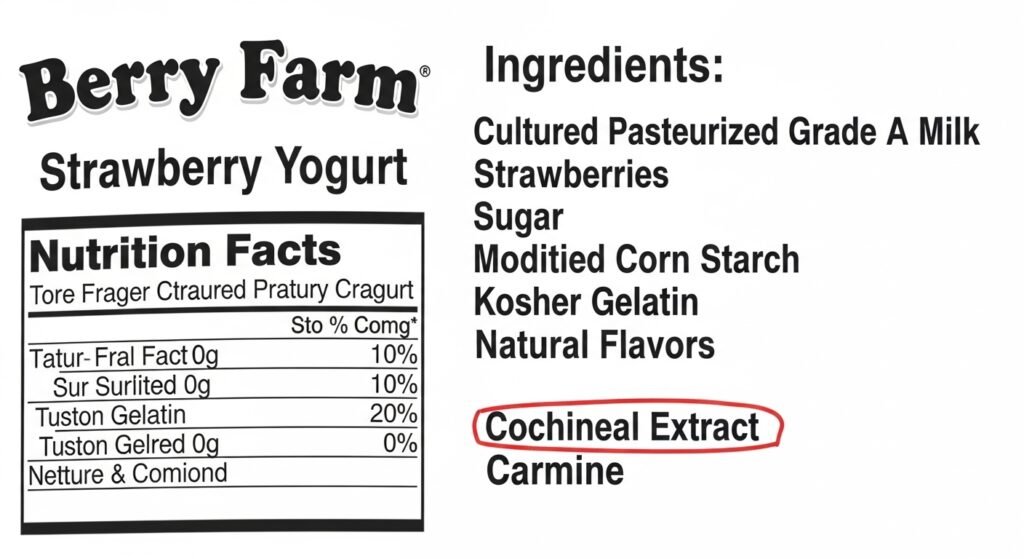
While reviewing ingredient labels across flavored dairy products and candy at major U.S. retailers in 2025, the huhuly team found carmine increasingly appearing in reformulated products that previously listed Red 40 — including several strawberry-flavored yogurt lines. Consumers who hadn’t changed their shopping habits were unknowingly switching dye sources.
According to IMARC Group, the global carmine market was valued at approximately $57 million in 2024 and is projected to reach over $92 million by 2033, growing at roughly 5.5% annually.
What the Science Actually Says
Here’s the straightforward version: carmine is not toxic. For the vast majority of people, eating it causes no reaction whatsoever.
Both JECFA (the Joint FAO/WHO Expert Committee on Food Additives) and the European Food Safety Authority (EFSA) set an Acceptable Daily Intake of 5 mg/kg of body weight per day. The average American consumer’s daily intake sits well below this threshold. Extensive animal studies evaluating carmine at doses up to 1,000 mg/kg per day found no toxicological, genotoxic, or carcinogenic effects, according to EFSA’s 2023 re-evaluation.
The safety concern that does exist is specific and real: allergic reactions. A 2022 study published in Advances in Dermatology and Allergology (PMC8953891) evaluated 110 patients with suspected hypersensitivity to food additives and found that 8% were diagnosed with a specific allergy to carmine. Reactions range from mild hives to respiratory distress and, in rare cases, anaphylaxis.
Researchers are still debating the exact mechanism. It may be carminic acid itself, or it may be the trace insect proteins that survive the purification process. The EFSA notes that for allergic individuals, there is effectively no safe threshold dose — even tiny amounts can trigger a response. This uncertainty is worth taking seriously if you or your child have known insect or shellfish allergies.
For everyone else, current research does not suggest meaningful health risk from normal dietary exposure.
Which Brands and Foods Contain It
The food categories most associated with carmine are flavored yogurts, gummy candies, processed meats, pink-tinted beverages, and red velvet baked goods. According to a study published in Advances in Dermatology and Allergology, carmine was present in 67% of processed meat assortments that contained dyes at all.
| Brand | Product | Category | Contains Carmine? |
|---|---|---|---|
| M.A.C. Cosmetics | Extra Dimension Skinfinish, Double Gleam | Cosmetics | Yes (verified) |
| Glossier | Cloud Paint Blush, Dusk & Storm | Cosmetics | Yes (verified) |
| Revlon | ColorStay Line Creator, Leathercraft | Cosmetics | Yes (verified) |
| Stila | Select blushes | Cosmetics | Yes (verified) |
| Fenty Beauty | Select eyeshadows | Cosmetics | Yes (verified) |
| Various processed meat brands | Sausages, hot dogs with added color | Food | Commonly present |
Note: Several major food brands — including candy and frozen novelty manufacturers — are currently mid-reformulation following the 2025 federal dye phase-out. Ingredient lists are changing faster than packaging cycles, so always check the label directly, not a product image online.
We cross-referenced cosmetic product labels available on SkinSAFE and confirmed the brand entries above as of early 2026.
How to Find It on Any Food Label
The FDA requires carmine to be named explicitly on ingredient lists — a rule it tightened in 2011, closing a loophole that previously allowed it to hide under “artificial coloring” or “color added.”
Today’s tricky tactic is different: products prominently marketed as using “Only Natural Colors” don’t clarify that those natural colors may come from insects. If you need to avoid carmine for dietary or allergy reasons, you have to read the ingredient list, not the front-of-pack claims.
Carmine almost always appears at the very end of the ingredient list, typically nested in the “Contains 2% or less of…” section.
All Names for Carmine on Labels
- Carmine
- Cochineal Extract
- Carminic Acid
- Natural Red 4
- Crimson Lake
- Carmine Lake
- E120 (European products)
- CI 75470 (cosmetics)
Who Should Be Most Concerned?
For most adults, carmine warrants awareness rather than avoidance. For some groups, it requires active vigilance.
⚠️ WARNING The following groups should read ingredient labels carefully before consuming products with carmine:
People with shellfish or insect allergies — Carmine is derived from an arthropod. Cross-reactivity with shellfish allergies is documented, and reactions can be severe, including anaphylaxis.
Individuals with chronic urticaria (CIndU or CSU) — Research indicates a higher prevalence of adverse reactions to E120 in this population.
Vegans and vegetarians — Carmine is an animal-derived product. It is not plant-based despite being classified as a “natural” color.
Those observing Halal or Kosher diets — Carmine’s permissibility varies by religious authority. Many Kosher certifications exclude it entirely. Halal status is contested across different Islamic scholarly opinions.
Children with atopic eczema or asthma — May have elevated sensitivity. Consult a healthcare provider if you notice reactions to red or pink foods.
Cleaner Alternatives
The market for insect-free red colorants has matured significantly. If you’re a consumer, look for these on ingredient lists. If you’re a formulator, these are the most viable options currently available:
Red Beet Extract / Beetroot Powder (Givaudan, IFF) — Works well in dairy and neutral-pH foods, but fades under high heat. Best for cold-process products.
Anthocyanins from Sweet Potato and Black Carrot (Oterra) — Highly stable in acidic environments. A strong option for beverages and fruit preparations.
EXBERRY® Coloring Foods (GNT) — Made from concentrated fruits and vegetables using only water and physical pressing. Fully vegan, clean-label, and commercially available at scale.
Emulsitech® Paprika (Givaudan) — A water-soluble emulsion for orange-to-red shades. Good for applications where beet fading is a problem.
Bio-identical Carmine (Debut Biotech) — Launched in late 2024, this is precision-fermentation carminic acid that chemically mimics the real thing without using any insects. It’s vegan, and it may be the most significant development in this space in years.
Latest News — 2024 to 2026
February 5, 2026 — FDA Enforcement Discretion on “No Artificial Colors” Claims The FDA announced it would allow voluntary “absence of artificial food colors” label claims, giving brands using carmine an active marketing advantage. This move is expected to accelerate reformulation timelines across the snack, dairy, and beverage sectors.
April 22, 2025 — HHS/FDA Synthetic Dye Phase-Out Announcement HHS and FDA announced a goal to eliminate six petroleum-based synthetic dyes by end of 2026. FDA Commissioner Dr. Marty Makary stated the agency was asking companies to “substitute petrochemical dyes with natural ingredients.” This single announcement is the primary driver of carmine’s current demand surge.
September 3, 2025 — Texas and Louisiana Warning Label Laws Texas (SB 25) and Louisiana (SB 14) passed legislation requiring warning labels on products containing certain synthetic additives, with requirements taking effect in 2027. Both laws are accelerating voluntary reformulations toward natural alternatives including carmine.
Late 2024 — Debut Biotech Launches Vegan Carmine Alternative Debut Biotech commercially launched its precision-fermentation carminic acid, positioned specifically at the vegan beauty market and food companies seeking insect-free natural red dye.
huhuly Verdict
Risk Level: Low (for most people) / High (for arthropod-allergic individuals)
Found In: Flavored yogurts, gummy candies, processed meats, pink beverages, red baked goods, lipsticks, blushes, eyeshadows
Label Names: Carmine, Cochineal Extract, Carminic Acid, Natural Red 4, E120, CI 75470, Crimson Lake
Our Take: Carmine is a well-tested natural colorant that poses no meaningful health risk for the majority of consumers. The concern is specific: if you have shellfish or insect allergies, it can trigger serious reactions with no safe minimum dose. Equally important, this dye is made from insects, which matters deeply for vegans, vegetarians, and many religious dietary practices. The “natural colors” marketing on the front of a package tells you nothing about whether bugs were involved. Flip it over and check.
FAQ
What foods contain carmine E120?
Carmine is most commonly found in strawberry and raspberry flavored yogurts, gummy candies, processed meats like sausages and hot dogs, pink-tinted beverages, and red velvet baked goods. According to a study published in Advances in Dermatology and Allergology, it appeared in 67% of processed meat assortments that contained any added dyes. Its presence is increasing as food manufacturers reformulate away from synthetic dyes following the 2025 federal phase-out initiative.
Is carmine safe for children to eat every day?
For most children, yes — both EFSA and JECFA set an Acceptable Daily Intake of 5 mg/kg of body weight per day, and typical dietary exposure falls well below this. However, children with asthma, atopic eczema, or known arthropod sensitivities may experience heightened reactions. Studies suggest that children with Chronic Inducible Urticaria have a higher prevalence of adverse responses to E120. If your child has any of these conditions, consult a pediatrician before dismissing label checks.
What is the difference between Red 40 and carmine?
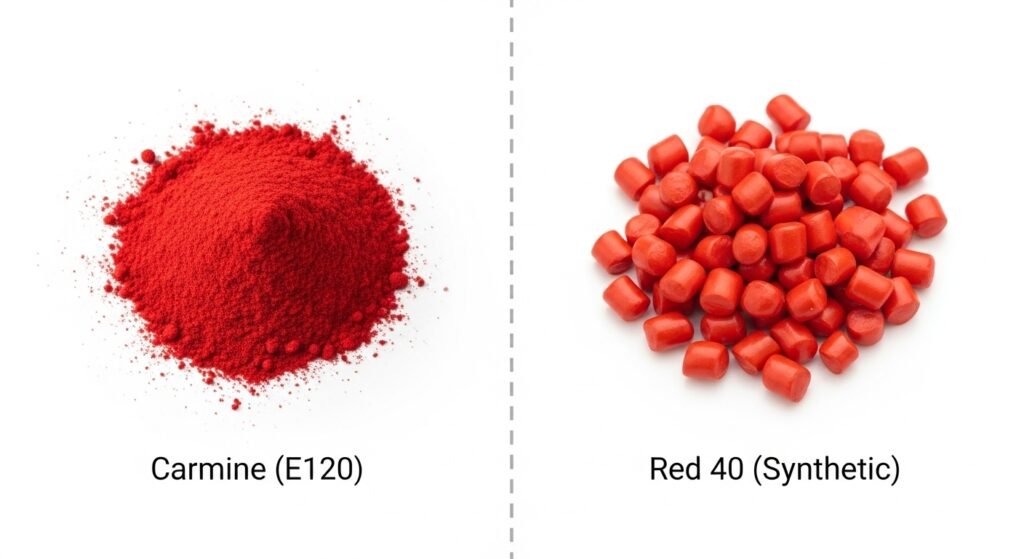
Red 40 is a petroleum-derived synthetic dye; carmine is extracted from insects. Red 40 is currently being phased out under 2025 federal guidelines due to concerns about its petroleum origin and potential behavioral effects in children. Carmine is classified as a natural colorant and is not subject to the same phase-out. The practical difference for consumers is that carmine carries an allergy and dietary concern that Red 40 does not — it affects vegans, those with shellfish cross-reactivity, and many following Halal or Kosher diets.
Is carmine vegan or halal?
Carmine is not vegan. It is derived directly from insects, which are animals. Most mainstream vegan certifications exclude it. Its Halal status is more nuanced — some Islamic scholarly bodies permit it, others do not, as insect consumption rules vary in Islamic jurisprudence. For Kosher purposes, most certification authorities classify it as non-Kosher since the cochineal insect is not a permitted food under Jewish dietary law. If your diet excludes animal-derived ingredients, carmine requires active avoidance.
Why is a natural dye made from insects being used in more foods now?
The short answer is regulation. The FDA and HHS announced in April 2025 that six petroleum-based synthetic food dyes would be voluntarily phased out by end of 2026. Carmine is one of the most commercially viable natural alternatives because it is heat-stable, light-resistant, and produces consistent bright red and pink shades. According to IMARC Group, the carmine market is projected to grow at roughly 5.5% annually through 2033, driven almost entirely by this regulatory shift away from synthetic colorants.
Three Things Worth Remembering
Carmine has a long, well-studied safety record. For the large majority of people who eat it, nothing happens — it just makes food look red. But it is made from insects, and that fact gets buried under “natural colors” marketing with remarkable consistency.
Check the back label on pink and red foods, especially flavored dairy, candy, and processed meats. Look for any of the names in the label section above. And if you have shellfish allergies or follow a vegan, Halal, or Kosher diet, this is one ingredient worth adding to your personal watchlist.
If you want us to check a specific product’s label for you, send it to the huhuly community — we read these so you don’t have to.
Reviewed by the huhuly Editorial Team
huhuly’s food transparency team reviews ingredient labels, monitors FDA regulatory updates, and tracks changes in U.S. food manufacturing. All claims are verified against official brand ingredient lists and regulatory databases before publication.
Last updated: February 2026 | Fact-checked: Yes | Sources: 18 cited
This article is for informational purposes only and does not constitute medical advice. Consult your healthcare provider before making dietary changes based on this information.
Acheta Powder in Food: 11 Brands Using It in 2026
More in Ingredients
You might also find these useful