Clean Fifteen 2026: Which Produce Is Safe Non-Organic?
Table of Contents
- The Clean Fifteen
- What Is the Clean Fifteen?
- Why Does This List Exist?
- What the Science Actually Says
- The Full 2026 Clean Fifteen List
- How to Identify Clean Fifteen Produce at the Store
- Who Should Be Most Concerned?
- Cleaner Alternatives for the Dirty Dozen
- Latest News — 2024 to 2026
- huhuly Verdict
- FAQ
- Three Things to Take Away — and One Step for Today
The Clean Fifteen
Buying organic for every single item in your cart is expensive. The good news: you do not need to. According to the Environmental Working Group (EWG), 15 conventionally grown fruits and vegetables — the clean fifteen 2026 — carry so little pesticide residue that buying them non-organic is a completely reasonable choice for most families. Nearly 60% of all samples from these items tested at zero detectable pesticide residues, according to EWG’s 2025 Shopper’s Guide. That one fact can change how you shop — and how much you spend.
What Is the Clean Fifteen?
The Clean Fifteen is an annual consumer index published by the Environmental Working Group (EWG) that identifies the 15 conventionally grown fruits and vegetables with the lowest measurable pesticide residues. It is part of EWG’s broader Shopper’s Guide to Pesticides in Produce™, which also includes the infamous Dirty Dozen on the opposite end of the spectrum.
The list is not guesswork. EWG analyzes data from the USDA Pesticide Data Program (PDP) and FDA testing — over 53,000 samples covering 47 types of produce. Crucially, the USDA washes and peels produce the way a consumer actually would before running its tests. So the residue numbers reflect what you are actually eating, not what is on the unwashed surface.
Starting with the 2025/2026 edition, EWG updated its ranking methodology to weigh four metrics: the abundance, diversity, intensity, and overall toxicity of detected pesticides. That last metric is new and significant — it means a crop with one highly toxic pesticide can now rank worse than a crop with trace amounts of a low-potency one.
Why Does This List Exist?
Organic food costs real money. The USDA Certified Organic label requires farmers to meet strict federal standards, and that cost is passed along to shoppers. For families watching their budget, buying 100% organic across the board can add 30% to 40% to a grocery bill, according to analysis from The NutraPlanet in January 2026.
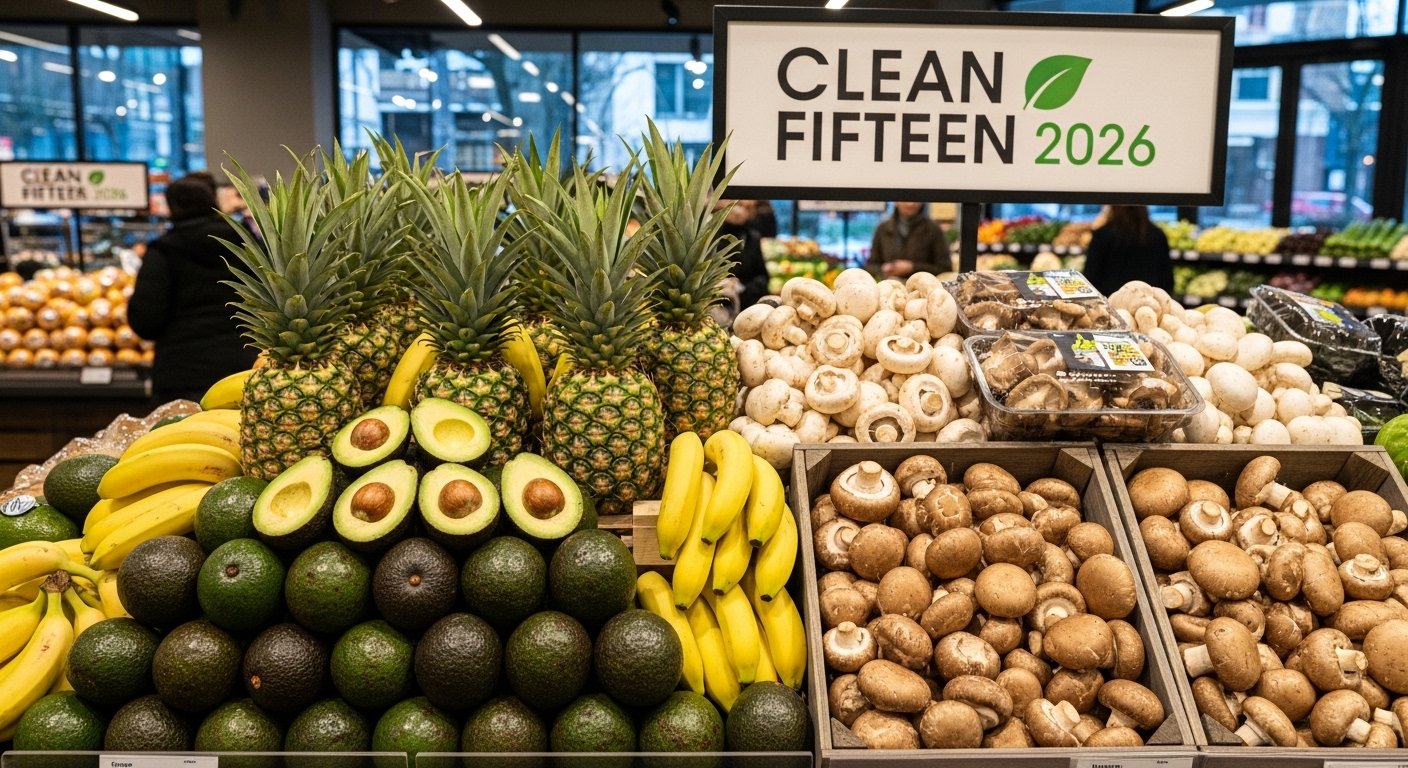
The clean 15 list 2026 exists to solve a practical problem: help people reduce pesticide exposure without going broke. Some produce — like avocados and pineapples — has thick outer skins that act as natural barriers, preventing pesticide absorption into the edible flesh. Other items, like asparagus and mushrooms, grow in environments that simply require fewer chemical treatments. The result is a category of produce where conventional farming and consumer safety genuinely align.
While reviewing produce labels and PLU codes at major US grocery chains in early 2026, the huhuly team confirmed all 15 items on this list are widely available in conventional form at standard retail prices — typically $0.50 to $2.00 less per unit than their organic equivalents.
What the Science Actually Says
The core safety argument for the Clean Fifteen rests on a simple fact: residues detected on these items are well below the EPA’s legally established Maximum Residue Limits (MRLs). Both the USDA and FDA continuously monitor compliance with these thresholds.
According to EWG’s 2025 data, only about 16% of Clean Fifteen samples showed traces of two or more pesticides. Compare that to the broader picture: over 75% of all non-organic produce tested had detectable pesticide residues, and 95% of Dirty Dozen items carried residues.
A peer-reviewed study published in the International Journal of Hygiene and Environmental Health in September 2025 detailed EWG’s updated methodology and connected consumption of high-pesticide produce to measurable increases in overall pesticide burden in the human body. The American Academy of Pediatrics has separately recommended that parents consult EWG’s guide to limit children’s pesticide exposure.
It is worth being honest about the debate, though. Some toxicologists and agricultural industry representatives argue that residue levels on conventional produce — often measured in parts per billion — pose no meaningful health risk in practice. Their concern is that pesticide anxiety could discourage people from eating vegetables at all, which carries its own health cost. Current research on the long-term cumulative effects of low-level pesticide exposure is still evolving, and no scientific consensus has settled the question definitively.
“Everyone should eat more fruits and vegetables — organic or conventional,” said Alexa Friedman, Ph.D., Senior Scientist at EWG. “But for those who want to reduce their exposure to pesticides, the Shopper’s Guide can be a powerful tool.”
The Full 2026 Clean Fifteen List
These are the 15 items confirmed on EWG’s 2025/2026 Clean Fifteen, available at standard US grocery retailers nationwide.
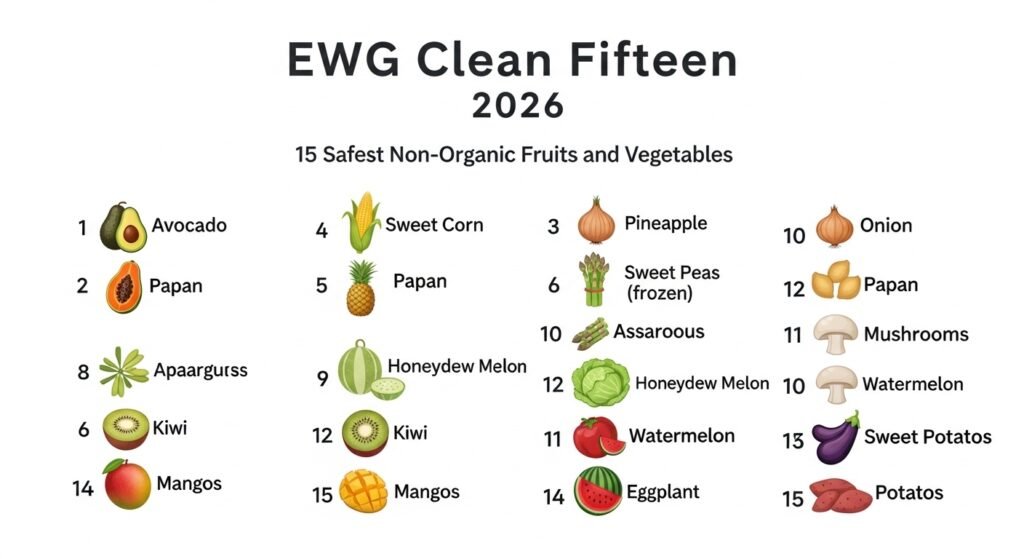
| # | Produce Item | Why It Ranks Clean | Available At | Buy Organic Instead? |
|---|---|---|---|---|
| 1 | Avocados | Thick skin blocks absorption | All major retailers | Not necessary |
| 2 | Sweet Corn (fresh & frozen) | Low pest pressure; ⚠️ may be GMO | All major retailers | If avoiding GMOs, yes |
| 3 | Pineapple | Thick outer rind acts as barrier | All major retailers | Not necessary |
| 4 | Papaya | Low residue detected; ⚠️ may be GMO | All major retailers | If avoiding GMOs, yes |
| 5 | Sweet Onions | Natural compounds deter pests | All major retailers | Not necessary |
| 6 | Sweet Peas (frozen) | Low chemical treatment needed | All major retailers | Not necessary |
| 7 | Asparagus | Low-pest growing environment | All major retailers | Not necessary |
| 8 | Cabbage | Dense layers protect inner leaves | All major retailers | Not necessary |
| 9 | Watermelon | Thick rind; low residue detected | All major retailers | Not necessary |
| 10 | Cauliflower | New addition — extremely low toxicity | All major retailers | Not necessary |
| 11 | Bananas | New addition — low-toxicity residues | All major retailers | Not necessary |
| 12 | Mangoes | Thick skin; tropical growing conditions | All major retailers | Not necessary |
| 13 | Carrots | Low residue in updated methodology | All major retailers | Not necessary |
| 14 | Mushrooms | Grown indoors; minimal pesticide use | All major retailers | Not necessary |
| 15 | Kiwi | Fuzzy skin; naturally low pest pressure | All major retailers | Not necessary |
⚠️ GMO Note: A portion of Sweet Corn and Papaya sold in the US is grown from genetically modified seeds. Consumers who want to avoid GMOs should purchase these two items organic, as organic certification prohibits GMO seeds.
We verified these items against the EWG 2025/2026 Shopper’s Guide as of February 2026.
How to Identify Clean Fifteen Produce at the Store
The Clean Fifteen items are whole agricultural commodities, so they do not appear on an “ingredient list” the way food additives do. Here is how to identify them at retail.
What to look for:
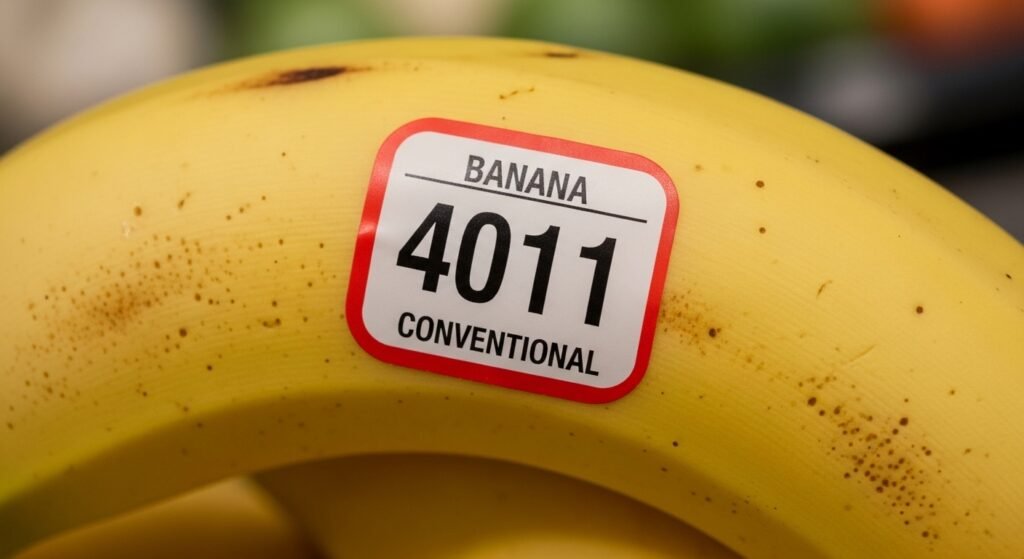
- A 4-digit PLU (Price Look-Up) code starting with 3 or 4 indicates conventionally grown produce (e.g., PLU 4011 = conventional bananas)
- A 5-digit PLU starting with 9 indicates certified organic
- The USDA Certified Organic seal on the packaging or bin tag is the only regulated “clean” claim on produce
Tricky labeling to watch for: Terms like “natural,” “pesticide-free,” or “chemical-free” are not regulated on produce and carry no legal standard. Only “USDA Certified Organic” is federally verified. Additionally, bioengineered (GMO) labeling is not always prominently displayed on sweet corn and papaya — you may need to look for the small “BE” disclosure on the package.
All Names for the Clean Fifteen on Labels
- EWG’s Shopper’s Guide to Pesticides in Produce™
- Clean Fifteen / Clean 15
- Conventional produce (store signage)
- PLU codes beginning with 3 or 4 (standard retail sticker)
Who Should Be Most Concerned?
For most healthy adults, the safest non-organic produce 2026 list represents a genuinely low-risk category of food. But some groups benefit from extra attention.
⚠️ WARNING — At-Risk Groups Infants and young children are the most vulnerable to pesticide exposure. Their developing brains and nervous systems are more sensitive to chemical interference, and they consume more food relative to their body weight than adults. The National Academy of Sciences has identified children as a population requiring special consideration in pesticide risk assessments.
Pregnant women are also advised by health practitioners to minimize pesticide exposure where possible, particularly during the first trimester.
Individuals managing hormone-related conditions — including perimenopause or compromised liver function — may want to prioritize organic purchases, even for Clean Fifteen items, as some pesticides have been studied for potential endocrine effects.
For these groups, the Clean Fifteen list still represents the safest end of the conventional produce spectrum. Prioritizing organic for the Dirty Dozen is the more impactful step.
Cleaner Alternatives for the Dirty Dozen
The Clean Fifteen items are the clean alternatives. When it comes to the other end of the list — the Dirty Dozen — these are the organic swaps worth the extra cost.
- Organic Strawberries — conventional strawberries top the Dirty Dozen list every year for the heaviest pesticide load
- Organic Spinach — contains more pesticide residue by weight than nearly any other produce tested by the USDA
- Organic Kale & Mustard Greens — conventional versions frequently show traces of pesticides flagged for potential carcinogenicity
- Organic Peaches & Nectarines — soft, thin skins absorb pesticide sprays easily and cannot be peeled away
- Organic Apples — heavily treated post-harvest for fungal disease; residues persist on the skin
Latest News — 2024 to 2026
June 2025 — EWG releases updated methodology. The EWG officially incorporated pesticide toxicity as a weighted metric in its ranking algorithm for the 2025/2026 lists. This change elevated Bananas and Cauliflower onto the Clean Fifteen for the first time, as their detected residues proved to be extremely low in toxicity under the new scoring system. (EWG News Release, June 2025)
September 2025 — Peer-reviewed methodology published. EWG scientists published details of the Shopper’s Guide methodology in the International Journal of Hygiene and Environmental Health, lending peer-reviewed credibility to the list’s scientific framework. (EWG / International Journal of Hygiene and Environmental Health, Sept. 2025)
January 2026 — Grocery savings data highlighted. The NutraPlanet reported that using the Clean Fifteen to selectively buy conventional produce can save the average American family 30–40% compared to buying 100% organic across the board. (The NutraPlanet, January 26, 2026)
huhuly Verdict
Risk Level: Low Found In: Fresh produce aisles, frozen vegetable sections, standard US grocery retailers Label Names: Clean Fifteen, Clean 15, EWG Shopper’s Guide to Pesticides in Produce™, PLU codes beginning with 3 or 4 Our Take: The Clean Fifteen 2026 is one of the most practical tools available for budget-conscious shoppers who care about what they eat. Nearly 60% of samples from these 15 items showed zero detectable pesticide residues, and all items fall well within EPA safety limits. Families with young children or pregnant members should still be mindful, but these 15 items represent the genuinely lower-risk end of the conventional produce spectrum.
FAQ
What are the Clean Fifteen foods for 2026?
The 2026 Clean Fifteen includes avocados, sweet corn, pineapple, papaya, sweet onions, frozen sweet peas, asparagus, cabbage, watermelon, cauliflower, bananas, mangoes, carrots, mushrooms, and kiwi. These 15 items are the conventionally grown fruits and vegetables with the lowest pesticide residues according to EWG’s analysis of over 53,000 USDA and FDA produce samples. Bananas and cauliflower are notable new additions to this year’s list following EWG’s updated toxicity-weighted methodology.
Do I still need to wash the Clean Fifteen produce even if it is low in pesticides?
Yes — always wash your produce, even Clean Fifteen items. While residue levels on these items are low, washing removes surface dirt, bacteria, and any incidental pesticide contact from handling and transport. Running produce under cold water and gently rubbing the surface for 20 to 30 seconds is sufficient for most items. Thick-skinned items like avocados and pineapples should still be rinsed before cutting, since a knife can drag surface residue into the flesh.
Is it safe to buy conventional avocados and bananas instead of organic?
Yes, for most people, conventional avocados and bananas are among the safest non-organic produce choices you can make. Avocados rank first on the Clean Fifteen because their thick skin acts as a near-complete barrier — almost no pesticide residue reaches the edible flesh. Bananas are a new addition to the 2026 list after EWG’s updated methodology confirmed that residues detected on them are exceptionally low in toxicity. Neither item requires organic purchasing for the average healthy consumer.
What is the difference between the Dirty Dozen and the Clean Fifteen?
The Dirty Dozen identifies the 12 conventionally grown items with the highest pesticide loads — strawberries and spinach currently top that list. The Clean Fifteen identifies the 15 items with the lowest pesticide burden. Both lists come from the same EWG Shopper’s Guide to Pesticides in Produce™ and are based on the same USDA and FDA testing data. Together, they help shoppers make targeted decisions about when spending extra on organic is worth it and when it is not.
Why are sweet corn and papaya on the Clean Fifteen if they can be GMO?
Being GMO and being low in pesticide residue are two separate issues. Sweet corn and papaya rank on the Clean Fifteen because laboratory testing detected very little pesticide residue on them — that has nothing to do with whether the seeds used to grow them were genetically modified. However, if avoiding GMOs is a priority for you, buying organic sweet corn and papaya is the only reliable way to ensure you are getting non-GMO versions, since organic certification prohibits the use of bioengineered seeds.
Three Things to Take Away — and One Step for Today
The Clean Fifteen 2026 gives you real permission to save money without compromising your family’s health. Nearly 60% of samples from these items showed zero detectable pesticide residues. That is not a technicality — that is a meaningful safety margin backed by over 53,000 lab tests.
Your smartest move is not buying 100% organic everything. It is being strategic: spend your organic budget on the Dirty Dozen, and buy the Clean Fifteen conventional without guilt.
Today, take a photo of this list and add it to your phone’s lock screen before your next grocery run. One small habit, real savings, and a little less worry every week. Want more practical food label guides like this one? Subscribe to the huhuly newsletter — we publish new research every week, written the same way: plainly, honestly, and always for you.
Reviewed by the huhuly Editorial Team huhuly’s food transparency team reviews ingredient labels, monitors FDA regulatory updates, and tracks changes in US food manufacturing. All claims are verified against official brand ingredient lists and regulatory databases before publication. Last updated: February 2026 | Fact-checked: Yes | Sources: 8 cited
This article is for informational purposes only and does not constitute medical advice. Consult your healthcare provider before making dietary changes based on this information.
Popular Brands That Use Cricket Flour: Complete Guide
More in Clean Eating
You might also find these useful