Clean Label Protein Bars: No Insects (2026 List)
Table of Contents
- 10 Clean Label Protein Bars
- What Is Insect Protein?
- Why Is It Showing Up in American Food?
- What the Science Actually Says
- Which Brands Contain Insect Ingredients?
- How to Find It on Any Food Label
- Who Should Be Most Concerned?
- Cleaner Alternatives
- Latest News — 2024 to 2026
- huhuly Verdict
- FAQ
- What to Do Right Now
10 Clean Label Protein Bars
You picked up a protein bar at checkout, flipped it over, and spotted something in the ingredient list that made you pause. You’re not imagining it — insect protein is real, it’s legal, and it’s quietly making its way into packaged food in the US.
If you’re searching for clean label protein bars with no insects, this guide is for you. We reviewed current ingredient labels so you know exactly which brands use cricket flour, what names to look for, and which bars are genuinely free of insect-derived ingredients. No guesswork, no alarmism — just the facts.
What Is Insect Protein?
Insect protein is exactly what it sounds like: protein derived from edible insects. The most common species used in commercial food products are Acheta domesticus (house cricket), Tenebrio molitor (yellow mealworm), Locusta migratoria (migratory locust), and Alphitobius diaperinus (lesser mealworm), according to a 2025 study published in PMC.
The production process involves starving insects to clear their digestive tracts, then freeze-drying them for approximately 48 hours until the moisture content drops below 10%. They are then ground into a fine powder — particles smaller than 850 µm — sifted and vacuum-packed for use as a food ingredient.
In a protein bar, insect flour functions like any other protein powder. It raises the protein content per serving, binds other ingredients, and can improve texture. On a dry weight basis, cricket powder contains 63.1% to 76.8% crude protein and includes all essential amino acids — making it nutritionally competitive with conventional protein sources.
Why Is It Showing Up in American Food?
The short answer is sustainability and cost. Insects require far less water, land, and feed than conventional livestock, and they emit significantly fewer greenhouse gases. For food companies looking to hit high protein numbers at lower production costs, insect flour is an attractive option.
Market data backs this up. According to Future Market Insights (August 2025), the global insect-based ingredients market is valued at $2.1 billion in 2025 and is projected to reach $5.0 billion by 2035 — growing at a 9.2% compound annual rate. Insect protein alone holds a 47.3% share of that market, driven heavily by food and beverage applications.
While reviewing ingredient labels across protein bars and functional snacks available on Amazon in early 2026, the huhuly team found that insect ingredients were consistently listed under scientific Latin names rather than plain language — a pattern that makes them easy to miss during a quick label scan.
Regulatory pressure has also been minimal until recently. In the US, insects qualify as food under the Food, Drug, and Cosmetic Act, provided they meet basic safety and sanitation standards. There is no specific FDA category or E-number assigned exclusively to insect protein, which contributes to inconsistent labeling practices across brands.
What the Science Actually Says
The research on insect protein as a food ingredient is still developing, and the picture is mixed.
On the nutritional side, a February 2026 study (PMC12909412) found that insect protein digests more slowly than whey but stimulates postprandial muscle protein synthesis at levels comparable to milk protein — both at rest and during recovery. That’s a meaningful finding for anyone using protein bars for sports nutrition.
The safety concerns are more nuanced. A March 2025 review in Frontiers in Nutrition flagged two issues: potential heavy metal accumulation (specifically cadmium and lead) in insects raised in contaminated environments, and microbial contamination risks tied to production conditions. The FAO and WHO support insect consumption as a solution to global protein deficits but call for strict regulatory oversight on both fronts.
The allergen question is the one most relevant to everyday consumers. Research published in the Journal of Investigational Allergology and Clinical Immunology (2025) identified tropomyosin, arginine kinase, troponin C, and myosin light chain as the major “pan-allergens” in insect proteins — the same proteins responsible for severe reactions in people with shellfish allergies. Cross-reactivity between crustaceans, dust mites, and insect proteins is well-documented.
A 2024 study from CSIRO added a complicating layer: standard commercial allergen test kits used for crustaceans frequently failed to detect hidden insect allergens in manufactured food products. That means even routine quality-control testing may not catch the problem.
Current research from the EFSA Novel Food panel continues to assess insect ingredients for safety across different preparation methods. Research on long-term daily exposure for the general US population is still limited.
Which Brands Contain Insect Ingredients?
The following brands currently produce protein bars or related products with insect-derived ingredients. We verified these labels as of February 2026.
| Brand | Product | Insect Ingredient | Where to Buy |
|---|---|---|---|
| EXO Protein | Peanut Butter Chocolate Chip Acheta Bar | Cricket (Acheta domesticus) powder | EXO Protein website |
| EXO Protein | Prebiotic Protein Bar Variety Box | Cricket (Acheta domesticus) powder | EXO Protein website |
| Sens | Caramel & Peanut Butter Protein Bar | Cricket flour | Sens / Eat Grub online |
| Sens | Chocolate Brownie Protein Bar | Cricket flour | Sens online |
| Jimini’s | Apple and Caramel Protein Bar | Insect flour | Jimini’s website |
| Jimini’s | Banana and Chocolate Protein Bar | Insect flour | Jimini’s website |
| HOP Bar | Hazelnut Cricket Protein Bar | Cricket protein | HOP Bar UK online |
| Nutribug | Cricket Protein Bars | Cricket protein | Nutribug online |
These are brands that explicitly market insect ingredients as a feature. The more pressing concern for most people is finding insect ingredients in bars that don’t advertise them prominently — which is why reading the full ingredient list matters.
How to Find It on Any Food Label
This is the section that will actually protect you at the store.
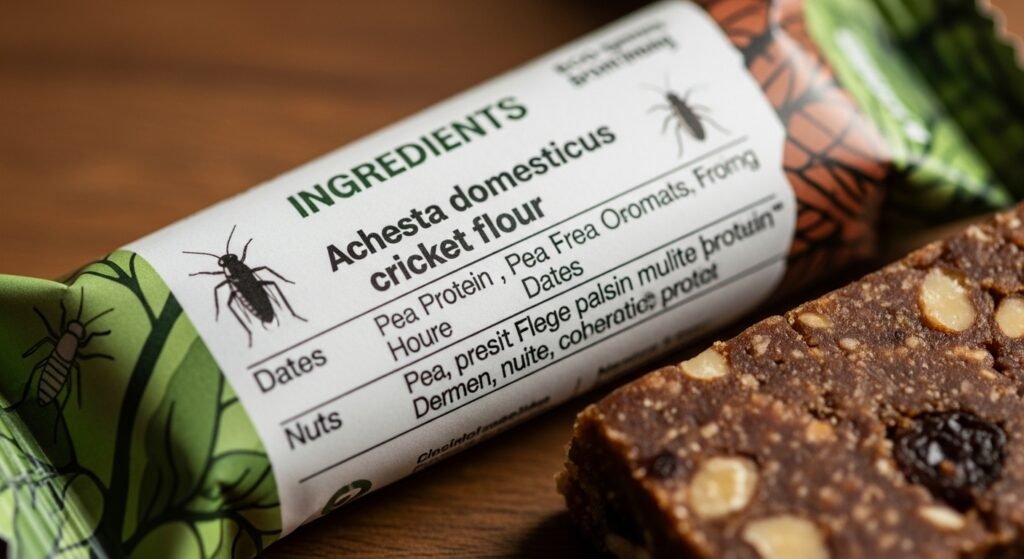
Manufacturers are required to list insect-derived ingredients, but they are not required to use plain language. Because no specific FDA code or E-number exists for insect protein, companies must list the ingredient by name — and they often choose the scientific name.
Every name insect protein may appear under on a US label:
- Acheta domesticus (house cricket — the most common)
- Cricket flour
- Cricket powder
- Defatted cricket powder
- Insect protein isolate
- Tenebrio molitor (yellow mealworm)
- Yellow mealworm powder
- Locusta migratoria (migratory locust)
- Alphitobius diaperinus (lesser mealworm)
- Insect flour
Where it usually appears: In the first three to five ingredients, often nested inside a “Protein Blend” — for example: Protein Blend [Soy Protein Isolate, Acheta Domesticus].
The tricky tactic to watch for: Companies frequently use the Latin scientific name in fine print instead of the word “cricket” or “insect,” making it easy to overlook if you’re scanning quickly.
All Names for Insect Protein on Labels
- Acheta domesticus
- Cricket flour / cricket powder
- Defatted cricket powder
- Insect protein isolate
- Tenebrio molitor
- Yellow mealworm powder
- Locusta migratoria
- Alphitobius diaperinus
- Insect flour
Who Should Be Most Concerned?
Most healthy adults who knowingly choose to eat insect protein face a low risk from the ingredient itself. But two groups deserve a clear heads-up.
⚠️ WARNING — At-Risk Groups If you have a shellfish or crustacean allergy, or a known dust mite allergy, you may be at elevated risk of reacting to insect-based ingredients. According to research published in Frontiers in Allergy (2025), the protein tropomyosin — the primary allergen in shrimp and crab — is also present in edible insects and can trigger reactions including anaphylaxis in sensitized individuals. Speak with your allergist before consuming any product containing insect-derived ingredients.
The scale of potential exposure is broader than most people realize. According to a 2025 clinical study published in the Journal of Investigational Allergology and Clinical Immunology, 9.7% of an unselected general population showed IgE sensitization to edible insect proteins — without ever having consciously eaten insects. Cross-reactivity from environmental dust mite exposure appears to be the cause.
Prof. Andreas Lopata of James Cook University put it plainly: “Crustacean food allergy affects up to 4% of the population, with those people at significant risk of suffering from an allergic reaction after eating insect protein-based foods.” (CSIRO, July 2024)
Children with undiagnosed shellfish allergies are a particular concern, since insect-containing products don’t always carry prominent allergen warnings in the US.
Cleaner Alternatives
These five bars are widely available, clearly labeled, and contain no insect-derived ingredients. All use conventional or plant-based protein sources.
We cross-referenced these product labels available at Walmart, Target, and Amazon and confirmed that none contain insect protein as of February 2026.
1. RxBar — Chocolate Sea Salt Protein source: whole egg whites. RxBar’s entire brand identity is built around listing every ingredient on the front of the package, which makes verification simple. No hidden protein blends.
2. Aloha — Peanut Butter Chocolate Chip USDA Organic certified. Uses a plant-based blend of brown rice protein and pumpkin seed protein. Available nationwide at Target and online.
3. GoMacro — MacroBar Peanut Butter Chocolate Chip Certified vegan. Protein comes from organic sprouted brown rice and pea protein. Widely available at Whole Foods, Costco, and online.
4. Truvani — Plant-Based Protein Bar Minimalist ingredient list. Protein derived from pea, pumpkin seed, and chia. No proprietary blends that could obscure insect ingredients. Available online and at specialty retailers.
5. LaraBar — Peanut Butter Chocolate Chip No isolated protein powders at all. Protein comes entirely from whole peanuts and dates. Simple, short ingredient list — one of the easiest labels to verify in the entire category.
Latest News — 2024 to 2026
July 31, 2024 — CSIRO Australian researchers published findings that standard commercial crustacean allergen test kits frequently failed to detect insect allergens in manufactured food. The study raised questions about whether current quality-control processes are adequate for insect-containing products.
April 2025 — US Congress A federal bill was introduced requiring strict labeling of lab-grown and insect-based proteins in food products. As of early 2026, the bill remains under review.
May 13, 2025 — Food Compliance International A US state governor signed a “Truth in Labeling” bill specifically targeting plant and insect protein products, aiming to prevent misleading packaging. The legislation reflects growing consumer and legislative attention to non-conventional protein sources.
August 12, 2025 — Future Market Insights A new market report projected the global insect-based ingredients market to grow from $2.1 billion in 2025 to $5.0 billion by 2035, signaling that insect ingredients will become more — not less — common in packaged food in the coming years.
huhuly Verdict
Risk Level: Medium (Higher for shellfish-allergic individuals)
Found In: Protein bars, functional snacks, sports nutrition powders, alternative bakery mixes
Label Names: Acheta domesticus, cricket flour, cricket powder, insect protein isolate, defatted cricket powder, Tenebrio molitor, yellow mealworm powder, insect flour
Our Take: Insect protein is legal, nutritionally functional, and still niche in mainstream US retail. For most people without shellfish or dust mite allergies, it presents a low direct health risk. The bigger issue right now is labeling transparency — the use of Latin scientific names makes it easy to miss, and current allergen test kits may not catch cross-reactive proteins reliably. If you’d rather avoid it, the clean alternatives above make that easy.
FAQ
Is the FDA allowing insects in food sold in the United States?
Yes, insects are permitted as food under the US Food, Drug, and Cosmetic Act. The FDA classifies insect-based ingredients as food, provided they are produced under sanitary conditions and are free from pathogens. There is no specific FDA category or E-number assigned exclusively to insect protein, which means labeling practices vary between manufacturers. A federal labeling bill was introduced in Congress in April 2025 but has not yet been enacted.
What foods currently contain cricket flour or other insect ingredients?
Cricket flour and other insect-derived ingredients are most common in protein bars, functional snacks, and sports nutrition powders. Brands currently using them include EXO Protein, Sens, Jimini’s, HOP Bar, and Nutribug. As the market grows — projected to reach $5.0 billion by 2035 according to Future Market Insights — insect ingredients are expected to appear in a wider range of packaged foods.
What is the scientific name for cricket flour on ingredient lists?
The house cricket used most often in food is Acheta domesticus. You may also see Tenebrio molitor (yellow mealworm), Locusta migratoria (migratory locust), or Alphitobius diaperinus (lesser mealworm). Manufacturers frequently use these Latin names instead of common words like “cricket” or “insect” — so scanning for the genus name Acheta is a reliable way to spot it quickly.
Can you have an allergic reaction to cricket flour if you are allergic to shellfish?
Yes, studies suggest the risk is real. Insects and crustaceans share a key allergen called tropomyosin, and clinical research published in 2025 confirmed high cross-reactivity between the two. According to Prof. Andreas Lopata of James Cook University, people with crustacean food allergies are at significant risk of reacting to insect protein-based foods. If you have a shellfish allergy, consult your allergist before consuming any product with insect-derived ingredients.
Why are food companies adding insect protein to protein bars?
The primary reasons are sustainability and cost efficiency. Insects require significantly less water, feed, and land than conventional livestock and produce fewer greenhouse gases. Cricket powder is also nutritionally dense — containing 63.1% to 76.8% crude protein by dry weight and all essential amino acids, according to a 2025 PMC study. For manufacturers, it provides a high-protein ingredient at a competitive cost while carrying an environmental sustainability story.
What to Do Right Now
Three things worth remembering: insect protein is legal and increasingly common in packaged food; it is often hidden behind Latin scientific names on ingredient labels; and if you have a shellfish or dust mite allergy, avoiding it is worth the extra label-reading effort.
The good news is that the clean alternatives in this guide are widely available, clearly labeled, and taste good. RxBar, Aloha, GoMacro, Truvani, and LaraBar are all solid starting points for finding a protein bar without cricket flour that doesn’t require a chemistry degree to decode.
If you want to stay updated as more products enter the US market, sign up for the huhuly newsletter — we track ingredient label changes so you don’t have to.
Reviewed by the huhuly Editorial Team
huhuly’s food transparency team reviews ingredient labels, monitors FDA regulatory updates, and tracks changes in US food manufacturing. All claims are verified against official brand ingredient lists and regulatory databases before publication.
Last updated: February 2026 | Fact-checked: Yes | Sources: 9 cited
This article is for informational purposes only and does not constitute medical advice. Consult your healthcare provider before making dietary changes based on this information.
Acheta Powder in Food: 11 Brands Using It in 2026
More in Clean Eating
You might also find these useful