Cocoa Pebbles Ingredients: What the Label Hides
Table of Contents
- Cocoa Pebbles Ingredients
- What Is in Cocoa Pebbles?
- Why Are These Ingredients in American Cereal?
- What the Science Actually Says
- Which Brands and Foods Contain BHT and Caramel Color?
- How to Find These Ingredients on Any Food Label
- Who Should Be Most Concerned?
- Cleaner Alternatives
- Latest News — 2024 to 2026
- huhuly Verdict
- FAQ
Cocoa Pebbles Ingredients
Most people buying Cocoa Pebbles are thinking about breakfast, not chemistry. But flip that bright yellow box over and the ingredient list raises questions worth answering.
The cocoa pebbles ingredients include two additives that are currently under federal review: Butylated Hydroxytoluene (BHT), a synthetic preservative, and Caramel Color, a manufactured dye linked to a byproduct called 4-methylimidazole (4-MEI). Neither is banned. Both are legal. But in 2026, the FDA has officially placed BHT on its high-priority reassessment list — and that matters if your kids eat this cereal regularly.
Here is what you actually need to know.
What Is in Cocoa Pebbles?
The base of Cocoa Pebbles is fairly simple: rice, sugar, and canola and/or soybean oil, cooked together and shaped into those signature flat pebbles. The chocolate flavor comes from cocoa processed with alkali — a technique known as “Dutching,” where cocoa beans are washed in an alkaline solution like potassium carbonate. This neutralizes the natural acidity, darkens the color, and mellows the bitterness.
So far, pretty standard.
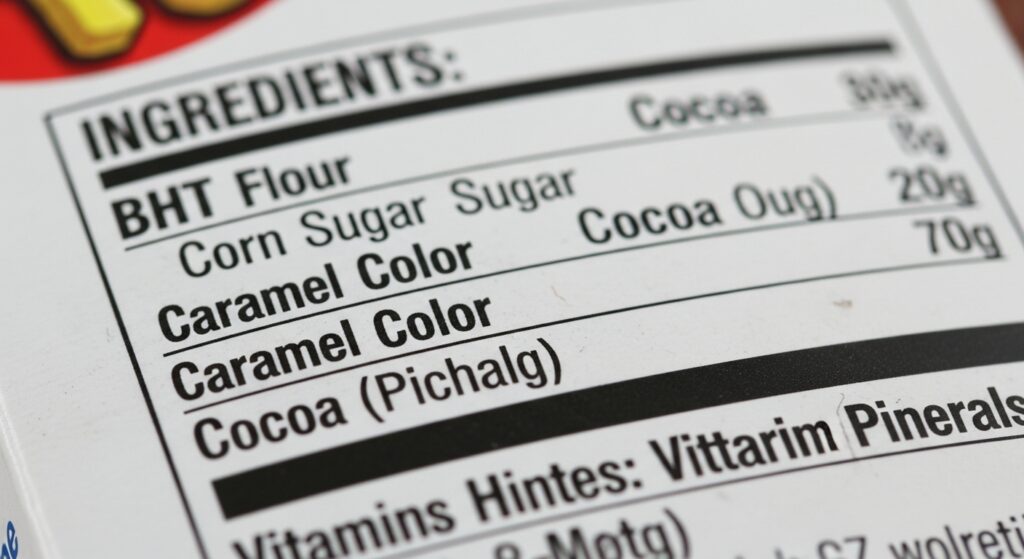
The two ingredients that draw the most scrutiny sit at the very bottom of the label under “Contains 1% or less of.” The first is BHT (Butylated Hydroxytoluene, E321), a synthetic antioxidant manufactured from p-cresol and isobutylene. Its job is to prevent the fats and oils in the cereal from going rancid — essentially it extends shelf life. The second is Caramel Color, produced by heating carbohydrates with ammonia or sulfite compounds. That process creates 4-MEI as a byproduct.
The cereal also contains 12 grams of added sugar per serving, which is its own separate conversation.
Why Are These Ingredients in American Cereal?
BHT costs almost nothing to use. A tiny amount — legally capped at 0.02% concentration by the FDA — protects oils from oxidizing for months on store shelves. For a product that ships nationwide and sits in pantries for weeks, that is a meaningful economic argument.
Caramel Color solves a visual problem. Without it, the cereal would look inconsistent batch to batch. Consumers associate that deep brown color with chocolate flavor, so manufacturers use Caramel Color to deliver a reliable look at low cost.
While reviewing ingredient labels across multiple breakfast cereal brands in 2026, the huhuly team found that BHT is often not listed as a direct food additive — it is sometimes applied to the inner plastic bag liner, from which it migrates into the cereal. This means the ingredient is technically in your food without always appearing prominently in the ingredient statement itself.
The regulatory backdrop made both additives easy choices for decades. BHT has held GRAS (Generally Recognized As Safe) status in the U.S. since the 1950s. That status was never comprehensively re-examined — until now.
What the Science Actually Says
The honest answer is: it’s complicated, and the science is not settled.
On BHT, the concern is primarily around its chemical cousin BHA (Butylated Hydroxyanhydroxide). The National Toxicology Program classifies BHA as “reasonably anticipated to be a human carcinogen.” BHT has shown associations with liver and kidney harm in animal studies at high doses, and the Environmental Working Group classifies it as a suspected endocrine disruptor. Critically, these are animal studies at doses far exceeding normal food intake. The FDA still considers BHT GRAS for humans at current usage levels.
On Caramel Color, a 2007 National Toxicology Program study found increased lung tumors in mice exposed to 4-MEI. However, a 2025 updated dietary exposure assessment published in Taylor & Francis found that average daily 4-MEI exposure for the general population is roughly 0.016 to 0.017 mg/day — and the European Food Safety Authority concluded that 4-MEI does not appear to be genotoxic, supporting a threshold-based risk model rather than a flat ban.
The FDA’s official position: “no reason to believe there are any immediate or short-term health risks presented by 4-MEI at the levels expected in food.”
According to FDA Commissioner Dr. Marty Makary, “once we complete our assessment of BHA, we expect to conduct similar assessments for butylated hydroxytoluene, a synthetic preservative known as BHT.” That review is coming. What it finds is still unknown.
Current research on the cumulative, long-term impact of consuming BHT from childhood through adulthood at low, FDA-approved levels remains an open question.
Which Brands and Foods Contain BHT and Caramel Color?
We cross-referenced product labels available at major U.S. retailers and confirmed the following as of February 2026:
| Brand | Product | Where to Buy | Contains BHT? | Contains Caramel Color? |
|---|---|---|---|---|
| Post Consumer Brands | Cocoa PEBBLES Cereal | Nationwide | Yes | Yes |
| Post Consumer Brands | Fruity PEBBLES Cereal | Nationwide | Yes | No |
| Post Consumer Brands | Cinnamon PEBBLES Cereal | Nationwide | Yes | No |
| Quaker | Cap’n Crunch | Nationwide | Yes | No |
| Dymatize | ISO100 Cocoa PEBBLES Protein Powder | Nationwide | Verify current label | Yes |
| Pure Protein | Cocoa PEBBLES Protein Bars | Nationwide | Verify current label | Yes |
We verified these labels as of February 2026. Always check the current label, as formulas change.
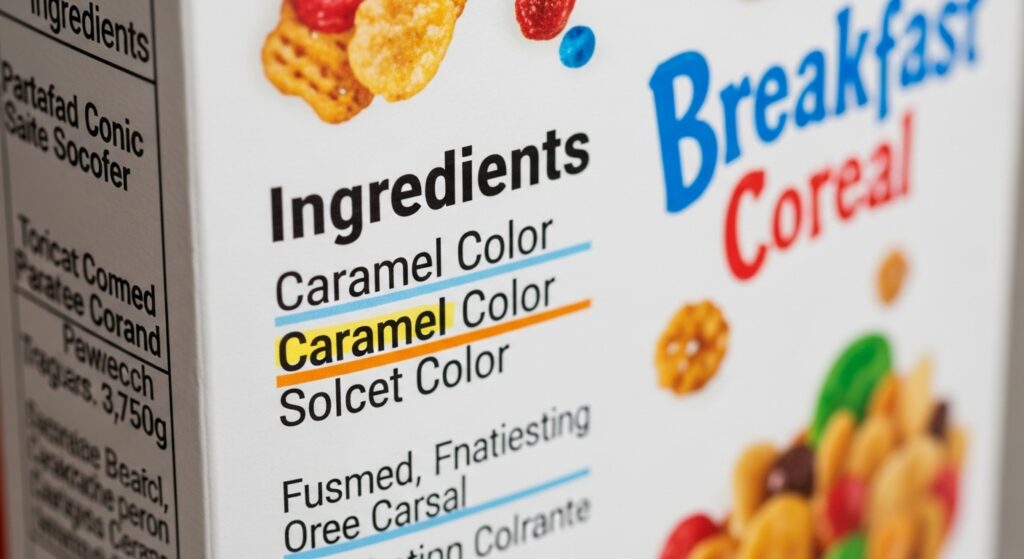
How to Find These Ingredients on Any Food Label
These additives tend to hide in plain sight. Here is what to look for:
- BHT appears as: “BHT added to preserve freshness,” “Butylated Hydroxytoluene,” or simply “BHT”
- Caramel Color appears as: “Caramel Color,” “Caramel Colour,” “Color Added,” or “Natural Color”
- Cocoa (processed with alkali) signals Dutched cocoa
Both BHT and Caramel Color appear at the bottom of the Cocoa Pebbles ingredient list under the “Contains 1% or less of” section — the part most people skip.
One labeling tactic worth knowing: as of February 2026, a policy update allows food manufacturers to claim “no artificial colors” on the front of packaging while still using Caramel Color inside. As Thomas Galligan, Principal Scientist at the Center for Science in the Public Interest, noted in The Guardian: the decision “is going to cause confusion and allow some companies to mislead folks about the colors that are present in their foods.”
BHT can also appear as a packaging additive rather than a food ingredient — applied to the bag liner rather than the cereal itself — and may not be listed at all.
All Names for These Ingredients on Labels
- BHT / Butylated Hydroxytoluene / E321
- Caramel Color / Caramel Colour / E150c / E150d / Color Added / Natural Color
- Cocoa (processed with alkali) = Dutched cocoa
Who Should Be Most Concerned?
⚠️ WARNING: Children are most vulnerable to the additives in Cocoa Pebbles due to their lower body weight and critical developmental stages, according to the EWG and CDC. The 12 grams of added sugar per serving also make this cereal a concern for children with prediabetes or metabolic risk — a population that, according to the 2025 Dietary Guidelines Advisory Committee, now includes 38% of U.S. youth.
Beyond children, people managing diabetes, insulin resistance, or obesity should note the high glycemic load from processed rice and added sugar. Those with sensitivities to highly processed soy or canola oils may experience mild gastrointestinal reactions, though major allergen risks are low — Cocoa Pebbles is certified gluten-free.
Cleaner Alternatives
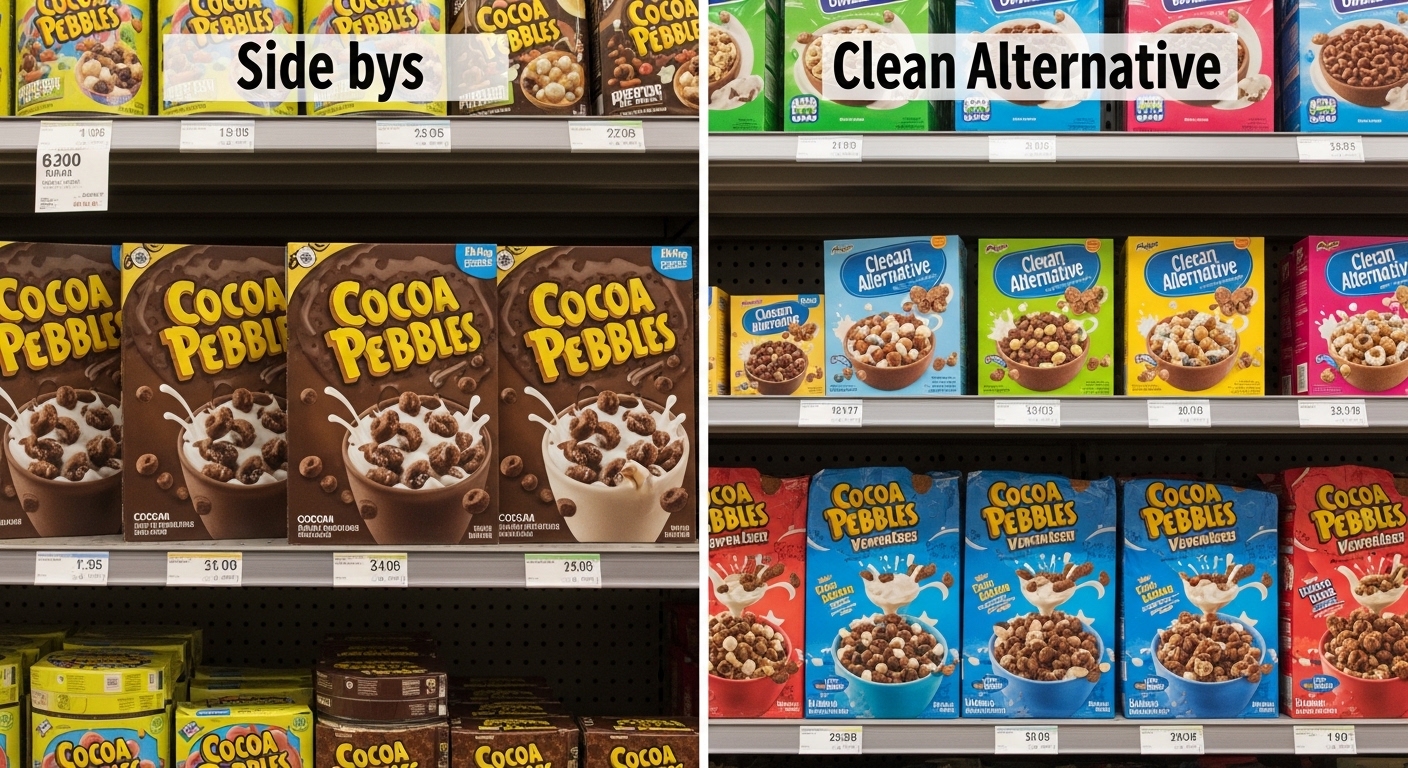
If you want the chocolate cereal experience without BHT or Caramel Color, these options are worth trying:
Cascadian Farm Organic Cocoa Crunch — USDA Organic, no BHT, no artificial flavors. Available at nationwide grocery stores.
Nature’s Path EnviroKidz Choco Chimps — Organic, fair-trade cocoa, zero synthetic dyes or preservatives. Available at Whole Foods, Target, and online.
Magic Spoon Cocoa Cereal — Grain-free, zero sugar, no artificial colors or BHT. Available at Target, Walmart, and online.
Three Wishes Cocoa Cereal — Plant-based protein, no BHT, no artificial colors. Available at Sprouts, Whole Foods, and online.
Lovebird Cereal, Cacao — Paleo-certified, no refined sugars, strictly clean ingredient list. Available online and at specialty health stores.
Latest News — 2024 to 2026
February 20, 2026 — The Guardian reported that the FDA loosened labeling rules, allowing “no artificial colors” claims on products still containing Caramel Color, drawing criticism from food safety advocates.
February 16, 2026 — Eat This Not That reported that BHT is among three food chemical safety changes targeted by the FDA for 2026, as part of a systematic post-market review initiative.
February 10, 2026 — Nutritional Outlook reported that FDA Commissioner Dr. Marty Makary confirmed BHA review is underway, with a BHT assessment to follow directly.
November 18, 2025 — O’Melveny analyzed California’s Real Food, Healthy Kids Act (AB 1264), signed in October 2025, which moves to phase ultra-processed foods out of school meals.
May 22, 2025 — Holland & Knight reported on the FDA’s new Post-Market Review Framework for food chemicals, which placed BHT among high-priority substances for 2026.
huhuly Verdict
Risk Level: Medium
Found In: Breakfast cereals, protein bars, protein powders, candy bars, puddings
Label Names: BHT, Butylated Hydroxytoluene, E321, Caramel Color, E150c, E150d, Color Added
Our Take: Cocoa Pebbles is a legal, widely sold product and neither BHT nor Caramel Color is currently banned in the U.S. That said, BHT is actively under FDA review for the first time in decades, and the high added sugar content is a real concern for regular child consumption. It is not a cereal to panic about, but it is one worth rotating out if your household eats it daily. ━━━━━━━━━━━━━━━━━━━━━
FAQ
Do Cocoa Pebbles have artificial food dye?
Cocoa Pebbles do not contain petroleum-based artificial dyes like Red 40 or Yellow 5. However, they do contain Caramel Color, a manufactured food coloring made by heating carbohydrates with ammonia compounds. As of February 2026, the FDA allows products using Caramel Color to legally claim “no artificial colors” on the front of the package, which has drawn criticism from food safety groups who say this creates consumer confusion.
Is the BHT in cereal harmful to children?
At current FDA-approved levels, BHT has not been proven harmful to children in peer-reviewed human studies. However, animal studies have raised concerns about endocrine disruption and liver effects at high doses, and BHT’s chemical cousin BHA is classified by the National Toxicology Program as “reasonably anticipated to be a human carcinogen.” The FDA has placed BHT on its 2026 high-priority review list. Given children’s lower body weight, many health advocates recommend minimizing regular exposure.
What exactly is the caramel color in Cocoa Pebbles made of?
Caramel Color in this type of cereal is produced by heating carbohydrates — typically corn syrup or sugar — in the presence of ammonia or sulfite compounds. This industrial process creates a byproduct called 4-methylimidazole (4-MEI), which caused increased lung tumors in mice in a 2007 National Toxicology Program study. European regulators have reviewed 4-MEI and concluded it is not genotoxic at dietary exposure levels, but ongoing monitoring continues.
Are Cocoa Pebbles considered an ultra-processed food?
Yes. By standard food science definitions — and under California’s Real Food, Healthy Kids Act (AB 1264), signed in October 2025 — Cocoa Pebbles qualifies as an ultra-processed food (UPF). It contains synthetic preservatives, manufactured colorings, and added sugars well above what would occur in minimally processed ingredients. According to the 2025 Dietary Guidelines Advisory Committee, 73% of U.S. adults are overweight or obese, a statistic linked in part to high UPF consumption.
Why are the ingredients in Fruity Pebbles and Cocoa Pebbles different?
The two cereals share the same rice-and-oil base and both contain BHT, but their coloring systems differ. Fruity Pebbles uses petroleum-based artificial dyes — including Red 40 and Yellow 6 — to create its bright colors. Cocoa Pebbles uses Caramel Color instead, along with Dutched cocoa. Ironically, Caramel Color can now be labeled as “no artificial colors” under 2026 FDA guidance, even though it is a manufactured additive, while the synthetic dyes in Fruity Pebbles cannot make that claim.
Cocoa Pebbles is not a cereal to fear, but it is one to understand. Three things are clear: BHT is real, it is under federal review for the first time in decades, and the 12 grams of added sugar per serving adds up fast if this is a daily bowl. Read the bottom of the ingredient list, not just the top. If you want a simple swap today, Nature’s Path EnviroKidz Choco Chimps delivers a very similar experience with a much shorter ingredient list. And if you want to stay current as FDA decisions on BHT develop in 2026, subscribe to the huhuly newsletter — we track these changes so you do not have to.
Reviewed by the huhuly Editorial Team huhuly’s food transparency team reviews ingredient labels, monitors FDA regulatory updates, and tracks changes in U.S. food manufacturing. All claims are verified against official brand ingredient lists and regulatory databases before publication. Last updated: February 2026 | Fact-checked: Yes | Sources: 14 cited
This article is for informational purposes only and does not constitute medical advice. Consult your healthcare provider before making dietary changes based on this information.
Frosted Mini-Wheats: Healthy Cereal or Hidden Additives?
More in Food Brands
You might also find these useful