E171 Banned in Europe — Why Is It Still in US Food?
E171 Banned in Europe
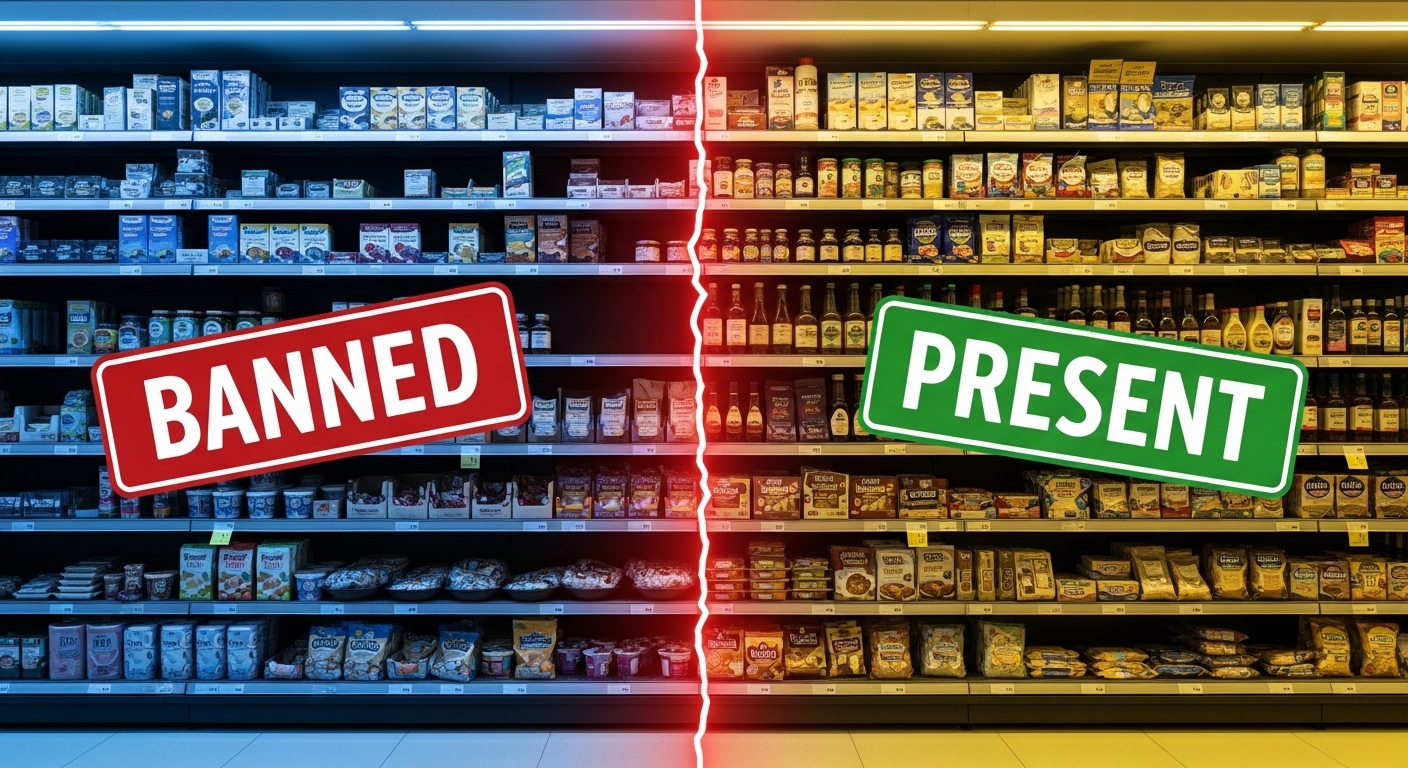
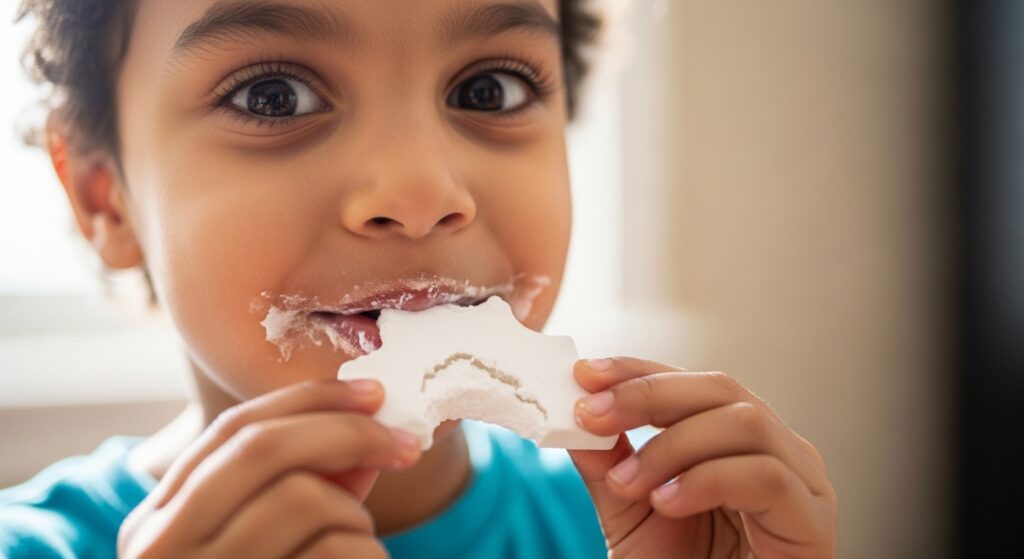
The EU banned it in 2022. The FDA still allows it in thousands of American products. Titanium dioxide — the same white pigment used in house paint — is sitting in your chewing gum, your salad dressing, and your kid’s candy coating right now.
The titanium dioxide EU ban food decision wasn’t made lightly. Europe’s food safety authority spent years reviewing the evidence before concluding it could no longer be considered safe. The United States has taken a different path, and the gap between those two positions is growing.
Here is what the research actually says, which products still contain it, and what you can do today to reduce your exposure.
Table of Contents
- E171 Banned in Europe
- What Is Titanium Dioxide?
- Why Is It in American Food?
- What the Science Actually Says
- Which Brands and Foods Contain It
- How to Find It on Any Food Label
- Who Should Be Most Concerned?
- Cleaner Alternatives
- Latest News — 2024 to 2026
- huhuly Verdict
- FAQ
- Three Things Worth Knowing Before You Go
What Is Titanium Dioxide?
Titanium dioxide (TiO₂) is an inorganic white compound refined from titanium-bearing ores. In food, it serves exactly one purpose: making things look whiter and brighter. It has no flavor, no nutritional value, and no preservative function.
What makes it complicated is its particle size. Food-grade TiO₂ is not uniform — it is a mixture of standard microparticles and nanoparticles smaller than 100 nanometers. According to a 2024 study published in Frontiers in Toxicology, these nanoparticles can account for between 10% and 36% of the compound depending on the application. That nanoparticle fraction is where nearly all the safety debate is centered.
On a label, it appears as titanium dioxide, E171, or simply “artificial color.” Its international regulatory codes are INS 171 and CI 77891 for cosmetic use.
Why Is It in American Food?
The short answer: it is cheap, effective, and the FDA has allowed it since it was approved under 21 CFR 73.575. Under that regulation, titanium dioxide may be used in any food product as long as it does not exceed 1% of the product’s total weight.
That 1% cap sounds small. In practice, it allows the additive to appear in an estimated 11,000 specific US retail food products, according to data cited by Label Insights. The Environmental Working Group actively tracks over 3,000 distinct verified items containing the chemical.
Food manufacturers rely on it because artificial dyes applied over a TiO₂ base appear more vivid, opaque, and consistent — which is why white-coated candies, frostings, and creamy-looking dressings all tend to use it. Removing it requires a complete reformulation of the product’s visual identity, and that reformulation costs money.
While reviewing ingredient labels across chewing gum and candy products in 2026, the huhuly team confirmed that titanium dioxide continues to appear in the final “contains less than 2% of” sub-clause on multiple major US products — a placement that makes it easy to overlook.
What the Science Actually Says
The scientific community is genuinely divided, and that division is methodological.
The concern: A 2025 meta-analysis in Critical Reviews in Food Science and Nutrition calculated that the lifelong weighted average oral intake of food-grade TiO₂ is 1.43 mg per kilogram of body weight per day — with children aged 3 to 9 showing significantly higher exposure than adults (Standardized Mean Difference of 2.15). A separate 2025 study led by Jiaxing Nanhu University found that nanoparticle exposure disrupts enteroendocrine cells in the gut, reducing secretion of key hormones involved in glucose regulation and potentially increasing risk for insulin resistance and metabolic disorders.
Research published in PMC in 2025 found that prolonged oral exposure leads to dose-dependent accumulation of titanium in the liver, spleen, kidneys, brain, and pancreas. This biological persistence is associated with sustained oxidative stress and altered cellular function.
The European Food Safety Authority (EFSA) concluded in 2021 that genotoxicity — the ability of nanoparticles to cause DNA strand breaks and chromosomal damage — could not be excluded. Because no safe threshold could be established, the ban followed.
The defense: Toxicologist David B. Warheit, writing in the same Frontiers in Toxicology journal in 2024, argues that EFSA made a “manifest error” by relying on studies using artificially dispersed lab nanoparticles rather than the agglomerated, clustered form of TiO₂ as it actually exists inside food. Feeding studies in rats show extremely low absorption through the gastrointestinal tract. In March 2024, the UK’s Committee on Toxicity (COT) formally agreed that evidence suggesting a genotoxicity concern was “exceedingly weak.”
The WHO/FAO’s JECFA panel also concluded in 2023 that use in food is safe based on their internal risk assessments.
Current research on nanoparticle behavior in the human gut is still limited to animal models. No large-scale human clinical trial has been completed. That gap is not a reason for panic — but it is a legitimate reason for caution, particularly in vulnerable populations.
Which Brands and Foods Contain It
| Brand | Product | Where to Buy | Contains TiO₂? |
|---|---|---|---|
| Trident | Fresh Gum Spearmint Sugar Free | Walmart, Target, Amazon | ✅ Yes |
| Betty Crocker | Icing Writing Classic Colors | Walmart, Target, Kroger | ✅ Yes |
| Mentos | Gum Pure Fresh | Most grocery chains, Amazon | ✅ Yes |
| Mentos | Pure White Chewing Gum | Most grocery chains, Amazon | ✅ Yes |
| Mars / Skittles | Skittles Original | Nationwide | ❌ Removed (end of 2024) |
| Dunkin’ | Powdered Sugar Donuts | Dunkin’ locations | ❌ Removed |
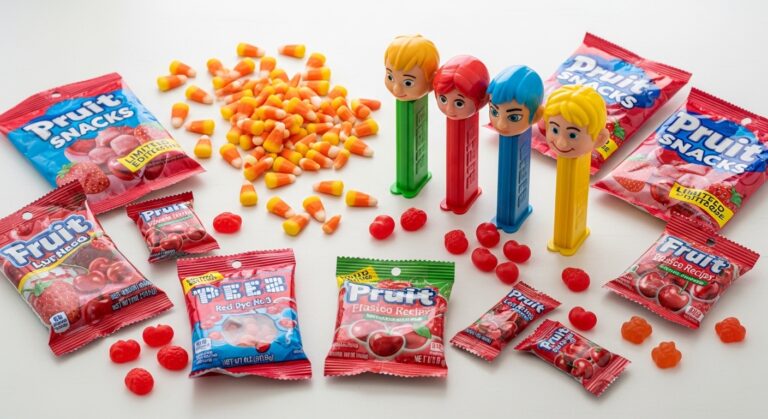
We verified these labels as of March 2026. The broader categories most dependent on TiO₂ include hard-shelled candies, white cake frostings, powdered sugar coatings, creamy salad dressings, dairy coffee creamers, and processed soups and gravies. If a product is brilliant white and ultra-processed, it is worth checking the label.
How to Find It on Any Food Label
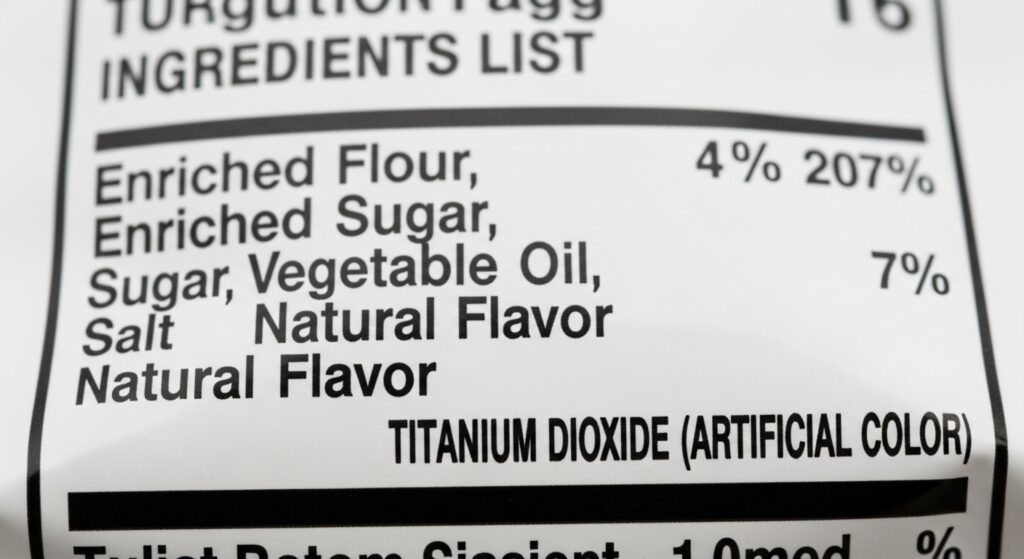
The FDA does not require manufacturers to disclose titanium dioxide by its chemical name. It is exempt from batch certification, which means it can hide behind generic phrases on any package sold in the US.
- Look for it in the final “contains less than 2% of” clause — that is where it almost always appears, given the 1% weight cap
- It will typically be listed after preservatives and stabilizers, near the end of the ingredient list
- If a product is marketed as “no artificial colors” under the FDA’s new 2026 guidance, that does not automatically mean it is TiO₂-free — but it is a positive signal
The most common tactic: listing TiO₂ simply as “artificial color” or “color added,” which makes it invisible to label-scanning apps and health-conscious shoppers alike.
All Names for Titanium Dioxide on Labels
- Titanium dioxide
- Titanium(IV) oxide
- Titania
- E171
- INS 171
- Pigment White 6 (PW6)
- CI 77891
- Color added (may indicate TiO₂)
- Artificial color (may indicate TiO₂)
- Colored with titanium dioxide
Who Should Be Most Concerned?
Most healthy adults eating varied diets are not at high immediate risk. Two groups deserve closer attention.
⚠️ WARNING — Children: Pediatric populations face significantly higher exposure than adults because TiO₂ is concentrated in candies, gum, and coated sweets that children consume at higher rates relative to their lower body weight. The 2025 meta-analysis calculated a Standardized Mean Difference of 2.15 for children aged 3 to 9 compared to adults. Parents of young children have the strongest evidence-based reason to reduce exposure.
⚠️ WARNING — IBD and Colitis Patients: People with Inflammatory Bowel Disease, leaky gut syndrome, or ulcerative colitis absorb significantly more TiO₂ into their bloodstream due to compromised intestinal barriers. Research published in PMC in 2025 shows that this elevated absorption activates the NLRP3 inflammasome, worsening secondary liver injury and systemic inflammation. If you have an IBD diagnosis, avoiding this additive is worth discussing with your gastroenterologist.
We cross-referenced multiple product labels available at Walmart and Target and confirmed that the majority of products containing TiO₂ are concentrated in the candy, gum, and frosting aisles — the exact categories over-represented in children’s diets.
Cleaner Alternatives
The food industry has accelerated its search for TiO₂ replacements since the EU ban. These are commercially available options you can already find:
- Sensient Technologies’ TiO₂-Free White System — a plant-based opacity blend used by major confectionery brands reformulating for the EU market
- Innophos Clean-Label Whitening Agent — FDA-cleared calcium phosphate-based alternative, launched June 2025
- Ingredion’s NOVATION TiO₂ Replacement — starch-based clouding system for dressings and dairy applications
- Givaudan DDW Rice Starch Opacifier — derived from rice starch, commercially available for white coating applications
- Nactarome FiorioNat Natural TiO₂ Replacer — a natural whitening ingredient targeting the confectionery sector, introduced in 2025
If you are shopping for your family right now, the simplest approach is to choose products with short ingredient lists, prioritize brands that have publicly announced TiO₂ removal, and use apps like EWG’s Healthy Living or the Fig App to verify labels before purchasing.
Latest News — 2024 to 2026
End of 2024 — Mars removes TiO₂ from Skittles. After a 2022 consumer class-action lawsuit and sustained pressure from the Center for Food Safety, Mars confirmed it had reformulated Skittles in the US market. The company has not commented on other products in its portfolio.
February 5, 2026 — FDA issues “no artificial colors” labeling guidance. FDA Commissioner Dr. Marty Makary announced that companies may now voluntarily label products “no artificial colors” if they replace petroleum-based synthetic dyes and controversial additives with naturally derived alternatives. This creates a powerful market incentive for brands to abandon TiO₂ without waiting for an outright ban.
2025 — California AB 2316 signed into law. All food served in California public schools must be free of titanium dioxide and six synthetic dyes by December 31, 2027. Florida, Georgia, Hawaii, and Arizona have introduced or passed parallel measures targeting school food.
April 14, 2023 (active) — FDA Color Additive Petition CAP 3C0325. A coalition including the Environmental Defense Fund, Center for Food Safety, Center for Science in the Public Interest, and the Environmental Working Group formally petitioned the FDA to revoke 21 CFR 73.575 entirely. The petition is under active review under FDA docket FDA-2023-C-1487.
August 2025 — EU reaffirms TiO₂ ban for food, carves exception for medicines. The European Commission confirmed the food ban remains in force while allowing continued use as a colorant in pharmaceutical products, following a 2024 European Medicines Agency review.
huhuly Verdict
Risk Level : Medium
Found In   : Candy, chewing gum, white frosting, powdered
             coatings, dairy creamers, salad dressings
Label Names: Titanium dioxide, E171, INS 171, artificial
             color, color added
Our Take   : The EU banned this additive in 2022 because
             its genotoxicity could not be ruled out. The
             FDA still permits it, and a formal petition to
             change that is under active review. Children
             and people with IBD have the clearest reason
             to reduce their intake now. For healthy adults,
             the evidence does not demand alarm — but
             choosing products without it is a reasonable,
             low-effort precaution.
FAQ
Why is titanium dioxide banned in Europe but still allowed in American food?
The difference comes down to how each regulatory body assessed the same data. The European Food Safety Authority concluded in 2021 that genotoxicity — potential DNA damage from nanoparticles — could not be excluded, and without a safe threshold, the ban followed. The FDA, the WHO/FAO JECFA, and the UK Committee on Toxicity reached a different conclusion: that food-grade TiO₂, as actually consumed in food, behaves differently from the isolated nanoparticles used in lab studies. The FDA is currently reviewing a formal petition to revoke its approval under docket FDA-2023-C-1487, so US status may change.
What is the difference between titanium dioxide and titanium dioxide nanoparticles in food?
Food-grade titanium dioxide is a heterogeneous mixture of standard microparticles (larger than 100 nm) and nanoparticles (smaller than 100 nm). The nanoparticle fraction — which can represent up to 36% of the compound — is what concerns researchers most. Standard microparticles are largely excreted without absorption. Nanoparticles are small enough to potentially cross the gut barrier, accumulate in organs, and trigger inflammatory responses. When you eat a product containing E171, you are consuming both simultaneously.
What happens to your body if you eat foods containing titanium dioxide every day?
For most healthy adults, the current evidence suggests low short-term risk. Over the long term, animal studies published in PMC in 2025 show that repeated oral exposure leads to titanium accumulation in the liver, spleen, kidneys, and brain at sub-chronic doses. A 2025 study from Jiaxing Nanhu University found that nanoparticle exposure disrupts gut hormones that regulate blood sugar, potentially raising metabolic risk. These are animal studies, and large-scale human data is still limited. Current research on long-term daily effects in humans is still limited to early-stage models.
How do I know if titanium dioxide is in my food if the label just says “artificial colors”?
You often cannot tell from the label alone without laboratory testing. The FDA permits food companies to list titanium dioxide simply as “artificial color” or “color added,” which makes it invisible to casual label reading. To check specific products, use the EWG Healthy Living app, the Fig App, or search the Open Food Facts database by product barcode. Products sporting the new FDA “no artificial colors” claim as of 2026 are required to have replaced synthetic options — which provides one useful filter.
Is titanium dioxide safe for children to eat every day?
According to a 2025 meta-analysis in Critical Reviews in Food Science and Nutrition, children aged 3 to 9 have significantly higher exposure to food-grade TiO₂ than adults, with a Standardized Mean Difference of 2.15, due to their lower body weight and higher consumption of sweets and gum. No safe pediatric Acceptable Daily Intake has been established by EFSA — the reason the EU banned it. The FDA has not set a pediatric-specific limit. While no study proves direct harm to children from normal food consumption, the precautionary case for reducing children’s intake is the strongest in any demographic.
Three Things Worth Knowing Before You Go
First: the EU ban is not alarmist — it reflects a genuine gap in the scientific consensus that the FDA acknowledges by keeping its own review open. Second: avoiding titanium dioxide does not require a complete diet overhaul. The additive is concentrated in specific product categories — mainly candy, gum, and frostings — where swaps are easy. Third: the regulatory landscape is shifting faster in 2026 than at any point in the past decade. School bans are expanding, the FDA petition is active, and brands are reformulating. Checking labels now puts you ahead of where regulation will likely land.
Want early alerts when major brands remove titanium dioxide from their products? Subscribe to the huhuly newsletter — we verify every reformulation before we publish it.
Reviewed by the huhuly Editorial Team huhuly’s food transparency team reviews ingredient labels, monitors FDA regulatory updates, and tracks changes in US food manufacturing. All claims are verified against official brand ingredient lists and regulatory databases before publication. Last updated: March 2026 | Fact-checked: Yes | Sources: 18 cited
This article is for informational purposes only and does not constitute medical advice. Consult your healthcare provider before making dietary changes based on this information.
Cricket Flour Brands 2026: 7 Using It Right Now
More in Food News
You might also find these useful