Fruit Roll-Ups Ingredients: Red 40 & 8 Additives
Table of Contents
- Fruit Roll-Ups Ingredients
- What Is Red 40?
- Why Is It in American Food?
- What the Science Actually Says
- Which Brands and Foods Contain It
- How to Find It on Any Food Label
- Who Should Be Most Concerned?
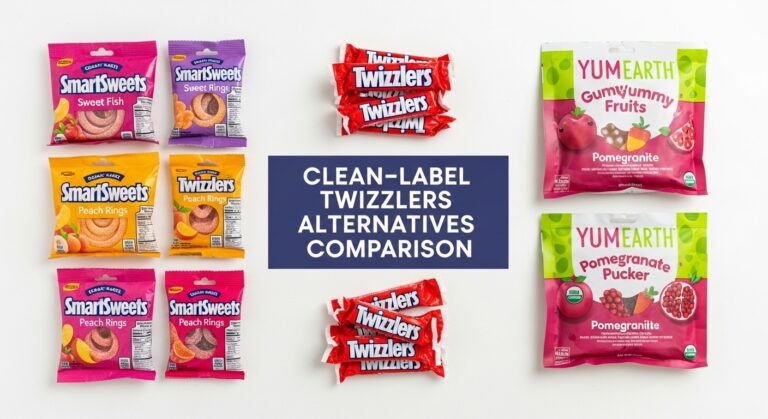
- Cleaner Alternatives
- Latest News — 2024 to 2026
- huhuly Verdict
- FAQ
- Three Things Worth Knowing Before You Buy
Fruit Roll-Ups Ingredients
Yes, Fruit Roll-Ups contain Red 40 — and right now, that ingredient is at the center of one of the biggest shifts in U.S. food policy in decades.
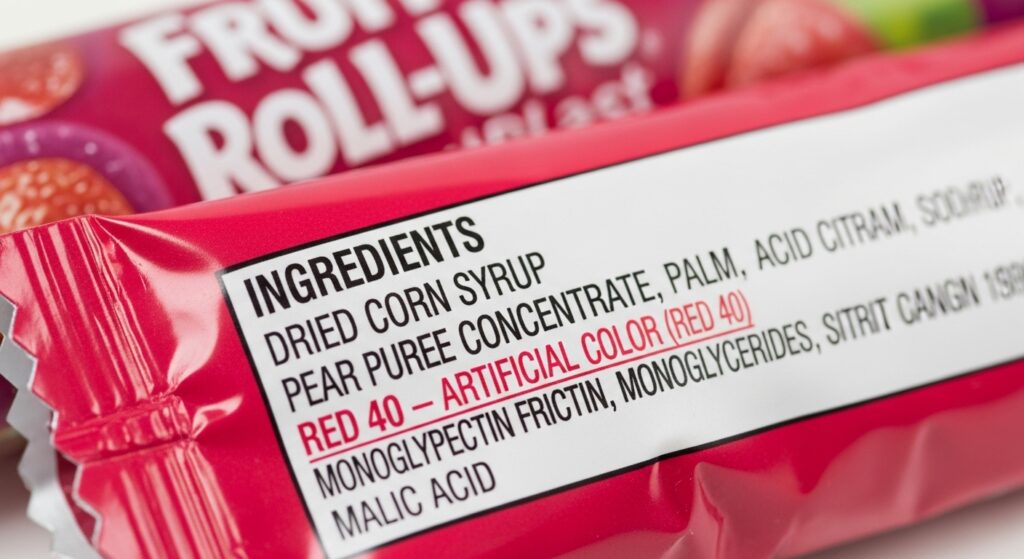
Fruit roll ups ingredients include corn syrup, dried corn syrup, sugar, pear puree concentrate, palm oil, and a short list of additives — including the synthetic dye Red 40, listed near the very end. That dye is currently being phased out of the U.S. food supply following an April 2025 FDA announcement. According to MIT Sloan’s color additive analysis, Red 40 appears in 8.6% of all branded foods in the U.S., representing 37,771 unique products. Fruit Roll-Ups are among the most recognizable of them.
This article breaks down exactly what’s in Fruit Roll-Ups, what the research says about Red 40, and what to buy instead if you’d rather skip it.
What Is Red 40?
Red 40 — officially classified by the FDA as FD&C Red No. 40, and listed in the European Union as E129 — is a synthetic azo dye used to produce vivid red and orange hues in processed foods.
It is not derived from fruit or plants. Red 40 is manufactured chemically from petroleum distillates and coal tars, according to EBSCO Health and Medicine. The finished dye is highly stable, which means it holds its bright color through heat processing, long shelf lives, and exposure to light — all qualities that make it attractive to food manufacturers.
In Fruit Roll-Ups specifically, Red 40 works alongside acetylated monoglycerides (an emulsifier that gives the snack its flexible, non-sticky texture) and corn syrup solids to create that signature chewy fruit leather consistency and vivid color.
Why Is It in American Food?
Natural colorants exist — beet juice, paprika extract, carmine — but they come with tradeoffs. They can fade over time, interact with flavor, and cost more to source and stabilize.
Red 40, by contrast, is cheap to produce, extremely stable, and delivers consistent color across every single unit in a production run. For a product like Fruit Roll-Ups, sold in millions of units with an expected shelf life of 12 to 18 months, synthetic dye is simply a more reliable industrial tool.
While reviewing ingredient labels across fruit snack products at major U.S. retailers in 2026, the huhuly team found that Red 40 appeared in nearly every major conventional fruit snack, including not just Fruit Roll-Ups but Gushers, Minis varieties, and co-branded General Mills snack products. The pattern is consistent: synthetic dye does the color work, natural fruit does very little of it.
According to Healthline, Red 40 is present in 14% of all food and beverage products sold by the top 25 U.S. manufacturers.
What the Science Actually Says
The science here is genuinely mixed, and it’s worth being honest about that.
On one hand, the FDA and EFSA have both historically pointed to chronic animal studies that establish a No-Observed-Adverse-Effect Level (NOAEL), concluding that Red 40 is safe in small, regulated doses. The EU’s Acceptable Daily Intake stands at 7 mg/kg of body weight per day.
On the other hand, more recent research raises real questions. A 2024 study published in PMC found that Red 40 causes DNA damage in vitro and in vivo, and that chronic consumption combined with a high-fat diet leads to gut dysbiosis and low-grade colonic inflammation in mice. A separate study in Nature Communications demonstrated that chronic Red 40 exposure exacerbates colitis in mouse models.
The California Office of Environmental Health Hazard Assessment (OEHHA) issued a report concluding that synthetic food dyes, including Red 40, may cause or exacerbate neurobehavioral problems — including hyperactivity and inattentiveness — in some children. The EFSA requires a warning label on any food in Europe containing Red 40 stating it “may have an adverse effect on activity and attention in children.”
No governing agency currently classifies Red 40 as a human carcinogen. Current research on its potential link to early-onset colorectal cancer is still limited to mouse models and has not been replicated in human trials.
FDA Commissioner Dr. Marty Makary stated in April 2025: “These compounds offer no nutritional benefit and pose measurable risks to children’s health. That era is coming to an end.”
Which Brands and Foods Contain It
| Brand | Product Name | Where to Buy | Contains Red 40? |
|---|---|---|---|
| Betty Crocker (General Mills) | Fruit Roll-Ups Strawberry Blast | Nationwide, BettyCrocker.com | Yes |
| Betty Crocker (General Mills) | Fruit Roll-Ups Wild Berry Punch Minis | Nationwide, GeneralMills.com | Yes |
| General Mills | Gushers Tropical Fruit Snack Minis | Nationwide, GeneralMills.com | Yes |
| General Mills | Cinnamon Toast Crunch Strawberry Mini Treat Bars | Nationwide, GeneralMills.com | Yes |
| Pillsbury (General Mills) | Toaster Strudel Pastries Strawberry | Nationwide, GeneralMills.com | Yes |
| Conagra Brands | Duncan Hines Red Velvet Cake Mix | Nationwide | Yes |
| Conagra Brands | Slim Jim | Nationwide | Yes |
| Bimbo Bakeries USA | Little Bites Snacks | Nationwide | Yes |
We verified these labels as of February 2026. General Mills and Kraft Heinz announced in June 2025 a commitment to remove all FD&C artificial dyes from their U.S. product lines by the end of 2027. Conagra pledged to eliminate certified colors from its U.S. frozen portfolio by the end of 2025.
How to Find It on Any Food Label
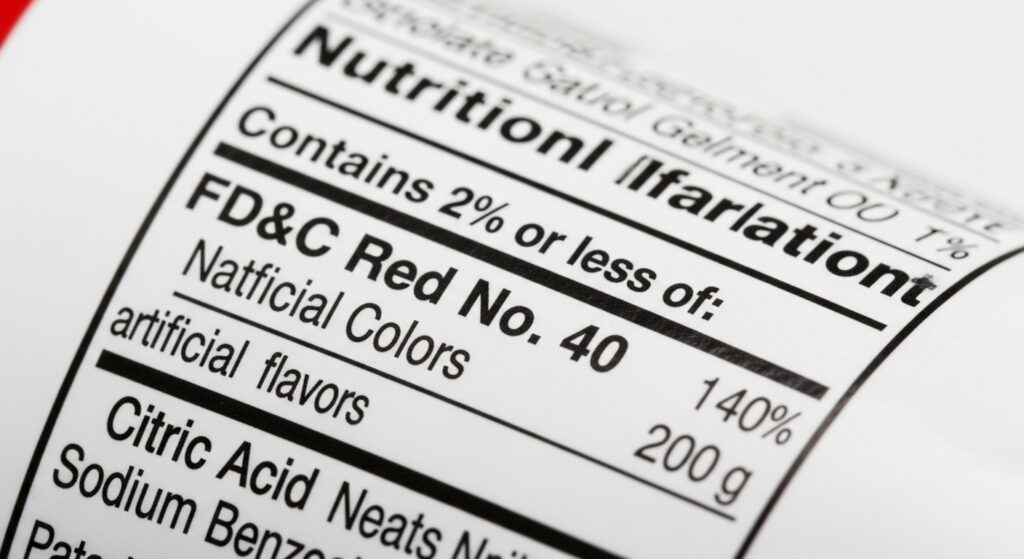
Red 40 always appears at the end of the ingredient list, typically after the “Contains 2% or less of:” statement. Because it is used in trace amounts, it lands last — but “last” does not mean least impactful for everyone.
One tactic worth knowing: some labels list “Red 40 Lake” instead of plain Red 40. The Lake version is the water-insoluble form, used in coatings and dry mixes. It is the same dye, just bound to a metallic salt. If you see “Lake” in a color name, treat it identically to its non-Lake version.
All Names for Red 40 on Labels
- Red 40
- Red 40 Lake
- FD&C Red No. 40
- FD&C Red No. 40 Aluminum Lake
- Allura Red AC
- CI Food Red 17
- CI 16035
- E129 (on imported European goods)
Who Should Be Most Concerned?
⚠️ WARNING: Children with ADHD or sensitivity to synthetic dyes, and individuals with inflammatory bowel conditions such as Crohn’s disease or ulcerative colitis, may be most affected by Red 40. If your child has a diagnosed attention or behavioral condition, or if you manage a chronic gut condition, consider reviewing your household’s exposure to this dye with your healthcare provider.
Beyond those groups, individuals who experience mild allergic reactions — skin irritation, headaches — after consuming brightly colored processed foods may be reacting to Red 40, according to GoodRx. The reaction is not common, but it is documented.
Children as a general population carry higher relative exposure simply because they eat more fruit snacks, cereals, and candy per pound of body weight than adults do.
Cleaner Alternatives
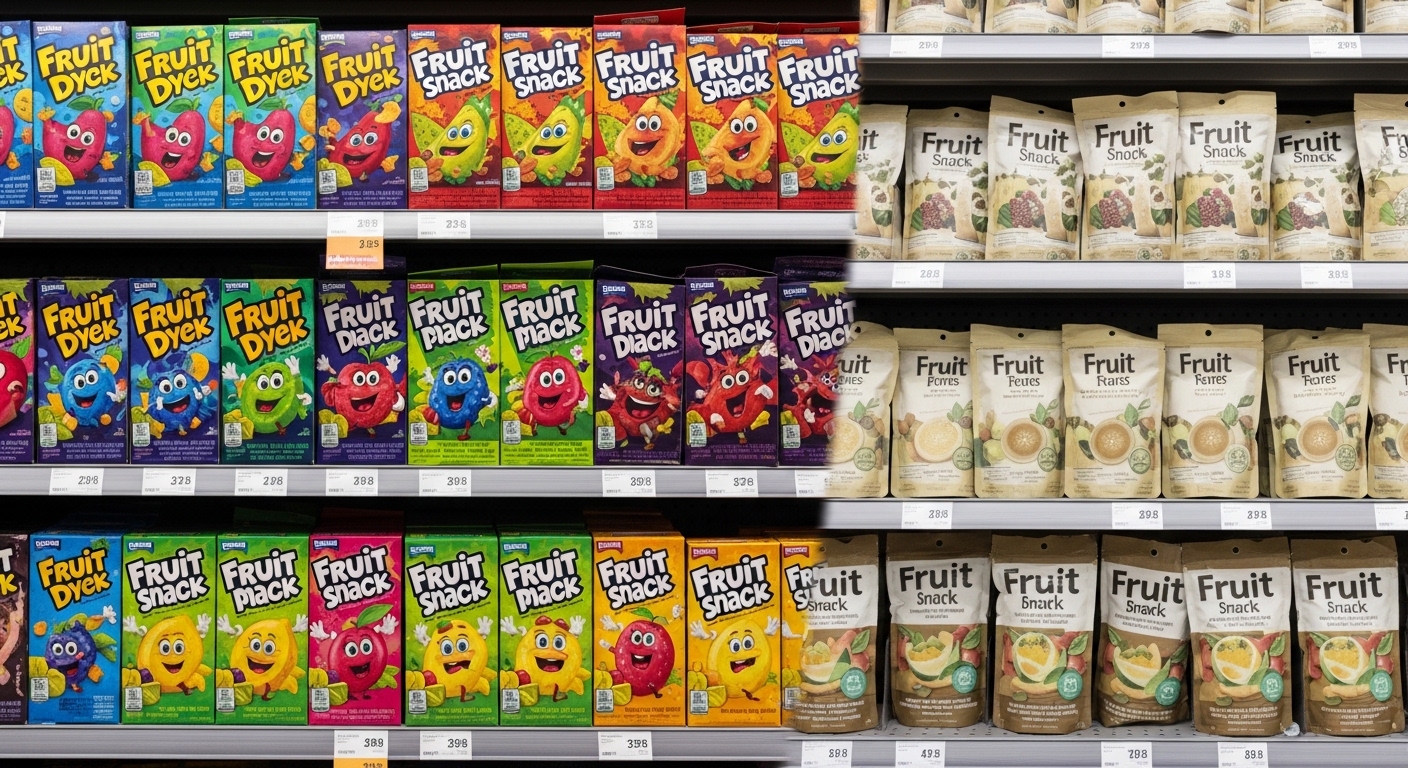
You do not have to give up fruit snacks. These alternatives skip the synthetic dyes entirely:
- Annie’s Bunnies & Hearts Fruit Snacks (General Mills) — uses organic fruit juice for color. Available at Target, Walmart, and major grocers.
- BEAR Real Fruit Yoyos (BEAR Snacks) — baked real fruit and vegetable extracts, zero artificial colors or added sugars. Available at Whole Foods and Amazon.
- Stretch Island Fruit Leathers (Stretch Island) — 100% fruit puree, no artificial dyes. Available at major grocers and Costco.
- That’s It Fruit Bars (That’s It) — two ingredients: actual fruit, nothing else. Available at Target and Amazon.
- Solely Organic Fruit Jerky (Solely) — single cold-pressed fruit, no dyes or added sugars. Available at Whole Foods and Sprouts.
We cross-referenced these five product labels available at Walmart, Target, and Amazon and confirmed none contain FD&C Red No. 40 or any other petroleum-based synthetic dye as of early 2026.
Latest News — 2024 to 2026
April 23, 2025 — FDA announces phase-out of synthetic dyes The FDA and HHS launched a national initiative to eliminate six petroleum-based synthetic dyes — including Red 40 — from the U.S. food supply by the end of 2026. The initiative currently operates as a strong industry request, not an immediate legal mandate. (New Food Magazine)
November 8, 2024 — California bans Red 40 in school meals Governor Gavin Newsom signed Assembly Bill 2316, banning Red 40 and five other synthetic dyes from California K-12 public school food, effective December 31, 2027. (K-12 Dive)
July 14, 2025 — Heightened legal scrutiny on food dye marketing Texas Attorney General Ken Paxton asserted that major CPG companies may have misled consumers by marketing products as “healthy” or dye-free while still containing Red 40 and Yellow 6. (Holland & Knight)
February 2, 2026 — FDA publishes industry pledge tracker The FDA began publicly tracking food manufacturer commitments to remove petroleum-based food dyes, following pledges from General Mills, Kraft Heinz, and Conagra. (FDA.gov)
Additional state activity: Utah banned Red 40 in schools in 2024. West Virginia banned it in school meals starting in 2025, with a statewide total food ban scheduled for 2028. Virginia joins California with a school meal ban starting in 2027. Over 30 states have pending or active legislation as of 2026. (GoodRx, 2026)
huhuly Verdict
Risk Level: Medium
Found In: Fruit snacks, breakfast cereals, baked goods, sodas, sports drinks, candy
Label Names: Red 40, Red 40 Lake, FD&C Red No. 40, Allura Red AC, E129, CI 16035
Our Take: Red 40 is not an ingredient that needs to be in your fruit snacks — it is there for cosmetic reasons only, and cleaner options exist. The science is not settled enough to call it a major threat for healthy adults, but for children with attention sensitivities or anyone with a gut condition, it is worth reducing exposure where you can. The good news: the food industry is moving away from it, and better-labeled alternatives are already widely available.
FAQ
Do Fruit Roll-Ups have Red 40 in them?
Yes, Fruit Roll-Ups contain Red 40, listed near the end of the ingredient panel under the “Contains 2% or less of:” declaration. The dye is present in multiple varieties, including Strawberry Blast and Wild Berry Punch Minis. General Mills has committed to removing FD&C artificial dyes from its U.S. product lines by 2027, so formulations may change before then.
Why is Red Dye 40 restricted in Europe but still common in the U.S.?
Red 40 is not outright banned in Europe, but any food containing it must carry a warning label stating it “may have an adverse effect on activity and attention in children,” according to EFSA rules. That mandatory label has made it commercially unattractive for most European manufacturers. U.S. regulators historically set a higher threshold for action, though the FDA’s April 2025 phase-out initiative signals that gap is closing.
What are the side effects of Red Dye 40 in children?
Studies suggest Red 40 may contribute to hyperactivity and inattentiveness in some children, particularly those with pre-existing ADHD. The California OEHHA issued a report supporting this link. Not every child reacts, and the effect appears to vary by individual sensitivity. Some children also experience mild allergic responses such as skin irritation, according to GoodRx. Current research on long-term effects is still developing.
Are Fruit Roll-Ups healthy or bad for you?
Fruit Roll-Ups are a heavily processed snack — their primary ingredients are corn syrup, dried corn syrup, and sugar, with pear puree concentrate listed further down. They provide minimal nutritional value and contain synthetic dye. Eaten occasionally, they are unlikely to cause harm for most healthy children or adults. As a regular daily snack, the sugar load and dye exposure are worth rethinking, especially for younger kids.
What fruit snacks do not have artificial dyes?
Several widely available options are made without synthetic food dyes. BEAR Real Fruit Yoyos, Stretch Island Fruit Leathers, Annie’s Bunnies & Hearts Fruit Snacks, That’s It Fruit Bars, and Solely Organic Fruit Jerky all use real fruit or vegetable-based color rather than petroleum-derived dyes. Most are available at Target, Whole Foods, Amazon, and major grocery chains.
Three Things Worth Knowing Before You Buy
Red 40 is a cosmetic ingredient — your fruit snack does not taste better because of it. The regulatory environment in 2026 is the most active it has been in decades, with multiple states acting faster than the FDA. And cleaner alternatives are not niche health food anymore — they sit on the same shelves.
Check your label for any of the names listed above. If Red 40 is on it and you have young kids or a gut condition in your household, try one of the alternatives this week. If you want more of this kind of breakdown in your inbox, consider signing up for the huhuly newsletter — we track ingredient changes across major brands as they happen.
Reviewed by the huhuly Editorial Team huhuly’s food transparency team reviews ingredient labels, monitors FDA regulatory updates, and tracks changes in U.S. food manufacturing. All claims are verified against official brand ingredient lists and regulatory databases before publication. Last updated: February 2026 | Fact-checked: Yes | Sources: 12 cited
This article is for informational purposes only and does not constitute medical advice. Consult your healthcare provider before making dietary changes based on this information.
Potassium Sorbate: What Labels Won’t Tell You
Are Cheerios Healthy? The 2026 Ingredient Breakdown
More in Food Brands
You might also find these useful