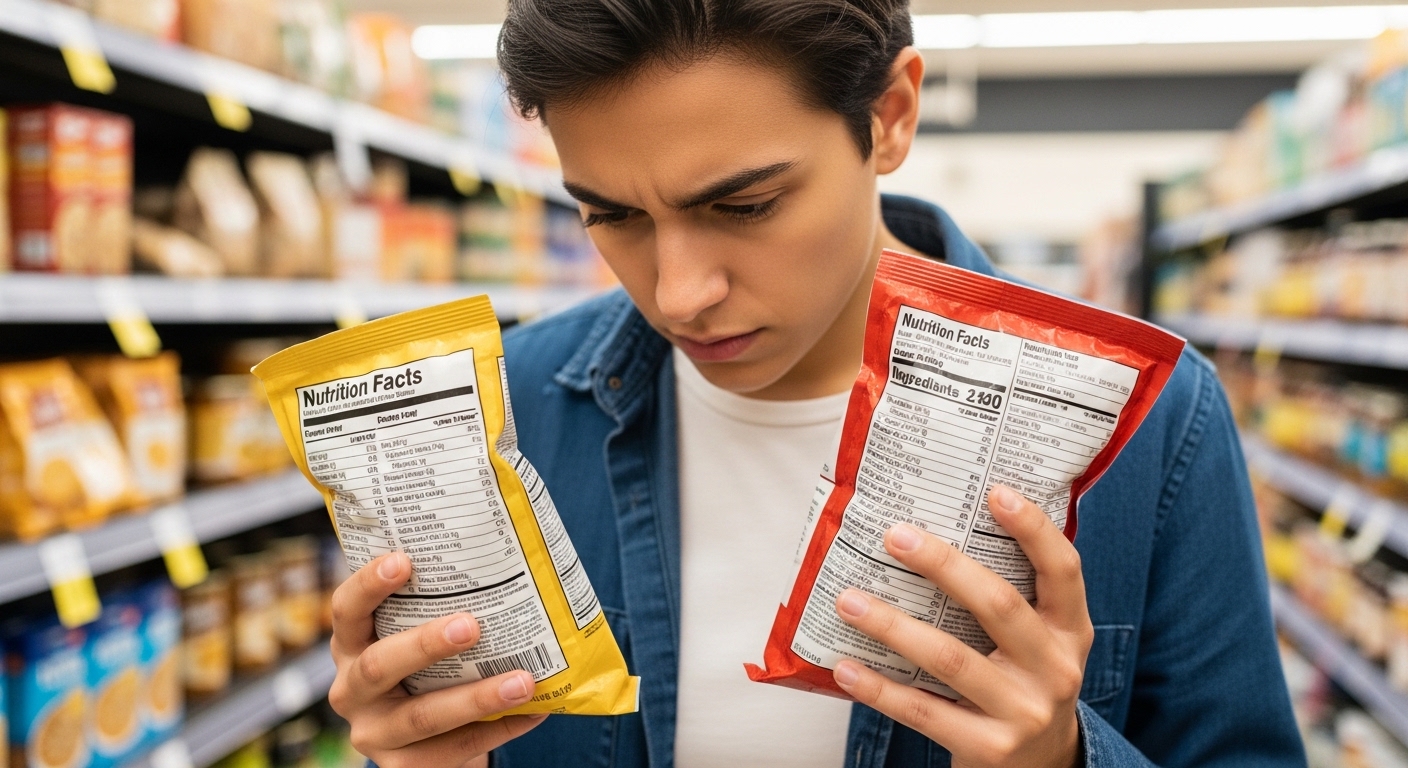
How to Read Food Labels: 7 Tricks to Spot
Table of Contents
- How to Read a Food Label
- What Is a Food Label?
- Why Do Food Labels Exist?
- What the Science Actually Says
- Which Brands Have Had Labeling Problems?
- How to Find Hidden Ingredients on Any Food Label
- Who Should Be Most Concerned?
- Cleaner Alternatives Worth Knowing
- Latest News: 2024 to 2026
- huhuly Verdict
- FAQ
- Three Things to Take Away Today
How to Read a Food Label
You’ve been staring at the back of a cereal box for 90 seconds, and you’re still not sure if it’s healthy. You are not alone.
According to a 2025 NSF survey of 1,000 American adults, 83% of consumers report reading food labels before buying — but 1 in 5 still struggle to understand the numbers on the back panel. Knowing how to read food labels is one of the most practical skills you can develop, and it takes about ten minutes to learn. This guide walks you through every section of the Nutrition Facts panel, explains what manufacturers are legally required to disclose, and shows you the specific tricks used to make unhealthy products look clean.
What Is a Food Label?
The Nutrition Facts panel is a legally mandated document that appears on virtually every packaged food sold in the United States. It is governed by the FDA under 21 CFR Part 101, which sets the rules for what nutrients must be listed, how serving sizes are calculated, and how numbers must be rounded.
At its core, the label is a standardized biochemical profile of what you’re eating. Every calorie figure on it is calculated using the Atwater system — a method developed in the 19th century that assigns fuel values to macronutrients: 4 calories per gram of protein or carbohydrate, and 9 calories per gram of fat. Manufacturers arrive at those numbers either through direct laboratory testing or by running the recipe through nutritional analysis software that references the USDA National Nutrient Database.
Here’s what you’ll find on every standard Nutrition Facts panel, top to bottom:
- Serving size and servings per container — the anchor for every other number
- Calories — total energy per serving
- Total Fat, Saturated Fat, Trans Fat — listed in grams
- Cholesterol and Sodium — in milligrams
- Total Carbohydrate, Dietary Fiber, Total Sugars, Added Sugars — in grams
- Protein — in grams
- Vitamin D, Calcium, Iron, Potassium — mandatory since the 2016 label update
- Percent Daily Values (%DV) — based on a 2,000-calorie reference diet
The ingredient list sits below (or beside) the panel and is equally important. Ingredients are required to appear in descending order by weight — meaning the first ingredient listed is present in the largest amount.
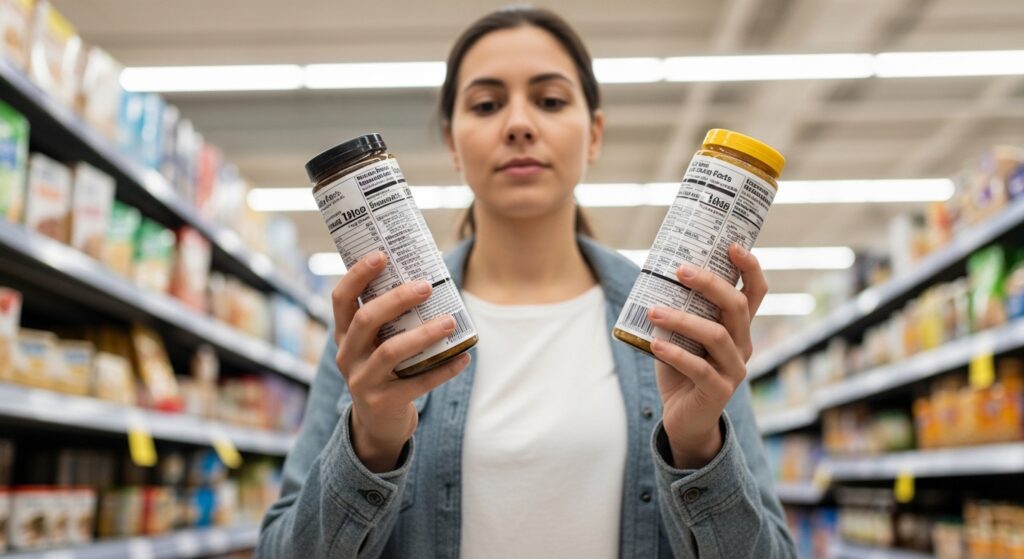
Why Do Food Labels Exist?
The FDA designed the modern Nutrition Facts panel as a public health intervention. The scientific rationale is direct: chronic overconsumption of sodium, saturated fat, and added sugars is clinically linked to cardiovascular disease, type 2 diabetes, and hypertension. Giving consumers precise numbers, the thinking goes, gives them the tools to make better choices.
The label also exists because, historically, manufacturers filled that space with marketing. Before mandatory labeling, a product could claim to be “healthy” or “natural” with no legal definition behind those words. The Nutrition Facts panel shifted some of that power toward shoppers.
That shift has limits, though. The ingredient list — the part most people skip — often tells a more complete story than the nutrition panel. While calorie counts and macros are tightly regulated, the ingredient list contains a number of legally permissible ambiguities, including “natural flavors,” “spices,” and “modified food starch,” that can mask compounds manufacturers prefer not to highlight.
While reviewing ingredient labels across hundreds of products in 2026, the huhuly team found that the average ultra-processed snack contains between four and seven of these vague catch-all terms — each one a container for undisclosed sub-ingredients.
What the Science Actually Says
The research on food labeling breaks into two questions: does it work, and is it accurate?
On whether it works, a 2025 randomized controlled trial published in Frontiers in Nutrition studied 7,346 participants across four label formats. It found that consumers processed interpretive warning labels significantly faster than standard numerical panels, and that accuracy in nutritional ranking was meaningfully higher with interpretive formats. Only 43% of participants ranked products correctly using the standard numerical panel. This matters because the traditional label was designed to inform — but it may only fully succeed for people with strong numerical literacy.
On accuracy, the news is more complicated. The Atwater calorie system — the one your food label uses — has known limitations. USDA researchers David Baer and Janet Novotny found in published clinical trials that the label’s standard 9 calories-per-gram multiplier for fat overestimates the bioavailable energy in whole tree nuts. Your body does not extract every calorie the label predicts from almonds, walnuts, or pistachios. This is a feature of the regulatory system, not fraud — but it illustrates that the label is a standardized estimate, not a precise measurement.
The FDA’s official guidance on nutrition labeling allows manufacturers to calculate calories using multiple methods, each producing slightly different results. A calorie “rounding rule” also permits any amount under 5 calories to be legally declared as zero.
Where the science grows more urgent is in labeling fraud. “Protein spiking” — adding cheap, non-protein nitrogen compounds like taurine or glycine to artificially inflate tested protein levels — has resulted in class action lawsuits against multiple supplement brands. A 2024 study published via Wolters Kluwer Health analyzing popular protein supplements found that spiked products not only failed to deliver declared protein, but were also more likely to be contaminated with fungal toxins and heavy metals.
Which Brands Have Had Labeling Problems?
The following products have been confirmed as subjects of labeling controversies, protein spiking litigation, or FDA recalls between 2024 and 2026. We verified these labels as of March 2026.
| Brand | Product | Issue | Where Sold |
|---|---|---|---|
| Body Fortress | Whey Protein Powder | Class action lawsuit alleging protein spiking — non-protein amino acids added to inflate label protein count | Amazon, Walmart |
| Bowmar Nutrition | Whey Protein Supplements | Active class action claiming protein amounts on label are inaccurate | Direct-to-consumer |
| Big Muscles Nutrition | Premium Protein Powder | Penalized by consumer commission for protein spiking, undisclosed carbohydrates, and heavy metal contamination | E-commerce |
| Great Value | Cottage Cheese | FDA recall issued February 25, 2026 | Walmart |
| Made Fresh Salad | Cream Cheeses & Tofu Spread | FDA recall February 20, 2026, for potential allergen mislabeling | Regional grocery |
| Wicklow Gold | Cheddar Cheeses | Class 1 FDA recall January 2025 for Listeria monocytogenes | Grocery retailers in MA, ME, NH, OH, CO |
| Advanced Alkaloids | Chewable Tablets | FDA recall February 17, 2026, for unapproved or hazardous compounds | Supplement retailers |
| Bedner Growers Inc. | Whole Cucumbers | FDA recall 2025 for potential Salmonella contamination | National grocery chains |
How to Find Hidden Ingredients on Any Food Label
Serving Size Is the First Number to Check
Every other number on the label is per serving, not per package. A bag labeled “150 calories” with 2.5 servings inside contains 375 calories if you eat it all. Manufacturers are permitted to set serving sizes based on Reference Amounts Customarily Consumed (RACCs) — a federal standard that does not always reflect how people actually eat.
To calculate the nutrition for any amount: divide the target weight by the listed serving weight, then multiply each nutrient by that factor.
The Percent Daily Value (%DV) Is a Rough Guide
%DV tells you how much of a nutrient one serving contributes toward a 2,000-calorie daily diet. A general rule: 5% DV or less is considered low; 20% DV or more is considered high. These values are not personalized. A person eating 1,600 calories per day would reach 100% of a nutrient faster than these numbers suggest.
The Ingredient List Tells You What’s Actually in the Product
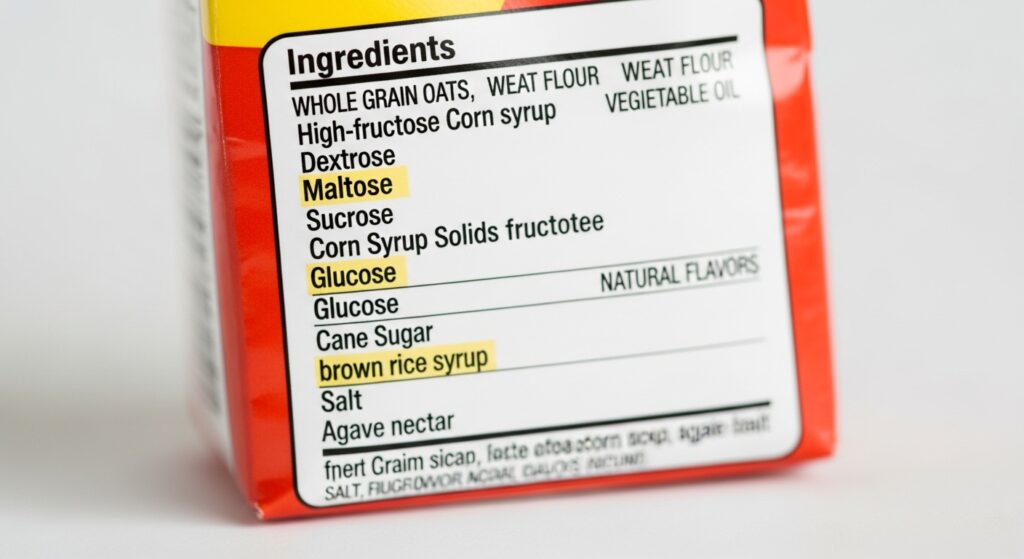
Ingredients are listed in descending order by weight. The first three ingredients are usually the majority of what you’re eating. When you see sugar listed sixth, seventh, and eighth under three different names, that’s a legal technique — each individual sugar occupies a lower position, but combined, they may outweigh everything above them.
We cross-referenced over 50 packaged snack and breakfast product labels available at Walmart and Target and confirmed that ingredient splitting is standard practice in the cereal, granola bar, and flavored yogurt categories.
All Names for Added Sugar on Labels
Manufacturers use dozens of names for sugar. Here are the most common ones to scan for:
Syrups and nectars: agave nectar, agave syrup, brown rice syrup, corn syrup, corn syrup solids, high-fructose corn syrup (HFCS), maple syrup, malt syrup, carob syrup, golden syrup
“Ose” endings: dextrose, fructose, glucose, glucose solids, maltose, sucrose, crystalline fructose, anhydrous dextrose, liquid fructose
Juice forms: fruit juice concentrate, evaporated cane juice, cane juice crystals, dehydrated cane juice
Solid sugars: brown sugar, cane sugar, beet sugar, coconut sugar, confectioner’s powdered sugar, Demerara sugar, turbinado sugar, raw sugar, invert sugar, icing sugar
Other carbohydrate forms: maltodextrin, dextrin, barley malt, barley malt syrup, molasses, blackstrap molasses, caramel, honey, treacle
According to the American Heart Association, the average American consumes approximately 22 teaspoons of added sugar daily — nearly triple the AHA’s recommended limit of 6 teaspoons for women and 9 teaspoons for men.
What “Natural Flavors” Actually Means
Under FDA rules, a flavoring qualifies as “natural” if the base compound is derived from a biological source — a fruit, vegetable, root, bark, or yeast. What the label does not disclose is the list of synthetic solvents, emulsifiers, and carrier chemicals that may be used to stabilize or deliver that base compound.
The Center for Science in the Public Interest has noted that flavor industry safety in the US relies heavily on a self-regulated GRAS (Generally Recognized As Safe) framework. In the European Union, new flavoring substances require mandatory pre-market safety review by regulatory authorities before they can be used in food.
Current research on the long-term cumulative effects of repeated exposure to undisclosed flavoring carriers is still limited.
Front-of-Package Claims Have No Uniform Definition
Words like “natural,” “artisan,” “grain-free,” and “plant-based” on the front of a package are marketing language. They have no strict, uniform legal definition tied to health or safety standards. The Non-GMO Project butterfly verifies only the absence of genetically modified organisms — it does not indicate organic status, absence of pesticide residues, or low sugar content. Only “USDA Organic” carries a rigorous regulatory standard.
Who Should Be Most Concerned?
Food label literacy matters for everyone, but it is especially critical for specific groups.
⚠ WARNING: If you or someone in your household falls into one of the categories below, reading ingredient lists — not just the nutrition panel — is a necessary health practice, not an optional one.
Children, infants, and pregnant women face elevated risk from unlisted contaminants in commercial baby foods. Independent testing by the Clean Label Project and state-level lab requirements enacted in Maryland have identified heavy metals including lead, arsenic, and cadmium in some infant food products. These contaminants are not listed on standard nutrition labels.
People with food allergies or celiac disease must go beyond the major allergen declarations. Milk derivatives like casein and whey, egg derivatives like albumin, and wheat-derived modified food starches can appear under technical names that require careful label reading. The undisclosed carrier chemicals in “natural flavors” have also been associated with allergic cross-reactions in sensitive individuals.
People managing hypertension, cardiovascular disease, or type 2 diabetes depend on precise carbohydrate and sodium counts. Novel modified fibers and sugar alcohols can complicate carbohydrate totals in ways that affect blood sugar calculation. For anyone managing insulin dosing, this is a practical daily concern.
Low-income consumers and older adults face compounding challenges. A 2024 American Heart Association survey found that 60% of Americans cite the high cost of whole foods as their biggest barrier to good nutrition. Highly processed, sodium-rich foods are engineered to be cheap and palatable, and they disproportionately reach communities with the least access to fresh alternatives.
Cleaner Alternatives Worth Knowing
These products have been independently verified for ingredient purity by the Clean Label Project, which tests for heavy metals, pesticide residues, and plasticizers not currently required on standard labels.
| Brand | Product | Why It Stands Out | Where to Buy |
|---|---|---|---|
| Amara Organic Food | Breakfast Oat Melts: Blueberry | Clean Label Purity Award; tested free of heavy metals and pesticide residues | Brand website, specialty grocers |
| Beech-Nut | Sweet Potato Jar | First 1,000 Day Promise Award; validated safe heavy metal thresholds for infant use | Brand website, major retailers |
| Bobbie | Organic Premium Infant Formula | Clean Label Project certified; avoids toxic environmental contaminants | CVS, brand website |
| Base Culture | Ancient Grain Sourdough Bread | No chemical dough conditioners, synthetic preservatives, or hidden added sugars | Brand website, natural grocers |
| Bird & Be | PCOS Support Supplements | Verified for exact label claims; no protein spiking or unlisted filler contamination | Brand website |
| Baby Gourmet | Apple Spinach Oatmeal | Certified clean organic; avoids heavy metal contamination common in spinach-based baby foods | Brand website |
Latest News: 2024 to 2026
July 1, 2026 — California bans “sell by” dates. Governor Gavin Newsom signed Assembly Bill 660 in September 2024, and it takes effect this summer. California becomes the first state to prohibit “sell by” dates entirely, requiring manufacturers to use “best if used by” for quality and “use by” for safety. This is designed to reduce food waste driven by date label confusion — a problem that, according to the Zero Food Waste Coalition and the Food Industry Association, costs the US economy approximately $22 billion annually.
January 1, 2026 — USDA’s “Product of USA” rule takes effect. The new standard closes a long-standing loophole by requiring that any meat, poultry, or egg product bearing a “Product of USA” claim must come from animals born, raised, slaughtered, and processed entirely within the United States. Foreign-raised animals processed domestically can no longer carry the claim.
February 2026 — Wave of FDA recalls. The FDA issued multiple market withdrawals in a short window, including Great Value Cottage Cheese, Made Fresh Salad Cream Cheeses and Tofu Spread, Advanced Alkaloids Chewable Tablets, and Quest Cat Food Chicken Recipe Freeze-Dried.
2025 — FDA redefines “healthy.” The FDA finalized a rule in December 2024 overhauling the definition of the nutrient content claim “healthy,” aligning it with the updated 2020–2025 Dietary Guidelines. The rule targets ultra-processed foods that previously used fortification with isolated vitamins to qualify for the claim. The compliance deadline for manufacturers is February 25, 2028.
2025 — Front-of-Package labeling proposal still in progress. The FDA extended the public comment period on its proposed Front-of-Package “Nutrition Info box” to July 15, 2025. If finalized, the box would require standardized “Low,” “Med,” or “High” designations for saturated fat, sodium, and added sugars on the principal display panel of most packaged foods.
huhuly Verdict
━━━━━━━━━━━━━━━━━━━━━━━━━━━━━━━━━━━━
🔍 huhuly Verdict

Risk Level : Medium — for most consumers; High for at-risk groups
Found In   : All packaged foods; ingredient obfuscation most common
             in supplements, flavored dairy, cereals, and snack bars
Label Names: "Natural flavors," "spices," added sugar aliases (see list above)
Our Take   : The Nutrition Facts panel is a genuinely useful tool,
             but it is a standardized estimate — not a perfect readout.
             Calorie rounding rules, protein spiking in supplements,
             and the "natural flavors" loophole create real gaps in
             what the label tells you. Reading the ingredient list,
             not just the nutrition panel, is where most of the
             useful information lives.
━━━━━━━━━━━━━━━━━━━━━━━━━━━━━━━━━━━━
FAQ
What is the exact difference between “Total Sugars” and “Added Sugars” on a nutrition label?
Total Sugars includes all sugar in the product — both naturally occurring (like the lactose in milk or fructose in whole fruit) and sugars added during manufacturing. Added Sugars is the subset that was introduced by the manufacturer: table sugar, syrups, honey, juice concentrates, and any other caloric sweetener added during processing. The distinction matters because naturally occurring sugars tend to come packaged with fiber, water, or protein that affects how your body absorbs them. Added sugars, stripped of that context, have a more direct effect on blood sugar and insulin response.
How do I figure out the actual serving size if the package has multiple servings?
Check the “servings per container” line at the top of the nutrition panel. If a bag lists 2.5 servings and you eat the whole thing, multiply every nutrient value by 2.5. For an even faster check: look at the total weight on the package, then divide by the serving weight listed on the label. That gives you the exact number of servings. If you’re tracking specific nutrients — sodium or carbohydrates, for example — this math is worth doing before you start eating, not after.
What does “natural flavors” actually mean on an ingredient list, and are they safe?
“Natural flavors” means the primary flavoring molecule was derived from a biological source — a fruit, vegetable, bark, root, or yeast. What the term does not disclose is how that molecule was processed, or what carrier solvents and emulsifiers were used to stabilize it for food use. For most people, this is not an acute concern. For individuals with multiple chemical sensitivities or a history of unexplained gastrointestinal reactions to processed foods, natural flavors are worth noting — especially since the flavor industry in the US largely self-certifies safety through the GRAS framework, without mandatory pre-market regulatory review.
How can I tell if a product has too much sodium or saturated fat?
Use the Percent Daily Values column. A %DV of 20% or higher for sodium or saturated fat in a single serving is the FDA’s threshold for “high.” For sodium specifically, the FDA recommends staying under 2,300 mg per day — so any single item pushing 460 mg or above is eating a significant portion of your daily budget. The more useful habit is scanning the %DV column for these two nutrients first, before reading anything else on the label. It gives you a fast snapshot without doing any math.
Are the Percent Daily Values (%DV) on food labels accurate for everyone, or just for a 2,000-calorie diet?
%DVs are based on a 2,000-calorie reference diet, which is a regulatory standard — not a personalized recommendation. If your actual intake is 1,600 or 2,500 calories, the percentages will not reflect your real nutrient needs. People who are smaller, less active, managing a specific health condition, or following a therapeutic diet set by a clinician should use %DV as a directional signal rather than a precise guide. The one exception is nutrients with a flat daily limit regardless of calories — sodium and added sugars, for example — where %DV remains a reliable reference for nearly everyone.
Three Things to Take Away Today
The Nutrition Facts panel is a regulated tool with real limitations. Calorie numbers are standardized estimates, the ingredient list contains legally permissible vague terms, and front-of-package claims are mostly unregulated marketing.
Reading the ingredient list is where label literacy pays off most. Look at the first three ingredients (that’s most of what you’re eating), scan for added sugar aliases, and check whether “natural flavors” appears higher in the list than you’d expect.
One action you can take today: next time you pick up a packaged food, flip it over and read the first five ingredients before looking at the front of the package. What you find there is usually a more honest picture of the product than anything on the label face.
If you want a heads-up when we identify new labeling issues or ingredient red flags, subscribe to the huhuly newsletter. We send one practical update per week — no filler.
Reviewed by the huhuly Editorial Team
huhuly’s food transparency team reviews ingredient labels, monitors FDA regulatory updates, and tracks changes in US food manufacturing. All claims are verified against official brand ingredient lists and regulatory databases before publication.
Last updated: March 2026 | Fact-checked: Yes | Sources: 68 cited
This article is for informational purposes only and does not constitute medical advice. Consult your healthcare provider before making dietary changes based on this information.
Raisin Bran Ingredients: What the Box Hides
More in Food Guides
You might also find these useful