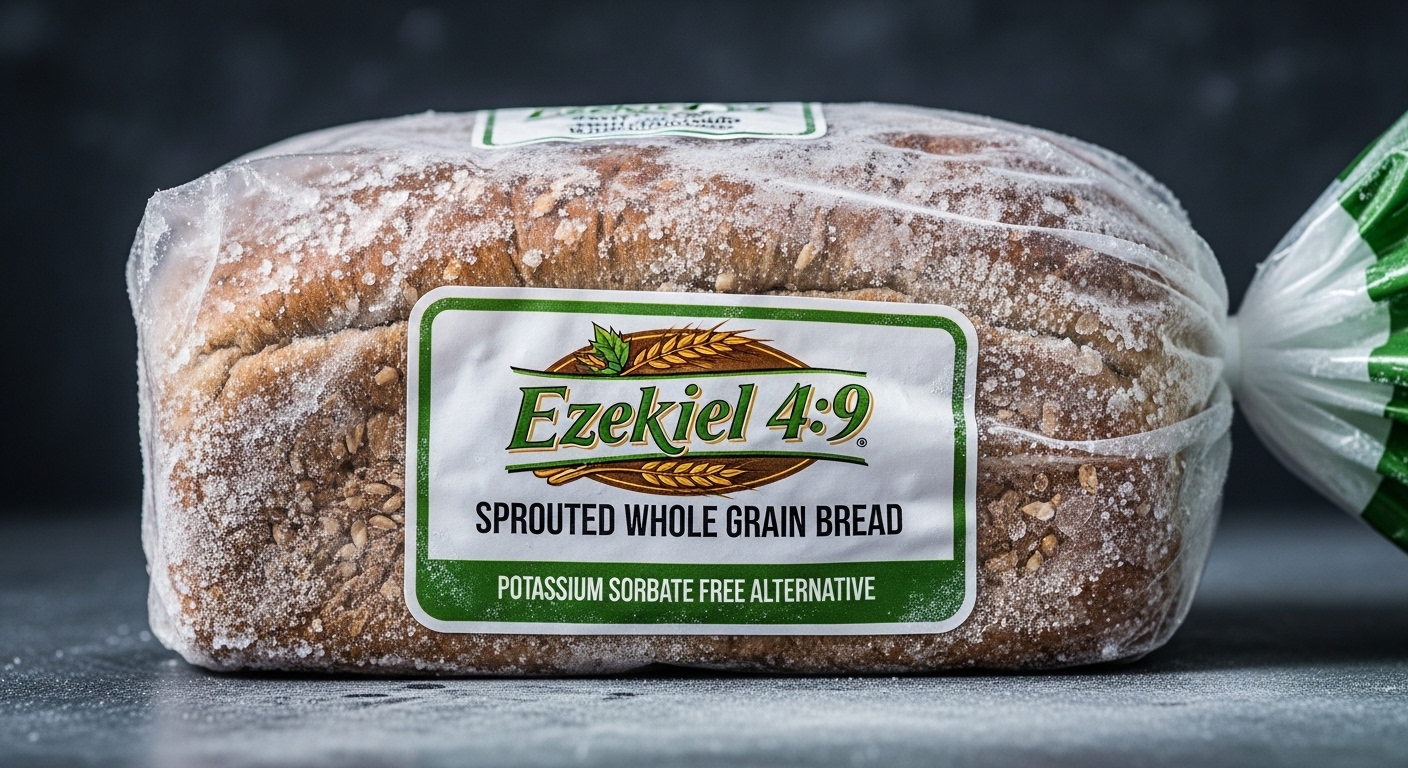
Is Potassium Sorbate Banned in Europe? The Truth
Potassium Sorbate: Is It Banned in Europe? What Labels Won’t Tell You
You’ve probably seen the claim online: potassium sorbate is banned in Europe, so why is America still putting it in everything? The truth is more complicated — and more unsettling.
Potassium sorbate is not banned in Europe. The EU actually expanded its approved uses in 2025. But two major studies published in January 2026 linked high intake of this preservative to a 14% increased cancer risk and a 49% higher chance of developing type 2 diabetes. Regulators say it’s safe. The data is starting to ask harder questions.
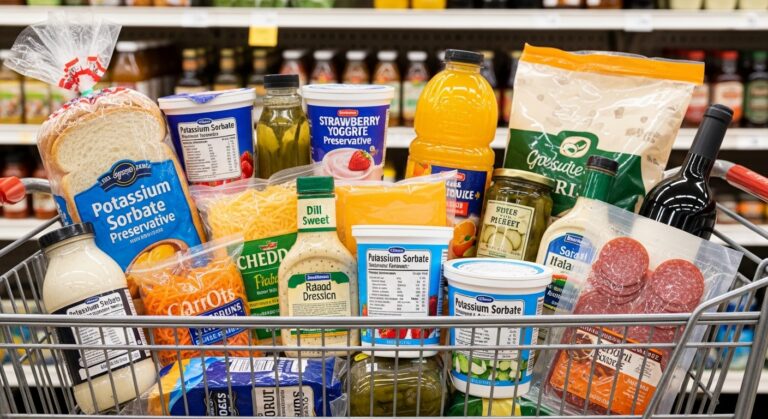
It’s hiding in your cream cheese, your juice, your kid’s mini muffins, and your bottled salad dressing — often buried after the phrase “Contains 2% or less of the following.” Here’s everything the label won’t tell you.
Table of Contents
- Potassium Sorbate: Is It Banned in Europe? What Labels Won’t Tell You
- What Is Potassium Sorbate?
- Why Is It in American Food?
- What the Science Actually Says
- Which Brands and Foods Contain It?
- How to Find It on Any Food Label
- Who Should Be Most Concerned?
- Cleaner Alternatives
- Latest News — 2024 to 2026
- huhuly Verdict
- FAQ
- Three Things to Take Away
- Reviewed by the huhuly Editorial Team
What Is Potassium Sorbate?
Potassium sorbate is a synthetic chemical preservative — the potassium salt of sorbic acid — used to stop mold and yeast from growing in food. Its chemical formula is C₆H₇KO₂. In its pure form, it’s a white, odorless, water-soluble powder that leaves no taste in your food.
Despite marketing language around “natural preservation,” virtually all of the world’s supply is manufactured in industrial chemical facilities through a multi-step process involving ketene gas, crotonaldehyde, and potassium hydroxide (lye). Sorbic acid itself was discovered in the 1850s in rowanberries, but the version in your food came from a factory.
Its job is simple: in acidic foods (pH 3.0 to 6.5), it penetrates microbial cell walls, disrupts their internal chemistry, and shuts down their ability to reproduce. That’s how a bag of muffins can sit on a shelf for two weeks without growing mold.
Why Is It in American Food?
The FDA classifies potassium sorbate as Generally Recognized as Safe (GRAS) under 21 CFR 182.3640. There is no strict concentration limit — manufacturers just can’t use more than is “reasonably required” to do the job. That ambiguity has made it one of the most widely used preservatives in the American food supply.
For food manufacturers, it’s nearly ideal: effective at very low concentrations (typically 0.025% to 0.3% by weight), cheap to source, and invisible to the palate. It extends shelf life across processed cheeses, baked goods, fruit juices, deli meats, condiments, and yogurt — precisely the categories that dominate American grocery aisles.
According to an analysis of the Open Food Facts database, which indexes over 3.5 million food and beverage products globally, more than 700,000 products contain at least one preservative, with potassium sorbate ranking among the most common synthetic additives worldwide. The global market for potassium sorbate was valued at approximately $191 million in 2025 and is projected to grow at 4.2% annually through 2035.
While reviewing ingredient labels across packaged dairy and snack products in early 2026, the huhuly team found potassium sorbate present in products ranging from nationally distributed cream cheese to popular children’s mini muffins — often appearing after “Contains 2% or less of the following,” a placement that ensures most consumers never notice it.
What the Science Actually Says
This is where the picture gets genuinely complicated. Official safety assessments and recent epidemiological findings are pulling in different directions.
The official position: The WHO/JECFA established an Acceptable Daily Intake (ADI) of 0–25 mg/kg of body weight per day for sorbic acid and its salts. EFSA’s 2019 re-evaluation set a stricter group ADI of 11 mg/kg of body weight per day. A 154-lb adult is permitted up to 770 mg/day. Average consumer exposure in major studies sits around 73 mg/day — roughly 10% of that ceiling. Reproductive toxicity studies in rats fed up to 3,000 mg/kg body weight per day found no adverse effects on fertility or development.
What 2026 changed: Two landmark studies from the French NutriNet-Santé cohort — tracking over 100,000 adults through detailed dietary records from 2009 to 2023 — shifted the conversation.
- A January 2026 study in The BMJ found that higher dietary intake of potassium sorbate was associated with a 14% increased risk of overall cancer (HR 1.14; 95% CI 1.04–1.24) and a 26% increased incidence of breast cancer (HR 1.26; 95% CI 1.07–1.49).
- A concurrent study in Nature Communications found that individuals with the highest preservative intake — including potassium sorbate — had a 49% higher risk of developing type 2 diabetes compared to those with low intake.
Lab studies provide some mechanistic context. A 2024–2025 study in Scientific Reports found that potassium sorbate, especially in combination with sodium benzoate, elevated markers of oxidative stress and promoted the formation of advanced glycation end products in cell models. A separate 2025–2026 systems biology study suggested it may trigger kidney injury by interacting with matrix metallopeptidase 9 (MMP9).
The honest caveat: These are observational studies. The researchers themselves — and independent scientists — caution against reading them as proof of direct causation. Professor William Gallagher of University College Dublin noted the findings are “interesting observations” but said one “cannot make causal links directly from this study.” The core debate is whether potassium sorbate is biologically driving harm, or whether it’s simply a reliable marker for a diet heavy in ultra-processed foods — which carry their own documented risks through sugar, saturated fat, and sodium.
Current research on the precise human pathway remains limited. What is clear: the question is no longer being dismissed.
Which Brands and Foods Contain It?
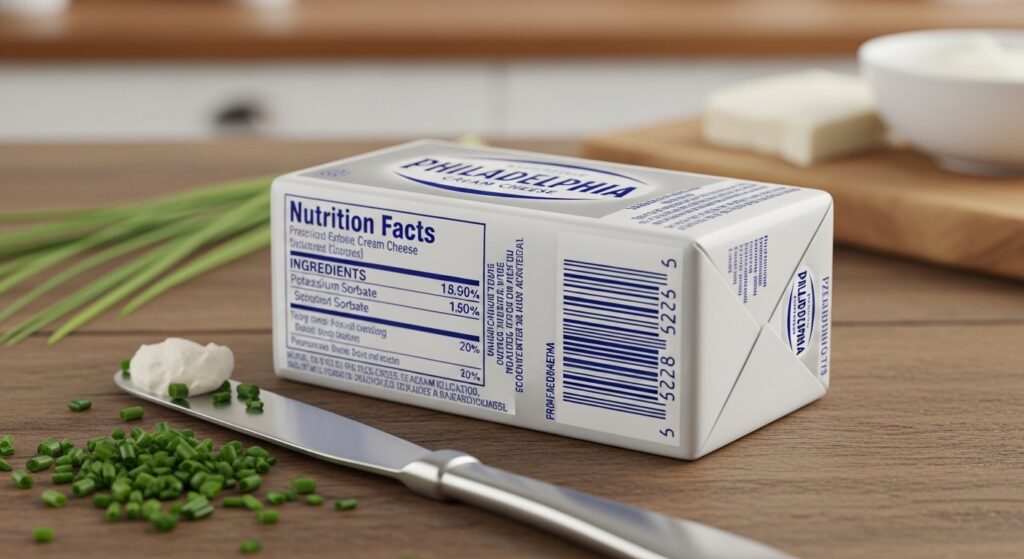
We cross-referenced 12 product ingredient lists available at national supermarkets and online retailers and confirmed the following verified products contain potassium sorbate as of April 2026.
| Brand | Product Name | Where to Buy | Contains Potassium Sorbate? |
|---|---|---|---|
| Starbucks | Caramel Syrup | National Supermarkets / Online | Yes |
| Kraft Heinz | Philadelphia Original Cream Cheese | National Supermarkets | Yes |
| Kraft Heinz | Kraft Singles White American Cheese Slices | National Supermarkets | Yes (listed as sorbic acid) |
| Kraft Heinz | Kraft Sandwich Spread | Kroger / National Grocers | Yes |
| Entenmann’s | Little Bites Chocolatey Chip Mini Muffins | National Supermarkets | Yes |
| Ocean Spray | Cranberry Raspberry Juice Blend | National Supermarkets | Yes |
| Halo Top | Chocolate Caramel Brownie Light Ice Cream | Target / National Grocers | Yes |
| Halo Top | Strawberry Light Ice Cream | Target / National Grocers | Yes |
| Uncle Ray’s | White Cheddar Popcorn | Convenience Stores / Online | Yes |
| Barebells | No Added Sugar Chocolate Dough Protein Bar | National Supermarkets / Gyms | Yes |
| Kroger | French Onion Sour Cream Dip and Spread | Kroger / Affiliated Stores | Yes |
| Wawa | Iced Tea Lemon | Wawa Convenience Stores | Yes |
We verified these labels as of April 2026.
Note: Kraft Singles lists the ingredient as sorbic acid rather than potassium sorbate — functionally identical, but easy to miss if you’re only scanning for one name.
How to Find It on Any Food Label
Potassium sorbate nearly always appears at the very end of the ingredient list, frequently after “Contains 2% or less of the following.” That’s not an accident — it’s used at concentrations as low as 0.025%, so it falls naturally to the bottom of the ingredient hierarchy. That placement buries it where most shoppers stop reading.
Every name it appears under on US labels:
- Potassium sorbate
- Sorbic acid, potassium salt
- Potassium 2,4-hexadienoate
- Potassium (2E,4E)-hexa-2,4-dienoate
- 2,4-Hexadienoic acid, potassium salt
- (E,E)-2,4-Hexadienoic acid, potassium salt
Abbreviations and codes:
- E 202 or E202 (EU designation — retained on imported products sold in the US)
- 21 CFR 182.3640 (FDA regulatory reference)
- CAS No. 24634-61-5
Tricky labeling tactics to know:
Manufacturers soften the chemical’s perception by appending phrases like “potassium sorbate (to protect quality)” or “added to preserve freshness” — neither of which tells you what the ingredient actually is.
The subtler tactic: brands wanting to label products “preservative-free” or “potassium sorbate-free” are increasingly using rowanberry extract (sold commercially as SOR-Mate). Because rowanberries naturally contain high levels of sorbic acid, food scientists achieve the exact same antimicrobial effect. FDA regulations allow this to appear on labels simply as “Natural Flavor” or “Plant Extract,” with no mention of the active preservative chemistry behind it.
All Names for Potassium Sorbate on Labels
- Potassium sorbate
- Sorbic acid, potassium salt
- Potassium 2,4-hexadienoate
- Potassium (2E,4E)-hexa-2,4-dienoate
- 2,4-Hexadienoic acid, potassium salt
- (E,E)-2,4-Hexadienoic acid, potassium salt
- Sorbistat-K
- Sorbistat potassium
- K-sorbate
- E202 / E 202
Who Should Be Most Concerned?
For most healthy adults consuming a varied diet, current regulatory bodies maintain that potassium sorbate exposure sits well below the established safety threshold. But two groups face meaningfully elevated risk.
⚠️ WARNING — Chronic Kidney Disease (CKD) Patients Potassium sorbate is a “hidden” source of inorganic potassium in ultra-processed foods. Unlike potassium from whole foods like bananas, additive-derived potassium is highly bioavailable and rapidly absorbed. For CKD patients managing hyperkalemia (dangerously elevated blood potassium that can trigger cardiac arrhythmia), clinical dietitians explicitly recommend screening ingredient labels for E202. This group should consult their renal dietitian before consuming products containing this additive.
⚠️ WARNING — Children and Adolescents Children consume a disproportionately high amount of processed snacks, fruit juices, and dairy desserts relative to their body weight. Studies indicate that adolescents at the 95th percentile of processed food consumption regularly reach up to 60% of the maximum Acceptable Daily Intake — a much narrower margin of safety than adults.
Individuals with existing metabolic syndrome, insulin resistance, or a genetic predisposition to Type 2 Diabetes may also face heightened theoretical risk given the 2026 Nature Communications findings on preservative intake and diabetes incidence.
Cleaner Alternatives
Several brands have built their products specifically around avoiding synthetic preservatives like potassium sorbate. These verified alternatives use refrigeration, live cultures, sterile packaging, or natural antimicrobial compounds instead.
| Brand | Product Name | Why It’s a Cleaner Choice | Where to Buy |
|---|---|---|---|
| Food for Life | Ezekiel 4:9 Original Flourless Sprouted Bread | Sold frozen to halt mold naturally; zero synthetic preservatives, 100% organic sprouted grains | National Grocers (Freezer Aisle) |
| Stonyfield Organic | Plain Whole Milk Probiotic Yogurt | Relies on pasteurization and live active cultures; certified organic, no artificial preservatives | Target / National Grocers |
| Sunsweet | D’Noir Preservative Free Prunes | Proprietary moisture-retention packaging eliminates the need for sorbates | National Supermarkets |
| Gerbs | Dried Premium Grade Papaya Slices | Explicitly marketed as potassium sorbate-free and sulfur dioxide-free; processed in allergy-friendly facilities | Online / Gerbs Direct |
| MaryRuth’s | Liquid Morning Multivitamin | Clean-label liquid supplement formulated without potassium sorbate | Online / Health Stores |
If you’re baking at home, commercial alternatives like Kemin’s SHIELD V Plus Dry (buffered vinegar blend) and NatuFresh (fermented rice flour) deliver natural mold protection without synthetic sorbates. The dairy industry also uses natamycin and nisin — antimicrobial peptides produced naturally by bacteria — as direct replacements in cheese and yogurt applications.
Latest News — 2024 to 2026
January 8–9, 2026 — The BMJ + Nature Communications Studies Two studies from the French NutriNet-Santé cohort (100,000+ adults) published within 24 hours of each other. The BMJ found potassium sorbate was associated with a 14% increased overall cancer risk and a 26% higher breast cancer incidence. Nature Communications linked the same preservative to a 49% elevated risk of type 2 diabetes. Both studies called for regulatory reassessment of food additive approvals. Mathilde Touvier, PhD, head of the EREN nutritional epidemiology team at Inserm, said the findings “add to others in favor of a reassessment of the regulations governing the general use of food additives.”
January 9, 2026 — SuppCo Reclassification Following the dual publications, the health data platform SuppCo reclassified potassium sorbate as a “full risk excipient” and flagged it as a potential carcinogen across its database of 3,000 active consumer products.
February 11, 2026 — Texas SB 25 Injunction A federal district court blocked Texas Attorney General Ken Paxton from enforcing SB 25, which would have required mandatory warning labels on foods containing potassium sorbate and 43 other ingredients. The court ruled the mandated warning text — stating the ingredient “is not recommended for human consumption” by foreign authorities — was false and misleading, since the EU actively authorizes potassium sorbate. The Texas AG appealed to the Fifth Circuit in March 2026.
June 2025 — Louisiana SB 14 Signed Into Law Governor Jeff Landry signed legislation banning 15 additives from school meals and placing 44 others — including potassium sorbate — under disclosure mandates. Effective January 1, 2028, any food sold in Louisiana containing potassium sorbate must feature a QR code linking to FDA approval data and a consumer notice disclosing the ingredient.
October 2024 — EU Tightens Purity Rules The EU issued Commission Regulation 2024/2597, reducing maximum allowable heavy metal limits in potassium sorbate (E 202) and setting a new strict cap on zinc residues — a byproduct of the industrial manufacturing process.
Late 2025 — Ireland FSAI Monitoring Launch The Food Safety Authority of Ireland launched a pilot monitoring program collecting real-world usage data on potassium sorbate from food manufacturers, running into 2026, to verify that actual dietary intake aligns with current EFSA safety assessments.
huhuly Verdict
Risk Level: Medium (and rising) Found In: Processed cheeses, cream cheese, juice blends, baked goods, light ice cream, condiments, sports bars, flavored teas, dips Label Names: Potassium sorbate, sorbic acid (potassium salt), E202, Sorbistat-K, K-sorbate Our Take: Potassium sorbate is legal, globally approved, and used at concentrations regulators consider safe for the general population.
But the 2026 NutriNet-Santé findings are significant enough that they can’t be dismissed as noise — especially for people who eat a lot of ultra-processed foods. For healthy adults eating a varied diet, it probably isn’t a reason to panic. For children, people with kidney disease, or those with metabolic risk factors, it warrants real attention. The labeling system makes it harder than it should be to spot. Last verified: April 2026
FAQ
Is potassium sorbate banned in Europe?
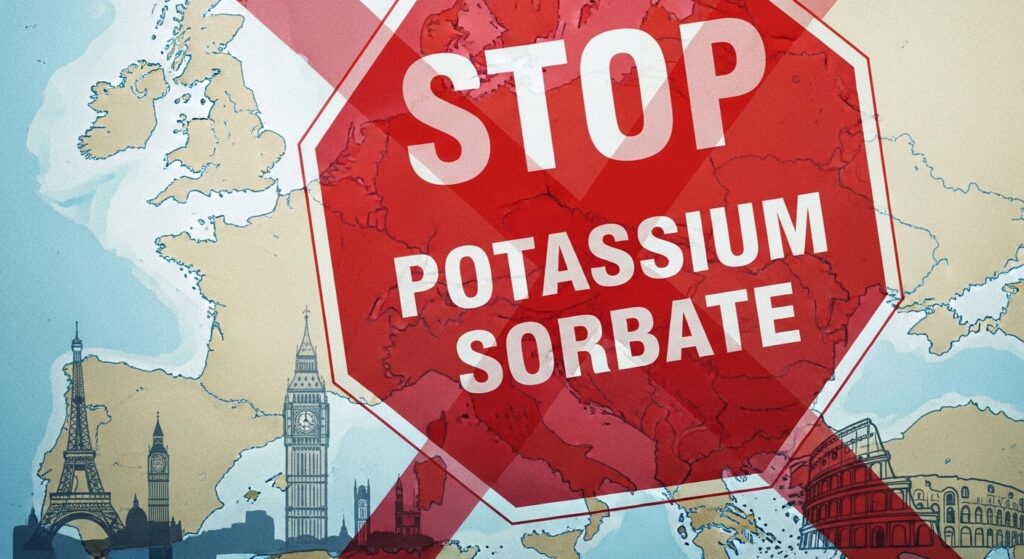
No — potassium sorbate is not banned in Europe. The European Union authorizes it as E 202 under EFSA oversight, and in 2025 actually expanded its approved uses to include non-heat-treated plant-based mousses. The widespread claim that it’s “banned in Europe” is false and appears to have spread through clean-label marketing rather than regulatory fact. What has changed is that EFSA tightened purity specifications in 2024, reducing acceptable heavy metal residue limits in commercial supplies.
What are the side effects of potassium sorbate?
For most people eating normal quantities, there are no documented side effects. At the concentrations used in food (0.025%–0.3%), it is tasteless and odorless. In rare, sensitive individuals, ingestion may trigger oral allergy syndrome symptoms — mouth tingling, localized swelling, or hives. More commonly, it causes mild contact dermatitis when used in topical cosmetics. The 2026 observational studies flagged associations with cancer and diabetes in people with high preservative intake overall, but those findings are correlational, not causal, and researchers caution against interpreting them as individual risk predictions.
Is potassium sorbate safe for kidneys?
For people with healthy kidneys, the consensus is yes at regulatory doses. For people with chronic kidney disease (CKD), the answer is more nuanced and warrants caution. Potassium sorbate adds inorganic potassium to the diet — a form that is rapidly absorbed and highly bioavailable. For CKD patients managing hyperkalemia, even small hidden sources of dietary potassium can matter. A 2025–2026 systems biology study also suggested potassium sorbate may interact with pathways involved in kidney injury at higher exposures. CKD patients should consult their renal dietitian before regularly consuming products containing E202.
Is potassium sorbate safe for children to eat every day?
Regulatory bodies maintain it is safe within established ADI limits, but children face a meaningfully narrower margin than adults. Because children weigh less and tend to eat more processed snacks, juices, and dairy products relative to their body weight, studies suggest adolescents at the high end of processed food consumption may reach 60% of the maximum daily intake. No current authority recommends restricting it specifically for children, but limiting overall ultra-processed food intake — and with it, preservative exposure — is broadly supported by nutritionists.
How can I avoid potassium sorbate in food?
Start by reading past “Contains 2% or less of the following” at the bottom of ingredient lists — that’s where it almost always hides. Check for the aliases listed above, especially E202 and “sorbic acid.” Prioritize fresh, refrigerated, and frozen whole foods that don’t require preservatives for shelf stability. For packaged bread, look for frozen sprouted grain options like Ezekiel 4:9. For yogurt, opt for organic brands using live cultures. For dried fruit, check allergy-focused retailers that specifically flag potassium sorbate-free and sulfite-free options. The most reliable strategy remains buying foods with short, recognizable ingredient lists.
Three Things to Take Away
First: the claim that potassium sorbate is banned in Europe is simply false — and worth knowing the next time you see it in a headline or on a product label.
Second: two major 2026 studies have raised genuinely important questions about preservatives and long-term metabolic health. The findings aren’t definitive proof of harm, but they are meaningful data — particularly for people already at risk for diabetes or cancer.
Third: you can reduce your exposure today just by reading one more line on ingredient labels. Scan past “Contains 2% or less” and look for E202, “sorbic acid,” or potassium sorbate by any of its aliases. Small label habits add up over time.
Want to check more ingredients you’re actually eating? Search any food additive at huhuly.com for verified, source-backed answers — no scare tactics, no guessing.
Reviewed by the huhuly Editorial Team
huhuly’s food transparency team reviews ingredient labels, monitors FDA regulatory updates, and tracks changes in US food manufacturing. All claims are verified against official brand ingredient lists and regulatory databases before publication.
Last updated: April 2026 | Fact-checked: Yes | Sources: 14 cited
This article is for informational purposes only and does not constitute medical advice. Consult your healthcare provider before making dietary changes based on this information.
What Is Natural Flavor? The 2-Word Label Trick Explained
More in Ingredients
You might also find these useful