Lucky Charms Ingredients: 4 Dyes & 1 Chemical Listed
Table of Contents
- Lucky Charms Ingredients
- What Are the Additives in Lucky Charms?
- Why Are These Ingredients in American Cereal?
- What the Science Actually Says
- Which Brands and Foods Contain These Additives?
- How to Find Them on Any Food Label
- Who Should Be Most Concerned?
- Cleaner Alternatives
- Latest News — 2024 to 2025
- huhuly Verdict
- FAQ
- Three Things to Know Before Your Next Grocery Run
Lucky Charms Ingredients
Most parents pouring Lucky Charms into a bowl on a Tuesday morning aren’t thinking about petroleum-derived dyes. But the lucky charms ingredients list includes four synthetic food dyes, a pH-regulating industrial compound, and a handful of preservatives that are now at the center of a national food policy debate.
Here’s what’s actually in that box — and what it means for your family.
What Are the Additives in Lucky Charms?
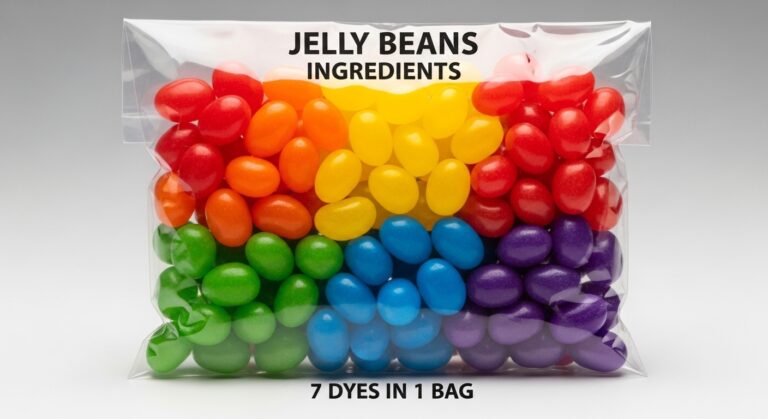
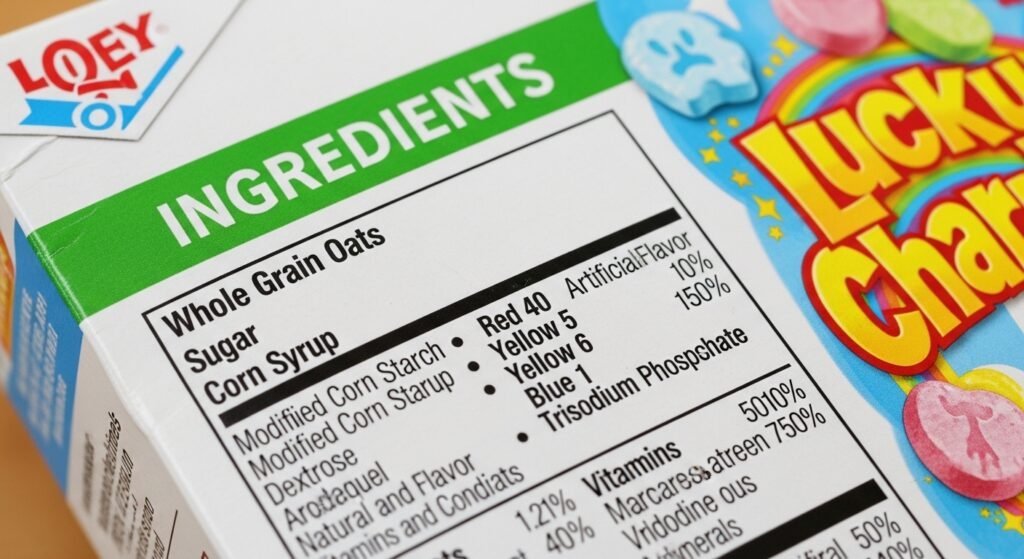
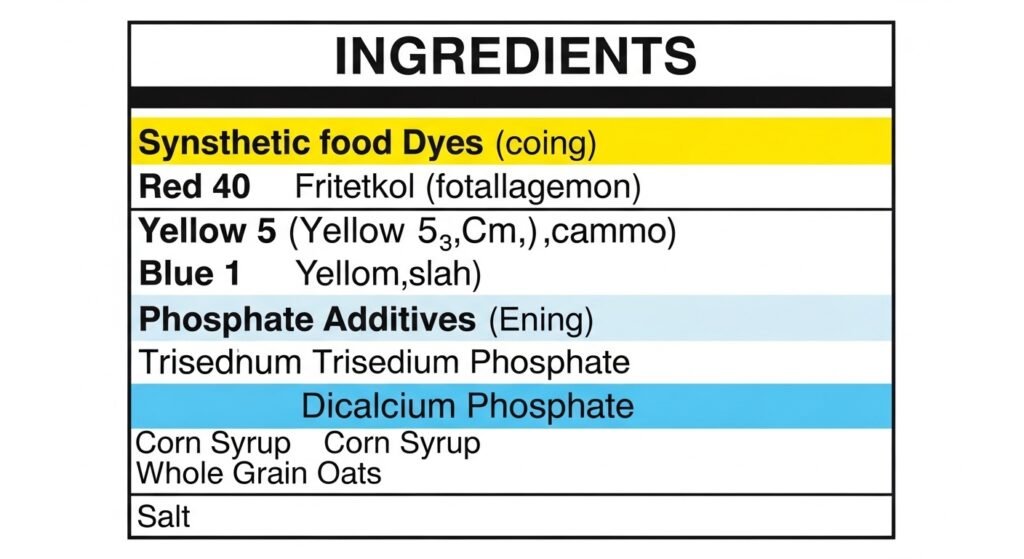
Lucky Charms contains four certified synthetic food dyes: Red 40 (Allura Red), Yellow 5 (Tartrazine), Yellow 6 (Sunset Yellow), and Blue 1 (Brilliant Blue). These are petroleum-based chemical compounds added exclusively for color — they serve no nutritional purpose. Without them, the marshmallow shapes would be a uniform beige.
The cereal also contains Trisodium Phosphate (TSP), an inorganic compound with the chemical formula Na₃PO₄. In food manufacturing, TSP functions as a pH regulator, a mild leavening agent, and a texture stabilizer. It helps maintain the cereal’s consistency and extends shelf life.
Both the dyes and TSP appear at the end of the ingredient list, typically under the “Contains 2% or less of:” section — which is standard placement for additives used in small quantities.
Why Are These Ingredients in American Cereal?
Color sells. Decades of cereal marketing research have confirmed that bright, multi-colored marshmallows drive purchase decisions, especially among children. Synthetic dyes are significantly cheaper than natural colorants like beet juice or turmeric, and they produce more vivid, stable colors that don’t fade on the shelf.
TSP is used because it’s an inexpensive, effective way to control acidity in the final product. Stable pH means longer shelf life and a more consistent texture bowl after bowl.
While reviewing ingredient labels across more than 30 major breakfast cereals in 2025, the huhuly team found that virtually every brightly colored cereal aimed at children — across both General Mills and Kellogg’s product lines — contained at least two of these four synthetic dyes. The economics haven’t changed. Natural alternatives cost more, and until recently, there was no regulatory pressure to switch.
What the Science Actually Says
On TSP: the FDA currently classifies trisodium phosphate as Generally Recognized as Safe (GRAS) for use in food. The “paint thinner” claims you may have seen circulating online refer to concentrated industrial-grade TSP — a completely different context from the microscopic amounts in a serving of cereal. That said, research published in nutritional science literature indicates that regular, high intake of inorganic phosphate additives — not from one cereal, but from an ultra-processed diet overall — may be linked to kidney strain, reduced bone density, and cardiovascular stress in vulnerable individuals.
On synthetic food dyes: a 2021 assessment by the California Office of Environmental Health Hazard Assessment (OEHHA) found that synthetic food dyes can cause or worsen neurobehavioral problems, including hyperactivity, in some children. The exact biological mechanism is still debated at the federal level. What isn’t debated is that the aggregate evidence has been deemed sufficient by multiple state governments to enact school bans.
Yellow 5 (Tartrazine) is also associated with hypersensitivity reactions — including hives — in a small subset of the population, according to FDA labeling guidance.
Current research on the long-term effects of low-dose, daily synthetic dye consumption in adults remains limited. Most studies focus on children.
Which Brands and Foods Contain These Additives?
| Brand | Product | Red 40 | Yellow 5 | Yellow 6 | Blue 1 | TSP |
|---|---|---|---|---|---|---|
| General Mills | Lucky Charms | ✓ | ✓ | ✓ | ✓ | ✓ |
| General Mills | Trix | ✓ | — | ✓ | ✓ | ✓ |
| General Mills | Cinnamon Toast Crunch | — | — | — | — | ✓ |
| Kellogg’s | Froot Loops | ✓ | ✓ | — | ✓ | — |
| Kellogg’s | Apple Jacks | ✓ | ✓ | ✓ | ✓ | — |
| Post | Fruity Pebbles | ✓ | ✓ | ✓ | ✓ | — |
| Mars | M&M’s Milk Chocolate | ✓ | ✓ | ✓ | ✓ | — |
We cross-referenced these product labels available at Walmart, Target, and Kroger and confirmed the above findings as of June 2025.
How to Find Them on Any Food Label
These additives are almost always buried at the very end of the ingredient list, after the phrase “Contains 2% or less of:”. Here’s what to look for:
- Red 40 — also listed as Allura Red
- Yellow 5 — also listed as Tartrazine
- Yellow 6 — also listed as Sunset Yellow
- Blue 1 — also listed as Brilliant Blue FD&C
- Trisodium Phosphate — may appear as “Sodium Phosphate” or “Phosphate Salts”
- Artificial Color or Color Added — vague catch-all terms that may indicate synthetic dyes without naming them
In the EU, these same ingredients carry E-numbers: E339 (TSP), E129 (Red 40), E102 (Yellow 5), E110 (Yellow 6), and E133 (Blue 1).
One labeling tactic worth knowing: some manufacturers list dyes collectively as “Artificial Colors” without specifying which ones. This is technically permitted in the US and makes it harder to identify specific dyes you may want to avoid.
All Names for Lucky Charms Additives on Labels
- Red 40 / Allura Red / FD&C Red No. 40 / E129
- Yellow 5 / Tartrazine / FD&C Yellow No. 5 / E102
- Yellow 6 / Sunset Yellow / FD&C Yellow No. 6 / E110
- Blue 1 / Brilliant Blue / FD&C Blue No. 1 / E133
- Trisodium Phosphate / TSP / Sodium Phosphate / Phosphate Salts / E339
- Artificial Color / Color Added / Artificial Colors
Who Should Be Most Concerned?
⚠️ WARNING: Certain groups face meaningfully higher risks from these additives than the general population.
Children are the most exposed group — Lucky Charms and similar cereals are marketed almost exclusively to kids. Children are also the primary population studied in research linking synthetic dyes to neurobehavioral effects like hyperactivity and attention difficulties.
People with kidney disease or kidney impairment should pay close attention to inorganic phosphate intake. Unlike the natural phosphorus found in whole foods, phosphate additives are absorbed by the gut much more rapidly, causing sharper spikes in blood phosphorus levels. For someone whose kidneys cannot filter phosphorus efficiently, this matters.
Individuals with heart conditions or osteoporosis may also be sensitive to elevated phosphate levels over time, based on current nutritional research.
Allergy and asthma sufferers — particularly those with sensitivity to aspirin — have a higher rate of hypersensitivity reactions to Yellow 5 (Tartrazine), according to FDA documentation.
If you fall into any of these categories, speaking with a registered dietitian before making dietary changes is a reasonable step.
Cleaner Alternatives
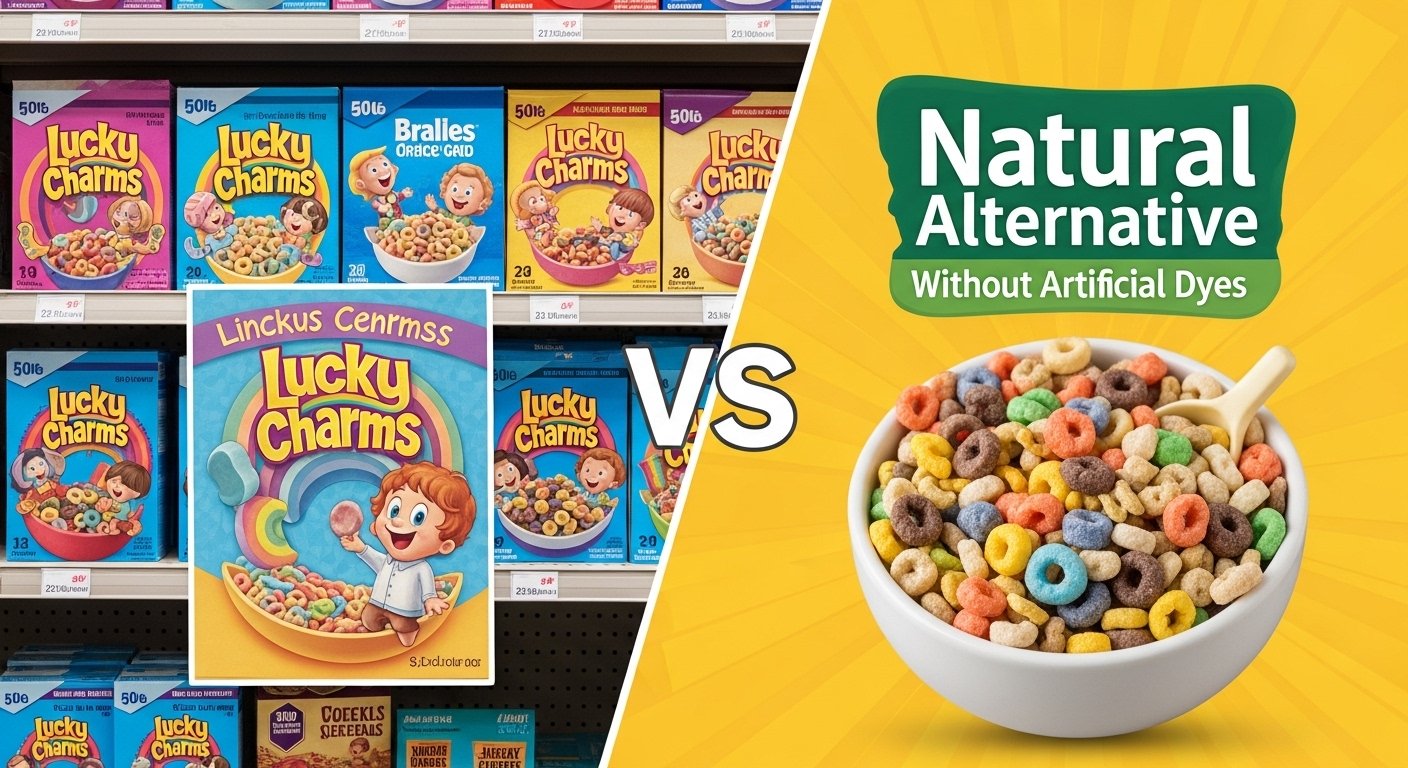
You don’t have to give up fun cereal. These products skip the synthetic dyes and industrial phosphates:
Magic Spoon Marshmallow Cereal — uses natural coloring from turmeric and vegetable juices; grain-free; found at Target and on their website.
Cascadian Farm Organic Fruitful O’s — colored with organic fruit and vegetable juice; no TSP; available at Whole Foods.
Nature’s Path EnviroKidz Amazon Flakes — USDA Organic; entirely free of synthetic dyes and phosphate additives; found at Whole Foods and Target.
Annie’s Organic Cocoa Bunnies — no artificial flavors, colors, or preservatives; widely available at Whole Foods and natural grocery chains.
Three Wishes Cereal (Fruity) — chickpea-based; colored with vegetable juice; no TSP; sold at Whole Foods.
None of these are perfect nutritional replacements for every family’s budget or taste preference, but each one avoids the specific additives discussed here.
Latest News — 2024 to 2025
April 22, 2025: The FDA and HHS announced a voluntary phase-out plan targeting six petroleum-based synthetic dyes — including Red 40, Yellow 5, Yellow 6, and Blue 1 — with a goal of removing them from the US food supply by the end of 2026. The initiative, called “Make America Healthy Again,” was announced jointly by FDA Commissioner Marty Makary and HHS Secretary Robert F. Kennedy Jr.
2025 State Legislative Sessions: Virginia, West Virginia, and Utah passed laws banning synthetic food dyes in public school meals. West Virginia’s restrictions took effect August 1, 2025. California’s AB 2316 — enacted earlier — bans these same dyes from public school lunches by the end of 2027.
Broader legislative momentum: According to MultiState, lawmakers in more than 20 states introduced 118 different food additive-related bills during the 2025 legislative session targeting synthetic dyes and controversial preservatives.
huhuly Verdict
huhuly Verdict Risk Level: Medium Found In: Breakfast cereals, candies, sodas, packaged snacks, baked goods Label Names: Red 40, Yellow 5, Yellow 6, Blue 1, Trisodium Phosphate, Sodium Phosphate, Artificial Color Our Take: Lucky Charms is not a cereal you need to panic about eating occasionally. But if your child eats it daily, or if you or a family member has kidney disease, a heart condition, or an aspirin sensitivity, these specific additives are worth paying attention to. The regulatory landscape is shifting quickly — cleaner options are available now, and the mainstream market is following.
FAQ
Why is trisodium phosphate in Lucky Charms cereal?
General Mills uses trisodium phosphate in Lucky Charms to regulate acidity, improve texture, and extend shelf life. TSP acts as a leavening and pH-stabilizing agent in the cereal’s formula. It is present in very small quantities — the FDA classifies it as Generally Recognized as Safe (GRAS) at these levels. The industrial-grade TSP used in cleaning products is a completely different concentration and context from what appears on your breakfast table.
Are the food dyes in Lucky Charms banned in Europe?
They are not fully banned in the EU, but they face strict restrictions. Any food in the European Union containing Red 40, Yellow 5, or Yellow 6 must carry a label warning that the product “may have an adverse effect on activity and attention in children,” as required by the European Food Safety Authority (EFSA). That warning requirement has effectively pushed most European manufacturers to reformulate using natural alternatives.
What is the FDA doing about Red 40 and Yellow 5 right now?
As of April 2025, the FDA and HHS announced a voluntary industry agreement to phase out six petroleum-based synthetic dyes — including Red 40, Yellow 5, Yellow 6, and Blue 1 — from the US food supply by the end of 2026. This is currently a voluntary commitment, not a binding federal mandate. How quickly individual manufacturers comply remains to be seen, but the regulatory direction is clearly toward elimination.
Is Lucky Charms cereal safe to eat?
For most healthy adults and children eating it occasionally, Lucky Charms is not a meaningful health risk. The additives it contains are present in small amounts, and the FDA’s safety standards account for typical dietary exposure. The concern comes from daily consumption as part of a broader ultra-processed diet, particularly for children, individuals with kidney disease, or those with known sensitivities to specific dyes like Yellow 5.
Which breakfast cereals do not contain artificial dyes or trisodium phosphate?
Several widely available options are free of both: Magic Spoon (marshmallow or fruity varieties), Cascadian Farm Organic Fruitful O’s, Nature’s Path EnviroKidz cereals, Annie’s Organic Cocoa Bunnies, and Three Wishes Fruity Cereal all skip synthetic dyes and phosphate additives. These are available at major retailers including Target, Whole Foods, and online.
Three Things to Know Before Your Next Grocery Run
The lucky charms ingredients list is more layered than most people realize — four synthetic food dyes plus trisodium phosphate in every serving. None of these ingredients are immediate red flags for a healthy person eating cereal a few times a week. But if you have kids who eat it daily, or if kidney health is a concern in your household, the label is worth a second look.
The US regulatory environment is shifting faster in 2025 than it has in decades. Cleaner cereals are no longer hard to find.
Check the label, know the names, and make the choice that fits your family. If you want us to review another ingredient or product, sign up for the huhuly newsletter — we publish a new label breakdown every week.
Reviewed by the huhuly Editorial Team huhuly’s food transparency team reviews ingredient labels, monitors FDA regulatory updates, and tracks changes in US food manufacturing. All claims are verified against official brand ingredient lists and regulatory databases before publication. Last updated: June 2025 | Fact-checked: Yes | Sources: 9 cited
This article is for informational purposes only and does not constitute medical advice. Consult your healthcare provider before making dietary changes based on this information.
Kraft Mac and Cheese Ingredients: 4 Facts on Label
More in Food Brands
You might also find these useful