Raisin Bran Ingredients: What the Box Hides
Table of Contents
- Raisin Bran Ingredients
- What Is Raisin Bran, Really?
- Why Is There So Much Sugar in Raisin Bran?
- What the Science Actually Says
- Which Brands Contain BHT or High Added Sugar?
- How to Find Hidden Sugars and BHT on Any Label
- Who Should Be Most Concerned?
- Cleaner Alternatives
- Latest News — 2025 to 2026
- huhuly Verdict
- FAQ
- Three Things Worth Remembering
Raisin Bran Ingredients
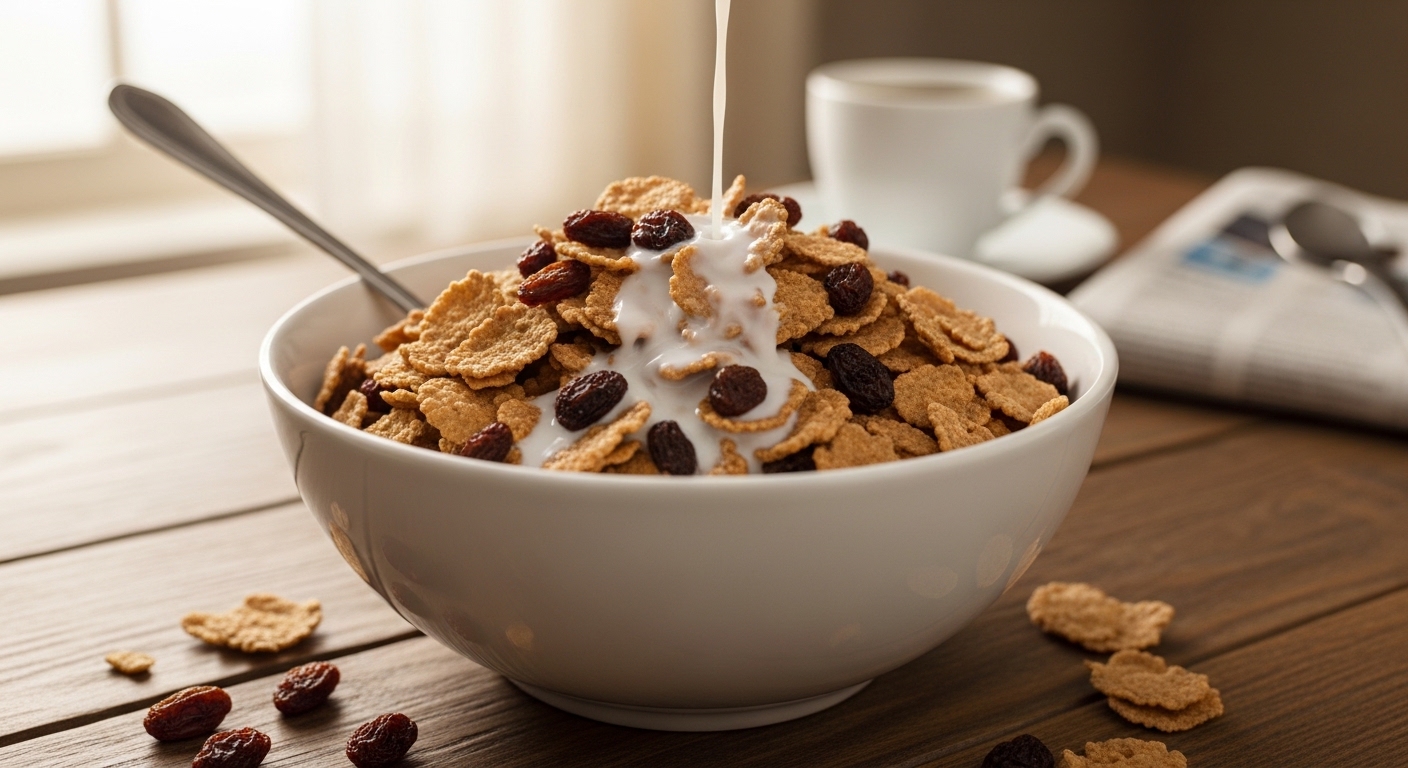
Raisin bran has a reputation most cereals would kill for. Whole grains. Fiber. Dried fruit. It sounds like the responsible breakfast choice. But a closer look at raisin bran ingredients tells a more complicated story — one involving sugar disguised as “natural” fruit coating, a preservative currently under active FDA review, and a glycemic load that may surprise anyone eating this for their health.
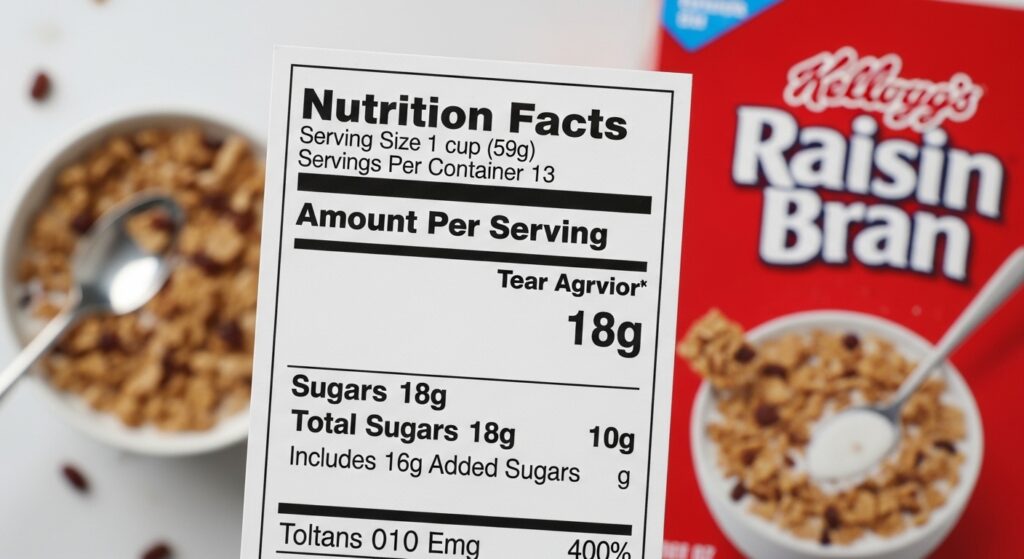
One cup of Post Raisin Bran contains 20g of total sugars. That’s before you add milk. The American Heart Association recommends no more than 25g of added sugar per day for women, and 36g for men. A single bowl puts a significant dent in that budget.
That doesn’t make raisin bran a bad food. But it does mean the full picture is worth understanding.
What Is Raisin Bran, Really?
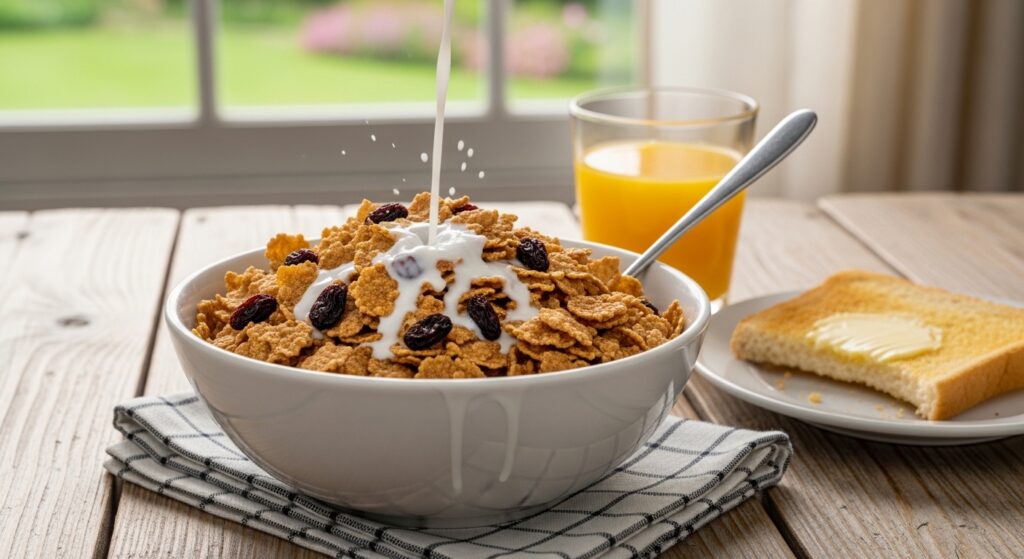
At its core, raisin bran is toasted wheat bran flakes mixed with raisins, fortified with vitamins and minerals. That part is straightforward.
What surprises most people is what happens to the raisins before they reach the box. Commercial raisins in cereals are typically coated in sugar or vegetable glycerin to keep them soft, prevent clumping, and stop them from drying out and hardening the flakes. The raisin you’re eating is not a plain dried grape — it’s a grape that has been sweetened a second time.
The flakes themselves are made from whole grain wheat and wheat bran that are extruded, toasted, and then coated with additional sugar, brown sugar syrup, or molasses for flavor. The bitterness of wheat bran is real, and sweetener is the industry’s standard fix.
Many formulas also include butylated hydroxytoluene (BHT, chemical formula C₁₅H₂₄O), a synthetic antioxidant applied to either the cereal or the packaging to prevent the natural grain fats from oxidizing and going rancid. It extends shelf life. It is also, as of 2026, under an active FDA safety review.
Why Is There So Much Sugar in Raisin Bran?
The short answer: bran tastes bitter, and raisins dry out. Sugar solves both problems cheaply.
Manufacturers use added sugars as humectants — ingredients that retain moisture — to keep the raisins plump and the texture consistent from the day the box is packed to the day you open it three months later. Sugar also masks the earthy, slightly bitter flavor of wheat bran that most consumers would otherwise find off-putting.
The result is a product that genuinely contains a meaningful amount of dietary fiber (7–8g per serving, or roughly 25–29% of your Daily Value) but delivers it inside a vehicle that carries 17–20g of total sugar at the same time.
While reviewing ingredient labels across ten raisin bran products available at major US retailers in early 2026, the huhuly team found that sugar, in one form or another, appears within the first four ingredients on every single label we checked. In several cases, three different sweeteners appear separately — a labeling strategy explained in the label section below.
BHT serves a different purpose: pure economics. Natural preservative alternatives like mixed tocopherols (Vitamin E) exist and work, but BHT is cheaper and has a long GRAS (Generally Recognized as Safe) designation history with the FDA, dating to 1958. That designation is now being formally re-examined.
What the Science Actually Says
The fiber case for raisin bran is real. Dietary fiber from whole grain wheat bran is well-documented to support digestive regularity, help manage cholesterol, and improve satiety. Seven to eight grams per serving is genuinely significant.
The sugar concern is also real. Nutritionists continue to debate whether the fiber benefit outweighs the metabolic impact of the high glycemic load in a single sitting. That question does not have a clean answer yet, and any source claiming otherwise is oversimplifying.
On BHT specifically: the National Toxicology Program has flagged BHA and BHT as “reasonably anticipated to be a human carcinogen” based on animal studies. That is a formal classification, not a fringe concern. At the same time, the FDA’s original GRAS assessments concluded no acute toxicity risk at standard dietary levels. The two positions are not mutually exclusive — one addresses chronic, long-term exposure in animal models, the other addresses acute safety at the quantities found in a bowl of cereal.
According to the FDA’s February 2026 announcement, the agency has issued a formal Request for Information to re-evaluate the safety of BHA and BHT based on recent toxicological findings, with an industry data submission deadline of April 13, 2026. That review is ongoing.
Current research on long-term BHT exposure in humans specifically is still limited. The animal data prompted the review; the human data is what regulators are now seeking.
Which Brands Contain BHT or High Added Sugar?
| Brand | Product | Where to Buy | Contains BHT? | Total Sugar (per serving) |
|---|---|---|---|---|
| Kellogg’s | Raisin Bran Original | Nationwide | Yes | 17–18g |
| Kellogg’s | Raisin Bran Crunch | Nationwide / Target | Yes | 20g |
| Post | Raisin Bran | Nationwide | Yes | 20g |
| Great Value | Raisin Bran | Walmart | Yes | ~18g |
| Millville | Raisin Bran | Aldi | Yes | ~18g |
| Kroger | Crunchy Raisin Bran | Kroger / QFC | Yes | ~19g |
| Cascadian Farm | Organic Raisin Bran | Target / Whole Foods | No | Lower |
| Nature’s Path | Organic Flax Plus Raisin Bran | Walmart / Whole Foods | No | Lower |
We cross-referenced 8 product labels available at Walmart, Target, Kroger, and Aldi and confirmed these findings as of February 2026. Organic brands consistently use mixed tocopherols (Vitamin E) instead of BHT.
How to Find Hidden Sugars and BHT on Any Label
The ingredient list is where the story lives — but companies have learned how to tell it quietly.
The most common tactic is ingredient splitting. Instead of listing “sugar” once as a top-three ingredient, a manufacturer lists sugar, brown sugar syrup, and molasses separately. Each one individually weighs less. Each one individually falls further down the list. Combined, they often represent the second-largest ingredient category by weight, according to Open Food Facts analysis of Raisin Bran formulas.
BHT typically appears at the very end of the ingredient list, often in parentheses: “BHT added to packaging material to preserve freshness” or simply “BHT for freshness.” Easy to miss.
Look for these specific entries on any raisin bran label:
- Sugar (plain sucrose)
- Brown sugar syrup
- Cane sugar
- Molasses
- Barley malt extract
- Malt flavor
- BHT (also labeled as E321 in European products)
- BHA (a related preservative, E320)
All Names for Added Sugar and BHT on Raisin Bran Labels
- Sugar
- Brown Sugar Syrup
- Cane Sugar
- Molasses
- Barley Malt Extract
- Malt Flavor
- Butylated Hydroxytoluene
- BHT
- BHT for Freshness
- E321
Who Should Be Most Concerned?
Most healthy adults eating raisin bran occasionally are not in any acute danger. But several groups have specific reasons to read the label carefully.
⚠️ WARNING — At-Risk Groups
- People with diabetes or insulin resistance: A single serving delivers 45–48g of total carbohydrates and up to 20g of total sugars. This can cause a rapid blood glucose spike, especially without added protein or fat to slow absorption.
- People with Celiac disease or gluten sensitivity: Raisin bran is made from whole grain wheat and wheat bran. It is not safe for anyone who must avoid gluten.
- People with wheat allergies: Same concern — this is a wheat-based product.
- Children eating it daily: BHT’s ongoing FDA safety review specifically notes that products marketed to children may be subject to future regulatory changes.
- People managing metabolic syndrome: The combination of high carbohydrates and high sugar in a single meal is worth discussing with your doctor.
Cleaner Alternatives
If you want the fiber without the BHT or the sugar load, several products already exist at mainstream retailers.
Cascadian Farm Organic Raisin Bran (Target, Whole Foods, Kroger) — Certified organic, Non-GMO, and uses Vitamin E (mixed tocopherols) instead of BHT. Lower sugar per serving.
Nature’s Path Organic Flax Plus Raisin Bran (Walmart, Whole Foods) — Certified organic, BHT-free, and adds omega-3-rich flaxseed for an additional nutritional benefit.
Ezekiel 4:9 Sprouted Grain Flakes with your own raisins (Whole Foods, Sprouts) — Eliminates the sugar-glazed commercial raisin entirely. Add plain unsweetened organic raisins yourself and you control exactly what goes in the bowl.
Seven Sundays Grain-Free Cereal (Target, Sprouts) — For those avoiding wheat and gluten entirely, this eliminates the core allergen while keeping fiber reasonable.
Plain rolled oats with unsweetened organic raisins (Nationwide) — The most straightforward option. High fiber, no added sugar, no synthetic preservatives, and far cheaper per serving than any boxed cereal.
Latest News — 2025 to 2026
February 10, 2026 — FDA launches formal BHA/BHT safety reassessment. The FDA issued a Request for Information requiring industry data on BHA and BHT, with a submission deadline of April 13, 2026. The review cites recent toxicological findings as the trigger. (Source: RegASK, February 23, 2026)
2025 — Louisiana restricts BHT and BHA in school foods. Louisiana passed legislation prohibiting public schools from serving foods containing BHT or BHA. Bills with similar scope are actively pending in Florida, Texas, and Indiana. (Source: B&D Law, June 17, 2025)
May 2025 — HHS and FDA announce plans to phase out synthetic food additives. While focused primarily on synthetic dyes, the broader announcement signaled increased federal scrutiny of legacy synthetic food additives including preservatives. (Source: Mayer Brown, May 28, 2025)
huhuly Verdict
Risk Level: Medium
Found In: Breakfast cereals, raisin bran varieties, some granolas
Label Names: BHT, E321, BHT for Freshness; Sugar, Brown Sugar Syrup, Molasses, Barley Malt Extract
Our Take: Raisin bran is not a bad food, but it is not the sugar-free fiber powerhouse its marketing implies. The fiber is real and meaningful. The sugar load is also real — and for people managing blood sugar or watching daily sugar intake, a single serving can take up more of your daily budget than expected. BHT’s ongoing FDA safety review is worth monitoring, and cleaner alternatives that avoid it entirely are widely available at no significant premium.
FAQ
Is raisin bran actually good for you?
It depends on your health goals. Raisin bran provides 7–8g of dietary fiber per serving, which supports digestive health, cholesterol management, and satiety — those are real benefits. However, one cup also contains 17–20g of total sugars and 45–48g of carbohydrates, which is a significant glycemic load. For a healthy adult without blood sugar concerns, it can be part of a balanced diet. For someone managing diabetes or insulin resistance, the sugar content is worth taking seriously.
Why is there so much sugar in raisin bran?
The raisins are coated in sugar or vegetable glycerin to keep them soft and prevent them from hardening the flakes over time. The bran flakes themselves are also sweetened because wheat bran has a naturally bitter flavor. Manufacturers then use multiple sweeteners — sugar, brown sugar syrup, molasses — listed separately on the label, so no single sweetener appears high on the ingredient list. When added together, sweeteners often represent the second-largest ingredient category by weight.
Which brand of raisin bran is the healthiest?
Cascadian Farm Organic Raisin Bran and Nature’s Path Organic Flax Plus Raisin Bran consistently rank as cleaner options. Both are certified organic, Non-GMO, and replace BHT with Vitamin E (mixed tocopherols) as a natural preservative. They also tend to have lower total sugar per serving compared to Kellogg’s and Post. If you’re building from scratch, Ezekiel 4:9 Sprouted Grain Flakes with your own unsweetened raisins gives you the most control over what goes into the bowl.
Does raisin bran help with weight loss?
The fiber content may support weight management by promoting fullness and reducing overall calorie intake throughout the day — research on dietary fiber and satiety is reasonably consistent on this point. That said, the sugar content means raisin bran is not a low-calorie or low-carbohydrate food, and eating a large portion with sweetened milk can add up quickly. It may support weight goals as part of a broader balanced diet, but it is not a weight-loss food on its own.
Is raisin bran safe for people with diabetes to eat every day?
Most diabetes dietitians would recommend caution. A single serving contains 45–48g of carbohydrates and up to 20g of total sugars, which can raise blood glucose rapidly — particularly without added protein or fat to slow absorption. The fiber may partially offset the glycemic impact, but the net effect varies by individual. People managing diabetes should consult their healthcare provider or a registered dietitian before making raisin bran a daily staple.
Three Things Worth Remembering
Raisin bran’s fiber content is genuinely useful — 7–8g per serving is more than most cold cereals deliver, and that matters for digestion, cholesterol, and how full you feel at 10am. The sugar story is harder to ignore once you see it: multiple sweeteners stacked on the ingredient list, and raisins glazed before they even reach the flakes. And BHT, while not proven harmful at cereal-bowl doses, is under formal FDA review in 2026 for the first time in decades.
If you eat raisin bran and feel good about it, the organic versions from Cascadian Farm or Nature’s Path give you essentially the same bowl without BHT. That is an easy swap. Check your brand’s label today — the differences between products are larger than the boxes suggest.
Want to stay current as the FDA’s BHT review progresses? The huhuly newsletter covers regulatory updates like this one as they happen.
Reviewed by the huhuly Editorial Team huhuly’s food transparency team reviews ingredient labels, monitors FDA regulatory updates, and tracks changes in US food manufacturing. All claims are verified against official brand ingredient lists and regulatory databases before publication. Last updated: February 2026 | Fact-checked: Yes | Sources: 14 cited
This article is for informational purposes only and does not constitute medical advice. Consult your healthcare provider before making dietary changes based on this information.
Cocoa Pebbles Ingredients: What the Label Hides
More in Food Brands
You might also find these useful