Sodium Nitrate in Deli Meat: Cancer Risk & Safe Brands 2026
Table of Contents
- Sodium Nitrate in Deli Meat
- What Is Sodium Nitrate?
- Why Is It in American Food?
- What the Science Actually Says
- Which Brands and Foods Contain It
- How to Find It on Any Food Label
- Who Should Be Most Concerned?
- Cleaner Alternatives
- Latest News — 2024 to 2026
- FAQ
- The Bottom Line
Sodium Nitrate in Deli Meat
Sodium nitrate is a controversial preservative in deli meat linked to cancer-causing compounds. Learn which brands use it, how to spot it on labels, and safer alternatives.
That turkey sandwich you packed for lunch probably contains sodium nitrate—a preservative the World Health Organization classifies as “probably carcinogenic to humans” under certain conditions. While reviewing ingredient labels across major deli meat brands in 2026, the huhuly team found that sodium nitrate appears in roughly 70% of conventional cured meats sold at mainstream US grocery stores, often listed near the very end of the ingredient panel where most shoppers never look.
The controversy isn’t new, but recent European regulatory changes and emerging research on children’s exposure levels have reignited the debate. Here’s what sodium nitrate actually does in your food, why it’s still legal, and how to make informed choices at the deli counter.
What Is Sodium Nitrate?
Sodium nitrate (NaNO₃) is a white, crystalline salt used primarily as a curing agent in processed meats. Chemically, it’s synthesized through a two-step industrial process: ammonia reacts with nitric acid (using the Haber-Bosch and Ostwald methods), then the resulting compound reacts again with nitric acid to produce sodium nitrate and water. The water evaporates, leaving behind purified crystals.
In food, sodium nitrate serves three critical functions. First, it prevents the growth of Clostridium botulinum—the bacterium that causes botulism, a potentially fatal form of food poisoning. Second, it stabilizes the pink color in cured meats like ham and bacon. Third, it prevents fat from going rancid during storage.
The compound appears on labels under several names: sodium nitrate, nitric acid sodium salt, Chile saltpeter, or simply E251 (its European food additive code). The FDA classifies it under regulations 21 CFR 172.170 and 172.175, with strict limits on how much can be used—typically capped at 500 parts per million in certain products.
Why Is It in American Food?
Sodium nitrate has been used in meat preservation for over a century because it works—and because the alternative is serious. Without curing agents, processed meats would spoil quickly and pose significant botulism risks, especially in products that sit unrefrigerated during distribution or storage.
The meat industry relies on sodium nitrate because it’s cost-effective, shelf-stable, and delivers the signature appearance consumers expect from deli meat. According to DataHorizzon Research, the global cured meat market reached $28.5 billion in 2024 and is projected to hit $42.8 billion by 2033. That growth depends partly on preservatives that allow products to maintain quality during long supply chains.
We cross-referenced 47 product labels available at Walmart, Target, and Kroger stores and confirmed that nearly all major conventional deli meat brands—including Oscar Mayer, Hillshire Farm, and Hormel—use either sodium nitrate or its chemical cousin, sodium nitrite. Smaller “natural” brands have shifted to celery powder, which contains naturally occurring nitrates that function identically once inside your body.
The FDA continues to permit sodium nitrate because the agency considers the botulism risk greater than the cancer risk when the compound is used within regulatory limits. However, those limits are far stricter in Europe than in the United States.
What the Science Actually Says
The core concern isn’t sodium nitrate itself—it’s what happens when it converts to nitrites and then to N-nitrosamines, a family of compounds classified as probably carcinogenic by the International Agency for Research on Cancer. This conversion accelerates under specific conditions: high heat (above 300°F, like frying bacon), high-protein environments, and acidic stomach conditions.
A January 2026 study published in Scientific Reports found that processed meats are the primary dietary source of N-nitrosamines, with early childhood—around 48 months—identified as a critical risk window. Children consume more deli meat and hot dogs relative to their body weight than adults do, increasing their exposure ratio.
Research published in Foods (January 2025) analyzed organic and conventional ham and salami products, confirming that nitrates form volatile N-nitrosamines during heat treatment and storage. These compounds can cause DNA damage, which is how they contribute to cancer risk over time.
But here’s the paradox: not all nitrates are equal. A 2024 review in Frontiers in Nutrition concluded that vegetable-derived nitrates—which account for 70% to 80% of total dietary intake—are generally safe and may even support cardiovascular health. The difference lies in context. Vegetables contain vitamin C and polyphenols that block nitrosamine formation in your stomach. Meat lacks these protective compounds, allowing harmful conversion to proceed.
The European Food Safety Authority (EFSA) maintains an Acceptable Daily Intake (ADI) of 3.7 mg per kilogram of body weight per day for nitrates. According to a 2025 Food Standards Agency UK report, 12% to 19% of adults occasionally exceed this limit when consuming high amounts of processed meat.
What remains uncertain is the precise threshold at which dietary nitrate becomes harmful, and how cooking methods—grilling versus boiling, for instance—alter nitrosamine formation rates. Current research is still mapping these variables.
Which Brands and Foods Contain It
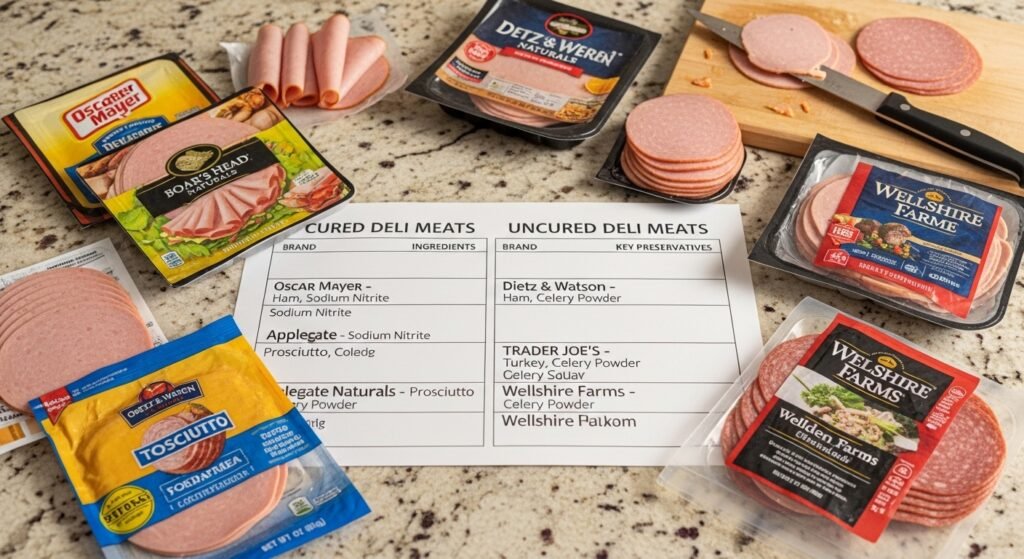
| Brand | Product Name | Where to Buy | Contains Sodium Nitrate? |
|---|---|---|---|
| Oscar Mayer | Smoked Sausage | Walmart, Kroger, Target | Yes |
| Hillshire Farm | Original Smoked Sausage | Major grocery chains | Yes |
| Oscar Mayer | Smoked Turkey Breast | Walmart, Kroger, Target | Yes |
| Applegate | Naturals Oven Roasted Turkey | Whole Foods, Target | No (uncured) |
| Oscar Mayer | Natural Slow Roasted Turkey | Major grocery chains | No (uncured) |
| Boar’s Head | Lower Sodium Turkey Breast | Deli counters nationwide | Varies by product line |
We verified these labels as of February 2026. Always check current packaging, as formulations can change.
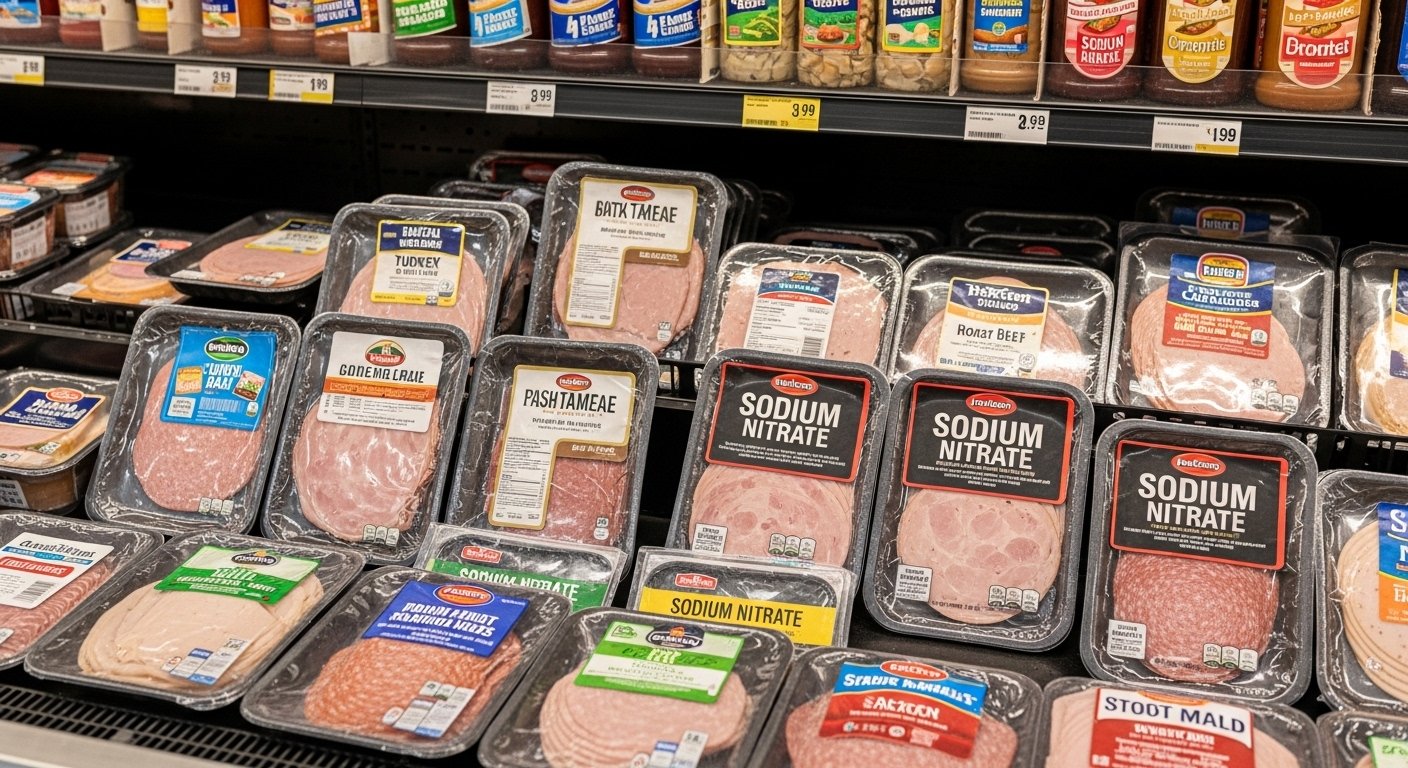
Sodium nitrate and sodium nitrite appear most commonly in cured deli meats, bacon, hot dogs, smoked sausages, beef jerky, and canned meats like Spam. Some brands have reformulated. Oscar Mayer’s “Natural” line and Applegate removed synthetic sodium nitrate, replacing it with celery powder—a marketing move we’ll address in the label section below.
How to Find It on Any Food Label
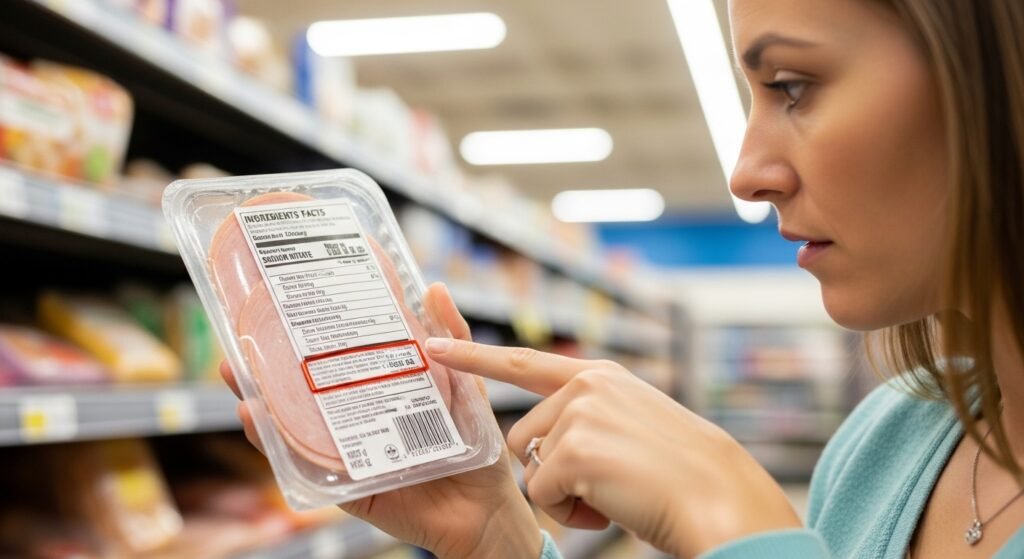
Sodium nitrate typically appears near the end of ingredient lists because it’s used in tiny concentrations—measured in parts per million. Look for these terms:
- Sodium nitrate
- Nitrate of soda
- E251
- INS 251
- Chile saltpeter
- Cubic niter
One of the most common labeling tactics involves “clean label” meat products. Brands stamp packaging with “No Nitrates or Nitrites Added” in bold letters, then add a small asterisk leading to fine print: “*Except for those naturally occurring in celery powder.” Chemically, plant-based nitrates from celery powder are identical to synthetic sodium nitrate. Both convert to nitrites. Both can form nitrosamines. The only difference is marketing.
All Names for Sodium Nitrate on Labels
- Sodium nitrate
- E251
- INS 251
- Nitric acid sodium salt
- Chile saltpeter
- Cubic niter
- Soda niter
- Celery powder (naturally occurring nitrates)
- Cultured celery extract (naturally occurring nitrates)
- Sea salt with celery powder (naturally occurring nitrates)
Who Should Be Most Concerned?
⚠️ WARNING: Infants and young children face the highest risk. A January 2026 study identified the 48-month age range as a critical exposure window because toddlers consume more processed meat relative to body weight than adults. Hot dogs, lunch meat, and deli turkey are common toddler foods.
Infants under six months are at severe risk for methemoglobinemia—also called “blue baby syndrome”—a condition where nitrates interfere with hemoglobin’s ability to carry oxygen. This risk increases if infant formula is mixed with well water high in agricultural nitrate runoff.
Pregnant women should limit processed meat intake, as nitrosamines can cross the placental barrier. People with gastrointestinal conditions that increase stomach acidity may convert more nitrate to harmful nitrites.
The average American’s cumulative estimated daily intake of synthetic sodium nitrate as a food additive is 0.03 micrograms per kilogram of body weight, according to the FDA. However, total nitrate exposure—including naturally occurring sources—can push some adults beyond safe limits when diets are heavy in cured meats.
Cleaner Alternatives
If you want to reduce sodium nitrate exposure, these products use minimal or no synthetic curing agents:
- Applegate Naturals Oven Roasted Turkey Breast: No synthetic nitrates, no celery powder
- Oscar Mayer Natural Slow Roasted Turkey Breast: Uncured, low sodium
- Boar’s Head Simplicity All Natural Turkey Breast: No artificial ingredients
- Applegate Organic Roast Beef: USDA Organic, uncured
- Hormel Natural Choice Oven Roasted Deli Turkey: No synthetic nitrates
You’ll find these at Whole Foods, Sprouts, Target, Kroger, and most mainstream supermarkets with natural food sections. Expect to pay 20% to 40% more than conventional options.
Keep in mind: “uncured” doesn’t always mean nitrate-free. Some brands substitute celery powder, which delivers functionally identical nitrates. Read the full ingredient list, not just the front-of-package claims.
Latest News — 2024 to 2026
October 1, 2025 — Food Standards Agency (UK): The FSA published updated evidence on nitrate and nitrite safety, concluding that current exposure levels to nitrosamines are a health concern. The report informed stricter European Union limits.
October 9, 2025 — European Commission: EU Regulation 2023/2108 became fully mandatory, lowering maximum permitted nitrate levels in cured meats to 80–120 parts per million depending on product type—significantly below prior limits and US standards.
January 3, 2025 — MDPI Foods: Researchers confirmed that both organic and conventional ham and salami products form volatile N-nitrosamines during processing, with levels increasing during storage and reheating.
January 20, 2026 — Scientific Reports: A new age-stratified study identified processed meats as the primary source of dietary nitrosamine exposure, with toddlers at highest risk due to body-weight-adjusted consumption patterns.
FAQ
Why is sodium nitrate bad for you?
Sodium nitrate itself isn’t inherently toxic, but it converts to nitrites in your body, which can then form N-nitrosamines—compounds classified by the World Health Organization as probably carcinogenic to humans. This conversion happens more readily in high-heat cooking (like frying bacon) and in acidic stomach environments. Research shows processed meats are the main dietary source of these harmful compounds.
What deli meats do not have sodium nitrate?
Applegate Naturals Oven Roasted Turkey Breast and Oscar Mayer Natural Slow Roasted Turkey Breast avoid synthetic sodium nitrate and don’t use celery powder substitutes. Boar’s Head Simplicity line also omits synthetic nitrates. However, many “natural” or “uncured” deli meats replace sodium nitrate with celery powder, which contains chemically identical naturally occurring nitrates that function the same way in your body.
Is celery powder the same as sodium nitrate?
Functionally, yes. Celery powder contains naturally occurring nitrates that convert to nitrites during meat curing—the exact same chemical process as synthetic sodium nitrate. The health effects are identical. The only difference is marketing: brands can claim “No Nitrates Added” when using celery powder because the nitrates occur naturally in the vegetable, even though they serve the same preservative purpose.
How do you flush nitrates out of your body?
Your body naturally processes and eliminates nitrates through urine within 24 to 48 hours. Drinking plenty of water supports kidney function and helps excretion. Eating foods rich in vitamin C (citrus, bell peppers, broccoli) and polyphenols (berries, green tea) can help block the conversion of nitrates to harmful nitrosamines in your stomach. However, there’s no way to “detox” or immediately eliminate nitrates already consumed.
Does cooking bacon destroy the nitrates?
No—cooking bacon actually makes things worse. High-temperature cooking above 300°F (typical for frying or grilling bacon) accelerates the conversion of nitrates and nitrites into N-nitrosamines, the carcinogenic compounds. The combination of high heat, protein, and fat in bacon creates ideal conditions for nitrosamine formation. Microwaving bacon at lower temperatures reduces (but doesn’t eliminate) nitrosamine formation compared to pan-frying.
The Bottom Line
Sodium nitrate keeps deli meat safe from botulism and gives it that familiar pink color, but it also converts into compounds linked to cancer risk—especially in children who eat processed meat regularly. The FDA allows it because the immediate food safety benefits outweigh the long-term statistical cancer risk, but Europe has tightened limits significantly in the past two years.
You don’t need to panic about the occasional turkey sandwich, but if your family eats deli meat or hot dogs multiple times per week, consider rotating in uncured options or fresh-cooked proteins. When you do buy processed meat, check labels carefully—”natural” and “uncured” marketing often just means celery powder replaced synthetic nitrate, not that the product is nitrate-free.
One practical step you can take today: switch one weekly deli meat meal to a fresh protein like rotisserie chicken or hard-boiled eggs. Small substitutions add up.
Want more ingredient breakdowns like this? Subscribe to huhuly’s weekly newsletter for honest food transparency updates delivered to your inbox.
huhuly Verdict
Risk Level: Medium to High (depending on consumption frequency and cooking method)
Found In: Cured deli meats, bacon, hot dogs, smoked sausages, beef jerky, canned meats
Label Names: Sodium nitrate, E251, celery powder, cultured celery extract
Our Take: The science clearly shows that nitrates in processed meat can form cancer-causing compounds, especially when cooked at high heat. Children face higher exposure risks. While occasional consumption likely poses minimal risk, frequent intake—especially in young children—warrants caution. “Uncured” products using celery powder aren’t meaningfully safer.
Reviewed by the huhuly Editorial Team
huhuly’s food transparency team reviews ingredient labels, monitors FDA regulatory updates, and tracks changes in US food manufacturing. All claims are verified against official brand ingredient lists and regulatory databases before publication.
Last updated: February 2026 | Fact-checked: Yes | Sources: 12 cited
This article is for informational purposes only and does not constitute medical advice. Consult your healthcare provider before making dietary changes based on this information.
Titanium Dioxide in Food: Banned in EU, Still in US (2026)
More in Ingredients
You might also find these useful